Story code: ST-000193
Part 1: He Said I Was Confused
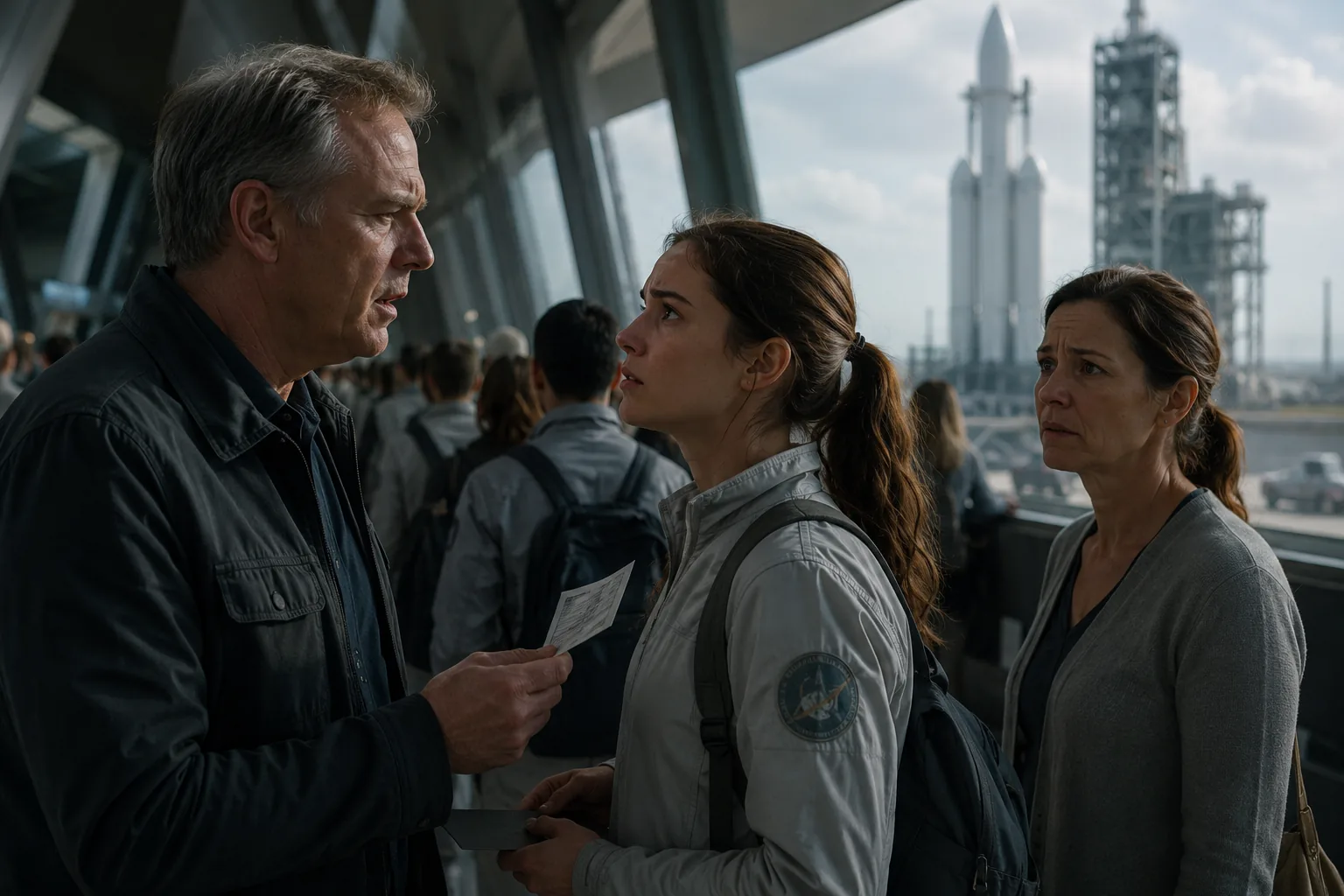
Cal Hale stopped his daughter three yards from the launch gate, looked at the boarding pass in her hand, and said, loud enough for the people in the boarding lane to hear, “Mara, there is no seat for you on this mission.” The words hit in the middle of ordinary terminal noise-scanner chirps, rolling bags, a child whining near the café rail-and the first damage was immediate: three strangers turned toward Mara as if she had tried to force her way onto a ship with fake paper. She was standing under the Departure Ring with a carry-on at her ankle and a printed pass with her name on it, and her own father, the listed mission sponsor, was acting like she had imagined the whole thing.
Mara did not step back. She held the pass at chest height and looked at Cal instead of at the people now watching.
“You told me this seat was cleared,” she said.
Her voice was level, but the paper in her hand moved once before going still.
Cal wore a sponsor lanyard with his clearance badge turned outward. In a place where every other traveler was waiting to be approved by a scanner, that badge drew attention by itself. He gave the sort of short, patient smile used on someone making a scene in public.
“I told you there were options,” he said. “You are mixing conversations together. Put the pass away and let’s not do this here.”
The phrase let’s not do this here did its work immediately. It made it sound like Mara had brought something private into a public lane. A woman in a gray travel coat, Rina Park, shifted her duffel higher on her shoulder and looked from Cal to the pass. Behind the check-in podium, Jules Navarro paused over a terminal screen without yet speaking. Two people in line stopped pretending not to listen.
Leah Hale stood just outside the lane rope with both hands around her phone. She did not move closer. She watched Cal when he spoke and Mara when the silence after him stretched too long.
Mara unfolded the boarding pass all the way, showing the printed strip, the colony code, the gate assignment, and her name. The paper had already been creased and smoothed enough times to leave a shine along the fold.
“This isn’t a conversation I mixed up,” she said. “You sent me here with this.”
Cal glanced at the pass, but only briefly, as if the paper itself was less important than keeping the room on his side.
“A printout doesn’t mean an active berth,” he said. “People misunderstand preclearance all the time.”
That landed differently. It did not deny the paper existed. It changed the argument while sounding helpful. Rina’s brows tightened. Jules looked up from the podium then, measuring the exchange the way agents do when an argument is getting too close to their lane.
Mara took one step toward the rope opening.
“Then scan it,” she said.
Cal moved half a step too, not touching her, just occupying the space between her and the lane entrance with the ease of somebody used to being obeyed. “You are not listening. There is nothing to scan if sponsorship wasn’t finalized.”
That was not the same thing as what he had said before, and the difference hung there. A man near the self-tag kiosk glanced over, looked at the pass, then at Cal’s badge.
Jules finally spoke. “If there’s a travel document, I can verify status.”
Cal turned his head toward the podium but kept his shoulders angled toward Mara, as if the problem was still family and not procedure.
“This is a misunderstanding,” he said. “No need to tie up your lane.”
Jules’s expression did not change. “The lane is already tied up.”
A soft ripple moved through the small group. Not laughter. Just the tiny shift that happens when procedure enters a personal argument and refuses to pick a side.
Mara lowered the pass enough for Jules to see the top line clearly. Her grip left a bend near the barcode. “My name is on it. Gate Ceres Three. Today’s launch window.”
Leah’s mouth opened slightly, then closed. She looked at Cal. Cal did not look back at her.
“Mara,” he said, more quietly now, though the room was still listening, “if you keep pushing this, you’re going to embarrass yourself.”
The sentence was smooth, practiced, and cruel in a way that made several people go still. It did not answer the paper in her hand. It answered the room. Mara’s jaw tightened once. She did not raise her voice.
“If there’s no seat,” she said, “why does this have a live gate and baggage allowance?”
That changed the shape of the moment. Even Rina leaned a little to see. Printed near the lower edge, under the berth code, was a checked allowance and a transfer stamp from earlier that morning.
Jules extended a hand across the podium. “Ma’am, let me see the pass.”
Before Mara could hand it over, Cal spoke again, and this time he had to choose an explanation in front of everyone.
“Because,” he said, with a careful pause that made Leah’s fingers tighten around her phone, “someone processed her farther than they should have.”
The scanner on Jules’s desk gave a bright idle chirp into the silence, and Mara held the boarding pass just out of reach for one second longer, because if Cal was saying the system had advanced her by mistake, then the system was the only thing in the room that could prove which one of them was lying.
Cal Hale stopped his daughter three yards from the launch gate, looked at the boarding pass in her hand, and said, loud enough for the people in the boarding lane to hear, “Mara, there is no seat for you on this mission.” The words hit in the middle of ordinary terminal noise-scanner chirps, rolling bags, a child whining near the café rail-and the first damage was immediate: three strangers turned toward Mara as if she had tried to force her way onto a ship with fake paper. She was standing under the Departure Ring with a carry-on at her ankle and a printed pass with her name on it, and her own father, the listed mission sponsor, was acting like she had imagined the whole thing.
Mara did not step back. She held the pass at chest height and looked at Cal instead of at the people now watching.
“You told me this seat was cleared,” she said.
Her voice was level, but the paper in her hand moved once before going still.
Cal wore a sponsor lanyard with his clearance badge turned outward. In a place where every other traveler was waiting to be approved by a scanner, that badge drew attention by itself. He gave the sort of short, patient smile used on someone making a scene in public.
“I told you there were options,” he said. “You are mixing conversations together. Put the pass away and let’s not do this here.”
The phrase let’s not do this here did its work immediately. It made it sound like Mara had brought something private into a public lane. A woman in a gray travel coat, Rina Park, shifted her duffel higher on her shoulder and looked from Cal to the pass. Behind the check-in podium, Jules Navarro paused over a terminal screen without yet speaking. Two people in line stopped pretending not to listen.
Leah Hale stood just outside the lane rope with both hands around her phone. She did not move closer. She watched Cal when he spoke and Mara when the silence after him stretched too long.
Mara unfolded the boarding pass all the way, showing the printed strip, the colony code, the gate assignment, and her name. The paper had already been creased and smoothed enough times to leave a shine along the fold.
“This isn’t a conversation I mixed up,” she said. “You sent me here with this.”
Cal glanced at the pass, but only briefly, as if the paper itself was less important than keeping the room on his side.
“A printout doesn’t mean an active berth,” he said. “People misunderstand preclearance all the time.”
That landed differently. It did not deny the paper existed. It changed the argument while sounding helpful. Rina’s brows tightened. Jules looked up from the podium then, measuring the exchange the way agents do when an argument is getting too close to their lane.
Mara took one step toward the rope opening.
“Then scan it,” she said.
Cal moved half a step too, not touching her, just occupying the space between her and the lane entrance with the ease of somebody used to being obeyed. “You are not listening. There is nothing to scan if sponsorship wasn’t finalized.”
That was not the same thing as what he had said before, and the difference hung there. A man near the self-tag kiosk glanced over, looked at the pass, then at Cal’s badge.
Jules finally spoke. “If there’s a travel document, I can verify status.”
Cal turned his head toward the podium but kept his shoulders angled toward Mara, as if the problem was still family and not procedure.
“This is a misunderstanding,” he said. “No need to tie up your lane.”
Jules’s expression did not change. “The lane is already tied up.”
A soft ripple moved through the small group. Not laughter. Just the tiny shift that happens when procedure enters a personal argument and refuses to pick a side.
Mara lowered the pass enough for Jules to see the top line clearly. Her grip left a bend near the barcode. “My name is on it. Gate Ceres Three. Today’s launch window.”
Leah’s mouth opened slightly, then closed. She looked at Cal. Cal did not look back at her.
“Mara,” he said, more quietly now, though the room was still listening, “if you keep pushing this, you’re going to embarrass yourself.”
The sentence was smooth, practiced, and cruel in a way that made several people go still. It did not answer the paper in her hand. It answered the room. Mara’s jaw tightened once. She did not raise her voice.
“If there’s no seat,” she said, “why does this have a live gate and baggage allowance?”
That changed the shape of the moment. Even Rina leaned a little to see. Printed near the lower edge, under the berth code, was a checked allowance and a transfer stamp from earlier that morning.
Jules extended a hand across the podium. “Ma’am, let me see the pass.”
Before Mara could hand it over, Cal spoke again, and this time he had to choose an explanation in front of everyone.
“Because,” he said, with a careful pause that made Leah’s fingers tighten around her phone, “someone processed her farther than they should have.”
The scanner on Jules’s desk gave a bright idle chirp into the silence, and Mara held the boarding pass just out of reach for one second longer, because if Cal was saying the system had advanced her by mistake, then the system was the only thing in the room that could prove which one of them was lying.