Story code: ST-000200
Part 1: The Favor He Kept Calling Debt
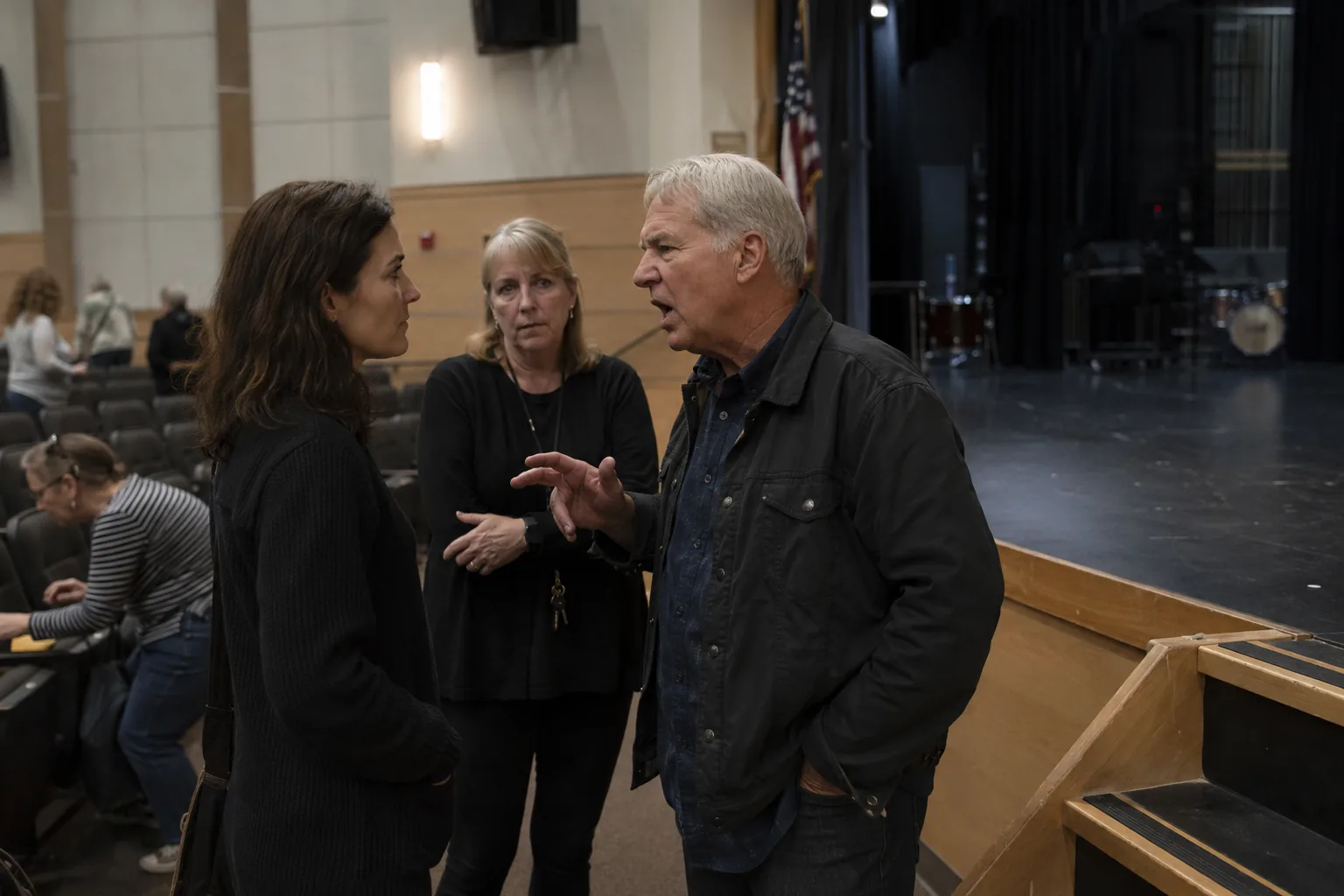
Dale Mercer cut me off beside the stage stairs in the school auditorium and said, loud enough for the people folding programs to hear, that after what he did for me, I owed him. The old mask box sat open on a chair by the wing, and a line of kids in black shirts was dragging folding risers across the floor while Mrs. Alvarez kept taping down a cable like none of it had anything to do with her. Dale pointed at the box, then at me, and turned a past favor into a bill right there in the middle of the room.
He had that same calm voice he used when he wanted a room to accept his version of things. “I covered for you,” he said. “I stepped in when people were making a mess. You don’t get to act like I never showed up.”
I looked at the box before I looked at him. It was one of those dented cardboard storage boxes schools kept forever, the kind with faded masking tape on the lid and a marker label half torn off. The lid had buckled at one corner. A pack of blue disposable masks sat inside it with the elastic bands tangled together. Somebody had set it on the chair where anyone walking past could see it. That was the point. In this auditorium, everything visible counted.
“I said thank you,” I told him.
He gave a short laugh through his nose and leaned one hand on the rail. “Thanks is not what we are talking about. I took care of this. I took care of you.”
Mrs. Alvarez rolled a cart of microphones past us without slowing. She glanced once at our faces, then back to the cart, and kept going. On the far side of the stage, Evan was stacking music stands and watching in the loose, unfixed way people do when they are trying not to get involved. Nobody stopped moving, which made the corner feel smaller.
Dale kept talking. He did not raise his voice, which made it worse. “You know how it went. When everybody was fighting about the event and who was going where, I was the one who made room. I let it slide. I let you slide.”
That was the move. He kept calling his choice generosity, like the shape of the words could change what had happened. He said it once, then again, each time making it sound less like a favor and more like a favor I had somehow failed to repay.
I said, “You moved the chairs because the stage crew needed the aisle clear.”
He held his hand up, palm out, like I was interrupting a teacher. “And that was me helping. That’s the part you keep leaving out.”
A rehearsal pianist hit three notes from the pit, stopped, and tried again. A booster parent in the front row kept sorting envelopes into a manila folder. The room stayed ordinary around us, which was almost insulting. I could hear the soft squeak of the box lid settling on the chair every time someone bumped the wing curtain.
Dale stepped closer, not enough to touch me, just enough to make the space around my shoulders feel borrowed. “I’m not asking for a medal,” he said. “I’m asking you to admit what you owe.”
There it was. Not gratitude. Debt.
I looked back at the box. I remembered where it had been before it ended up on that chair, and who had asked for it to be moved when the auditorium storage room got rearranged. I remembered what I had carried, and who had been standing there when I did it. But Dale was already speaking again, folding the whole thing into his version before I could get a clean sentence in.
“You don’t get to rewrite it,” he said. “Not after I saved you that day.”
Saved me.
I heard the words, and I heard the way he used them. The part that stuck was not the volume. It was the shape of the claim. The favor he kept reciting was the same one I had seen him use to open a door for himself, not for me. If that was true, then why was he standing here like I was the one in his debt?
Dale Mercer cut me off beside the stage stairs in the school auditorium and said, loud enough for the people folding programs to hear, that after what he did for me, I owed him. The old mask box sat open on a chair by the wing, and a line of kids in black shirts was dragging folding risers across the floor while Mrs. Alvarez kept taping down a cable like none of it had anything to do with her. Dale pointed at the box, then at me, and turned a past favor into a bill right there in the middle of the room.
He had that same calm voice he used when he wanted a room to accept his version of things. “I covered for you,” he said. “I stepped in when people were making a mess. You don’t get to act like I never showed up.”
I looked at the box before I looked at him. It was one of those dented cardboard storage boxes schools kept forever, the kind with faded masking tape on the lid and a marker label half torn off. The lid had buckled at one corner. A pack of blue disposable masks sat inside it with the elastic bands tangled together. Somebody had set it on the chair where anyone walking past could see it. That was the point. In this auditorium, everything visible counted.
“I said thank you,” I told him.
He gave a short laugh through his nose and leaned one hand on the rail. “Thanks is not what we are talking about. I took care of this. I took care of you.”
Mrs. Alvarez rolled a cart of microphones past us without slowing. She glanced once at our faces, then back to the cart, and kept going. On the far side of the stage, Evan was stacking music stands and watching in the loose, unfixed way people do when they are trying not to get involved. Nobody stopped moving, which made the corner feel smaller.
Dale kept talking. He did not raise his voice, which made it worse. “You know how it went. When everybody was fighting about the event and who was going where, I was the one who made room. I let it slide. I let you slide.”
That was the move. He kept calling his choice generosity, like the shape of the words could change what had happened. He said it once, then again, each time making it sound less like a favor and more like a favor I had somehow failed to repay.
I said, “You moved the chairs because the stage crew needed the aisle clear.”
He held his hand up, palm out, like I was interrupting a teacher. “And that was me helping. That’s the part you keep leaving out.”
A rehearsal pianist hit three notes from the pit, stopped, and tried again. A booster parent in the front row kept sorting envelopes into a manila folder. The room stayed ordinary around us, which was almost insulting. I could hear the soft squeak of the box lid settling on the chair every time someone bumped the wing curtain.
Dale stepped closer, not enough to touch me, just enough to make the space around my shoulders feel borrowed. “I’m not asking for a medal,” he said. “I’m asking you to admit what you owe.”
There it was. Not gratitude. Debt.
I looked back at the box. I remembered where it had been before it ended up on that chair, and who had asked for it to be moved when the auditorium storage room got rearranged. I remembered what I had carried, and who had been standing there when I did it. But Dale was already speaking again, folding the whole thing into his version before I could get a clean sentence in.
“You don’t get to rewrite it,” he said. “Not after I saved you that day.”
Saved me.
I heard the words, and I heard the way he used them. The part that stuck was not the volume. It was the shape of the claim. The favor he kept reciting was the same one I had seen him use to open a door for himself, not for me. If that was true, then why was he standing here like I was the one in his debt?