Story code: ST-000014
Part 1: The Tote She Would Not Let Go
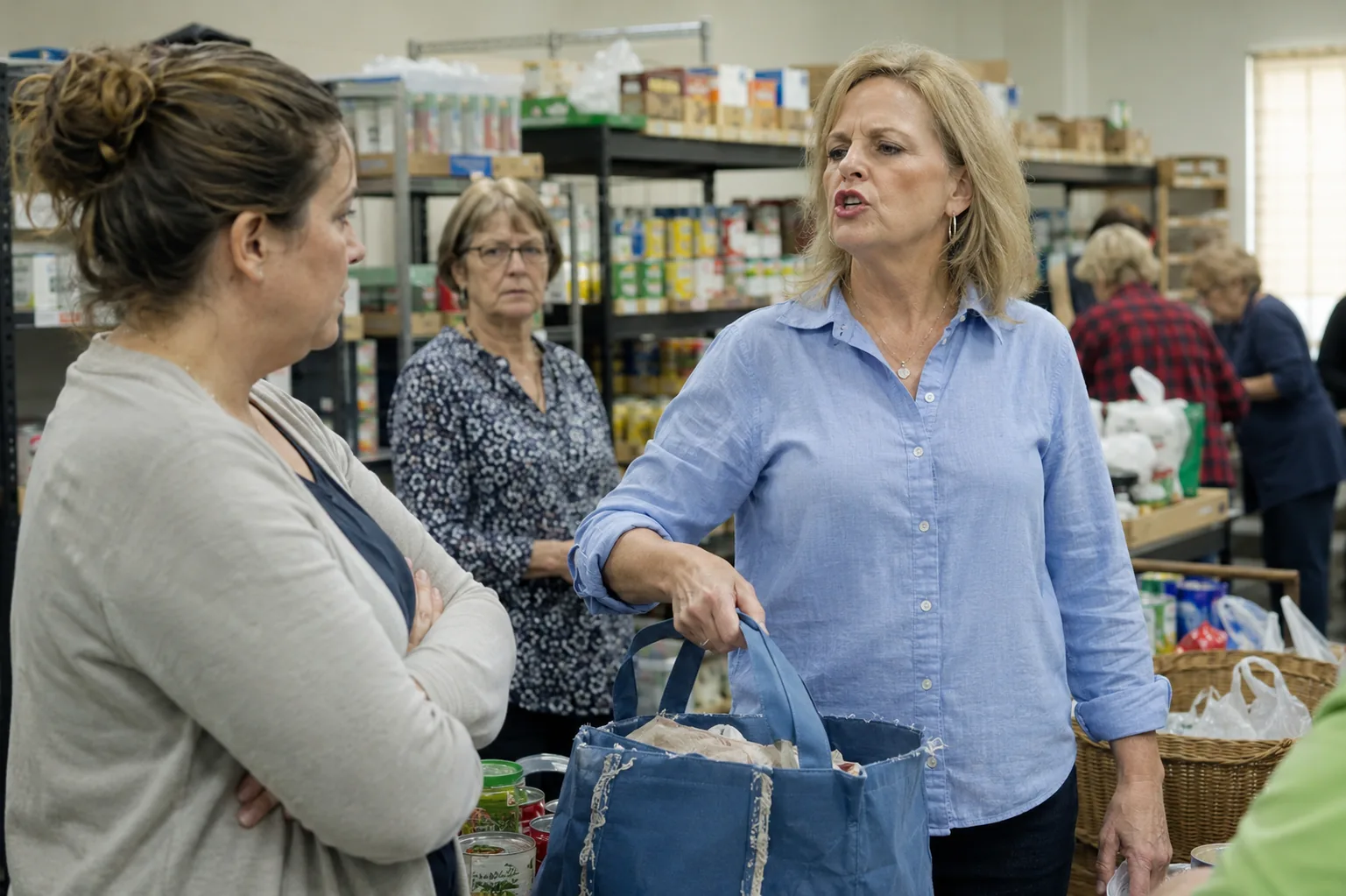
Linda Carver stood at the rear sorting table beside the intake shelves with one hand hooked through the frayed handle of the blue donation tote and told the room, loud enough for volunteers and clients to hear, that she was “the one who always ends up carrying this place.” Then she looked straight at me and said, “Mara, after everything I do here, I need you to stop questioning me and just do what I asked.” The canned goods kept clinking into place, rolls of pantry labels kept bouncing across the table, and somehow everyone acted like my gratitude had just become a debt I was supposed to pay on command.
I volunteer at Harvest Table Pantry twice a week, usually on the sorting shift before the main distribution line gets busy. It is the kind of place that likes to describe itself as family. People say things like we all pitch in, we all care, we all serve. What that usually means in practice is that Linda, our committee chair, gets to narrate every hard task as proof that she is holding the whole pantry together.
She had a way of doing it so smoothly that if you spoke up at the wrong moment, you looked petty. She would be assigning boxed dry goods, moving a clipboard with the volunteer task list from one station to the next, and in the same breath say she had given up her entire morning, skipped her own errands, and was still the only one making sure clients had food. Then she would tack on an instruction that was not really optional.
“Take those paper products to the front, but leave the tote,” she said that morning.
I had already been working intake for an hour. The tote was full of mixed donations that needed to be sorted like everything else. “I can take that too,” I said. “I’m headed that way anyway.”
Linda tightened her grip on the handle and gave me a thin smile. “No, this one stays with me. There are reasons things have to be handled a certain way.”
That could have been normal, except she had just finished telling Renee Alvarez and two church ladies near the canned vegetable shelves that she was exhausted from having to lug the tote around by herself every shift.
Renee looked up from stacking soup cans. Her hands paused for a second, then she went back to work.
I tried to keep my tone level. “If it helps, I’m offering to carry it.”
Linda let out a little laugh through her nose, not a friendly one. “It would help if people appreciated what goes into running this place instead of making more work for me.”
That was the move she used all the time. She would present herself as overburdened, refuse the practical help right in front of her, and then treat the refusal like proof that everyone else was selfish.
I felt the heat rise in my face anyway, because the pressure point was obvious and she knew it. Nobody wants to look ungrateful in a volunteer pantry, especially not in front of clients waiting near the door with their carts and reusable bags.
So I picked up the paper products and headed toward the front. I heard her behind me telling Deacon Paul Whitaker that “some people don’t understand the sacrifice behind basic order.” His answer was soft and noncommittal, the same voice he always used when he wanted things to stay smooth.
A few minutes later I came back for the boxed dry goods. Linda had set the blue tote on the sorting table like it was a display piece. One handle was frayed almost white where the webbing had worn thin. She touched it while talking, almost like she needed everyone to notice it.
“This tote alone has to be tracked properly,” she said. “I can’t have random volunteers deciding what goes where.”
Random volunteers. I had been on that same shift schedule for almost a year.
I said, “If there’s a system, I can follow it.”
She did not answer the question. She just raised her voice enough for the room. “Mara, when someone gives this much to a place, the least others can do is not make them defend every decision.”
That got me a few quick glances from the front tables. No one said anything. The pantry kept moving. Labels peeled. Bags rustled. A client thanked Renee for helping him reach a box on the lower shelf. The normalcy of it was the worst part. It made her words sound built into the room.
I finished sorting what was actually on my list and tried to stay on task. Linda kept circling back to me with little comments that sounded polite if you only heard half of them.
“I know you mean well.”
“Not everyone sees the bigger picture.”
“Some of us have been doing this long enough to know what matters.”
Every sentence carried the same message: obey first, ask later, and be grateful she lets you help.
Near the end of the shift, she lifted the tote again and made a point of wincing as she carried it two steps from the sorting table to the side table where Paul was checking receipts. I was close enough to see there was nothing dramatic in that move. She set it down, straightened, and said, “This is what people never notice.”
I said, quietly, “Linda, if it’s that much for one person, I can take over tote handling on my shifts.”
The room did not stop, but something in it changed. Renee looked over. Paul lifted his head from the intake list. Linda’s hand stayed on the tote handle.
She had spent the whole morning telling us how much she was sacrificing. I had just offered to remove the burden in the simplest possible way.
And she did not let go.
Linda Carver stood at the rear sorting table beside the intake shelves with one hand hooked through the frayed handle of the blue donation tote and told the room, loud enough for volunteers and clients to hear, that she was “the one who always ends up carrying this place.” Then she looked straight at me and said, “Mara, after everything I do here, I need you to stop questioning me and just do what I asked.” The canned goods kept clinking into place, rolls of pantry labels kept bouncing across the table, and somehow everyone acted like my gratitude had just become a debt I was supposed to pay on command.
I volunteer at Harvest Table Pantry twice a week, usually on the sorting shift before the main distribution line gets busy. It is the kind of place that likes to describe itself as family. People say things like we all pitch in, we all care, we all serve. What that usually means in practice is that Linda, our committee chair, gets to narrate every hard task as proof that she is holding the whole pantry together.
She had a way of doing it so smoothly that if you spoke up at the wrong moment, you looked petty. She would be assigning boxed dry goods, moving a clipboard with the volunteer task list from one station to the next, and in the same breath say she had given up her entire morning, skipped her own errands, and was still the only one making sure clients had food. Then she would tack on an instruction that was not really optional.
“Take those paper products to the front, but leave the tote,” she said that morning.
I had already been working intake for an hour. The tote was full of mixed donations that needed to be sorted like everything else. “I can take that too,” I said. “I’m headed that way anyway.”
Linda tightened her grip on the handle and gave me a thin smile. “No, this one stays with me. There are reasons things have to be handled a certain way.”
That could have been normal, except she had just finished telling Renee Alvarez and two church ladies near the canned vegetable shelves that she was exhausted from having to lug the tote around by herself every shift.
Renee looked up from stacking soup cans. Her hands paused for a second, then she went back to work.
I tried to keep my tone level. “If it helps, I’m offering to carry it.”
Linda let out a little laugh through her nose, not a friendly one. “It would help if people appreciated what goes into running this place instead of making more work for me.”
That was the move she used all the time. She would present herself as overburdened, refuse the practical help right in front of her, and then treat the refusal like proof that everyone else was selfish.
I felt the heat rise in my face anyway, because the pressure point was obvious and she knew it. Nobody wants to look ungrateful in a volunteer pantry, especially not in front of clients waiting near the door with their carts and reusable bags.
So I picked up the paper products and headed toward the front. I heard her behind me telling Deacon Paul Whitaker that “some people don’t understand the sacrifice behind basic order.” His answer was soft and noncommittal, the same voice he always used when he wanted things to stay smooth.
A few minutes later I came back for the boxed dry goods. Linda had set the blue tote on the sorting table like it was a display piece. One handle was frayed almost white where the webbing had worn thin. She touched it while talking, almost like she needed everyone to notice it.
“This tote alone has to be tracked properly,” she said. “I can’t have random volunteers deciding what goes where.”
Random volunteers. I had been on that same shift schedule for almost a year.
I said, “If there’s a system, I can follow it.”
She did not answer the question. She just raised her voice enough for the room. “Mara, when someone gives this much to a place, the least others can do is not make them defend every decision.”
That got me a few quick glances from the front tables. No one said anything. The pantry kept moving. Labels peeled. Bags rustled. A client thanked Renee for helping him reach a box on the lower shelf. The normalcy of it was the worst part. It made her words sound built into the room.
I finished sorting what was actually on my list and tried to stay on task. Linda kept circling back to me with little comments that sounded polite if you only heard half of them.
“I know you mean well.”
“Not everyone sees the bigger picture.”
“Some of us have been doing this long enough to know what matters.”
Every sentence carried the same message: obey first, ask later, and be grateful she lets you help.
Near the end of the shift, she lifted the tote again and made a point of wincing as she carried it two steps from the sorting table to the side table where Paul was checking receipts. I was close enough to see there was nothing dramatic in that move. She set it down, straightened, and said, “This is what people never notice.”
I said, quietly, “Linda, if it’s that much for one person, I can take over tote handling on my shifts.”
The room did not stop, but something in it changed. Renee looked over. Paul lifted his head from the intake list. Linda’s hand stayed on the tote handle.
She had spent the whole morning telling us how much she was sacrificing. I had just offered to remove the burden in the simplest possible way.
And she did not let go.