Story code: ST-000207
Part 4: They Restricted What He Could Claim
The room went still in a practical way, not a dramatic one. Nina’s pen was already in her hand. The doctor had the chart open on the screen and my binder beside it. Leo was kicking one heel lightly against the chair leg, watching the sink faucet instead of any of us.
Drew straightened away from the wall. “Corrected how?”
The doctor answered him in the same tone she had used for the lab range and the dosing notes. “Home protocol updates, symptom-call instructions, and treatment changes need to go to the documented caregiver who completed training and is carrying out the plan. Additional family access can be restored after current teach-back is completed and entered.”
“So you’re cutting me out,” he said.
“I’m limiting clinical instruction to the trained caregiver on file,” she said. “That is not the same thing.”
Nina was typing as she spoke. I could hear the soft clicks under the vent hum.
Drew looked at me then, like I was supposed to stop it. “Say something.”
I looked at the binder, at the tabs bent from use, at the page corner I had taped after it tore during one of Leo’s late-night fever weeks. “Keep the instructions with the person doing them,” I said.
That was all.
The doctor nodded once and turned back to Leo. She explained the next steps in short, simple sentences: what changes to watch for, when to call, what to log over the next two weeks, what follow-up timing they wanted after reviewing the genetics panel in context with today’s visit. I wrote while she talked. Nina printed the updated summary and clipped it to the front of the binder.
Then she placed a second page on top for me to review. At the bottom, under contact instructions, only my name appeared for treatment calls and protocol updates. Beneath that was a chart note line in smaller text: Family concern raised in waiting area; care log reviewed; communication limited to trained caregiver pending additional caregiver teach-back.
I read it twice.
Drew leaned in enough to see the page. “You’re seriously putting that in writing.”
Nina met his eyes for maybe one second, then looked back at the form. “It’s part of today’s visit documentation.”
“Based on her binder.”
“Based on the chart, the submitted log, and training status,” the doctor said.
He let out a breath through his nose and looked toward the door, then back at the monitor. “This is why families don’t trust systems like this.”
The doctor did not argue with that either. She just held out a separate instruction sheet. “If you want direct clinical updates restored, contact the nurse line and schedule a teach-back. Until then, do not independently adjust home administration.”
That sentence sat in the room longer than anything else had.
He took the paper, but only after a pause. His face changed in small ways I recognized from years of knowing him: jaw set hard, mouth pressed flat, shoulders lifted higher than they had been in the waiting room. There was no speech left that could turn that printed note back into opinion.
The rest happened with ordinary clinic efficiency. The doctor checked Leo’s abdomen, listened to his lungs, and reminded me where to upload the next week of symptom notes. Nina confirmed the pharmacy on file. I packed the water bottle, crackers, chew necklace, and folded summary into the bag. When Leo asked if we were done, I said yes, almost.
At the door, Nina handed me the binder and the lab report together. “Keep bringing the daily log,” she said. “It helps.”
Not praise. Not comfort. Just process.
Drew stepped into the hallway before us and stood off to one side while I fixed Leo’s sleeve and got his backpack settled. He did not offer to carry anything. He did not ask what time the next follow-up would be. He held the teach-back paper in one hand, folded once across the middle.
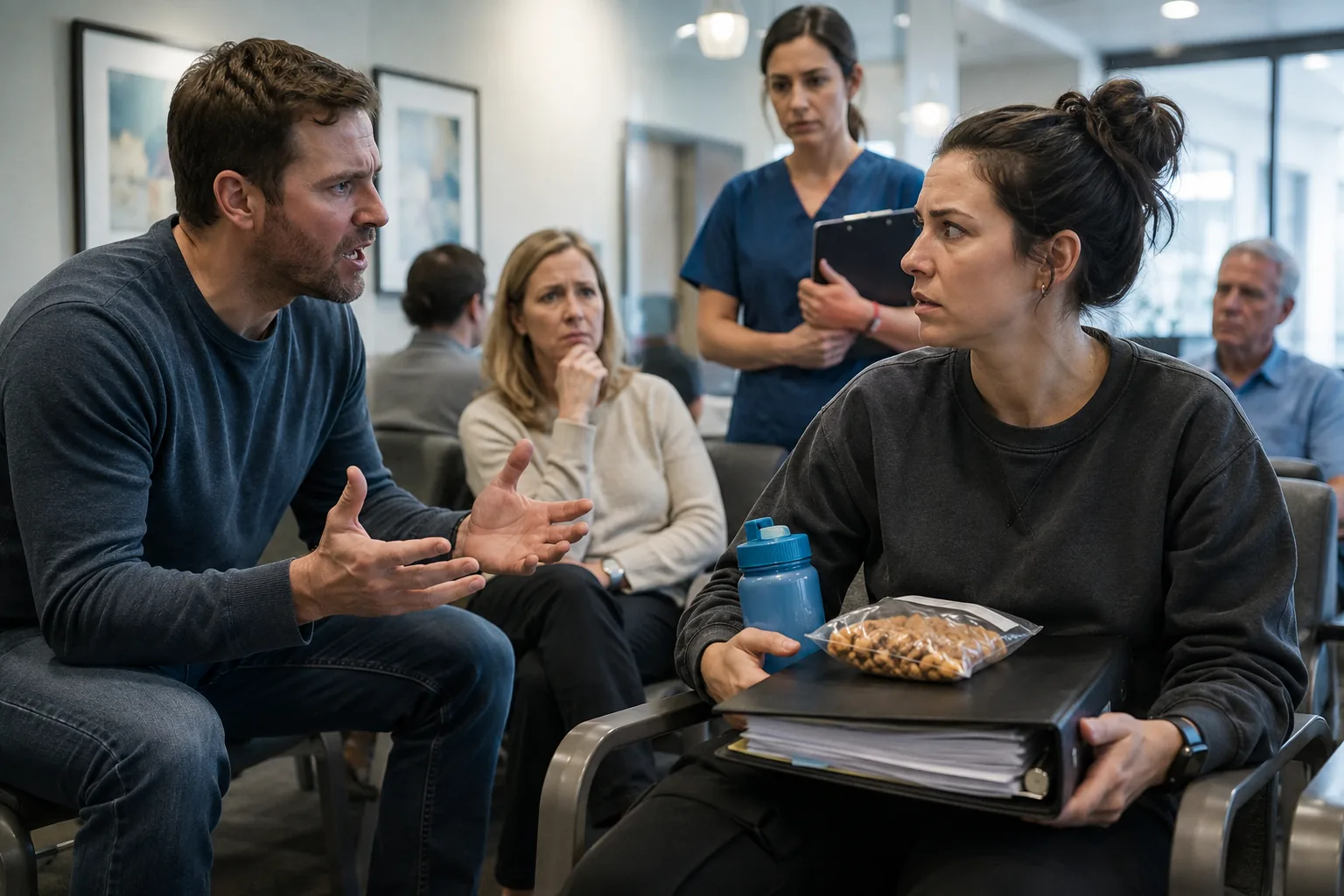
We walked past the waiting area where he had called me selfish. The same TV was still running with the subtitles on. A different family sat by the fish tank now. Nina was back behind the desk, scanning forms into the system. I could hear the check-in printer start up again.
Outside the sliding doors, the air felt warmer than it had when we came in. Leo took my hand and asked if we could get fries on the way home. “Yes,” I said.
Behind us, the clinic doors opened and shut once more. I did not turn around.
At a red light, I took the visit summary off the passenger seat and looked at the note again. My name for the calls. His access limited until training. The waiting room complaint reduced to one line in a chart that would outlast whatever he told people later.
It was not a win that made me feel tall. It was smaller than that and heavier. I still had the binder. I still had the next dose time written on a sticky note. I still had Leo beside me asking for extra ketchup.
But when my phone lit up with Drew’s name, I turned it face down and kept driving.