Story code: ST-000228
Part 1: The Sync Band in the Demo Room
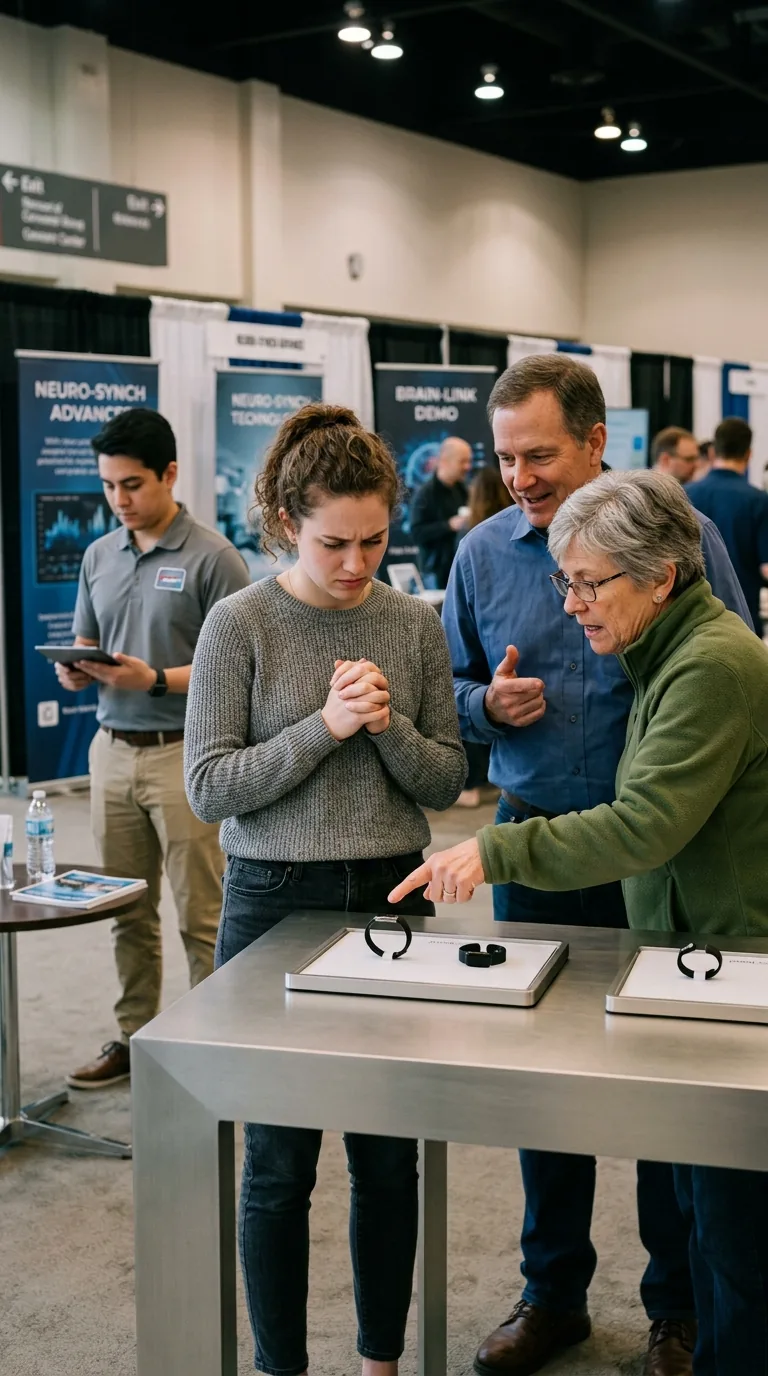
In the neural link implant demo room, my family kept pointing at the sync band like it was a small favor and not my rent money, and the Demo Room Staff just kept walking past the display table as if this was ordinary. The Neural Link Advocate stood beside the glass case, palm on the counter, saying the purchase had to happen today, right here, in the middle of the demo room, because family should help family. I was looking at the sync band, the price tag, and the same smiling relationship pressure I had already heard three times in the last minute.
Mara, it’s not that much,” my family member said. “We’re talking about a basic setup fee. You can cover it and we can sort the rest later.”
I kept my hands on my bag strap so I wouldn’t reach for my wallet too fast. The room was all clean white panels, a round demo chair, and the band on a felt tray under a little light. A staff member in a company polo tapped on a tablet at the next station and never looked over. On the counter, the total glowed on a screen beside the band: sync band, activation, monthly access, and a charge I did not expect to see under “starter kit.”
“I’m not buying anything until I know what I’m paying for,” I said.
The Neural Link Advocate smiled like I had said something rude in front of a child. “It’s for the family need. Don’t make this harder than it has to be.”
“What family need?” I asked. “You said it was for the implant demo and a short-term payment plan.”
“It is,” my family member said, too fast. “That’s what I said. This is just how it works.”
The advocate slid the paper brochure toward me with two fingers. The top line showed the band in a polished photo, and below it was a chart with a monthly amount that did not match the one-time expense they had talked about before. I stared at the numbers. There was a setup fee, an onboarding fee, and a “shared account transfer” line that looked new to me. I read it twice because the total kept changing in my head from a favor into a bill.
“You didn’t say shared account transfer,” I said.
“No need to get caught up in wording,” the advocate replied. “This is family duty. We’re trying to get through something practical.”
I looked at the band again. It was small, black, and glossy, the kind of object that looks harmless until somebody starts using it as leverage. The demo chair sat empty behind it. A soft chime sounded from another station, and a staff member asked someone else if they wanted water. Nobody stopped the conversation at my table.
My family member folded their arms. “Are you really going to sit here and make a scene over this?”
“I’m making a boundary,” I said. “If I pay anything, I need the real purpose and the real total.”
The advocate let out a short breath through the nose and tapped the brochure. “The real purpose is helping your family. That should be enough.”
It wasn’t enough. The price on the screen was already more than they had first said, and the line items below it looked like they had been added after the conversation started. I asked for the receipt history. The advocate’s hand moved over the tablet before I could read the whole page, and the screen turned back to the product page with the band centered like a prop.
“You don’t trust us?” my family member said.
“I trust numbers,” I said. “I don’t trust a request that keeps changing.”
The advocate’s smile thinned. “That is cruel. We came here because we thought you’d understand the responsibility.”
That word landed exactly the way they meant it to. The staff member at the next station glanced over once, then went back to the headset on the desk. My family member stepped closer, and the band between us looked smaller than before.
“If you walk away from this,” they said, “you’re choosing yourself over the family.”
I looked down at the brochure again. There was a transaction number printed in the corner, and one of the line items was time-stamped before the demo appointment even started. I had the paper in my hand, the band in front of me, and a price that already proved somebody had been spending before they asked me to pay. But the number in the corner made no sense next to the story they were telling, and I still did not know why.
In the neural link implant demo room, my family kept pointing at the sync band like it was a small favor and not my rent money, and the Demo Room Staff just kept walking past the display table as if this was ordinary. The Neural Link Advocate stood beside the glass case, palm on the counter, saying the purchase had to happen today, right here, in the middle of the demo room, because family should help family. I was looking at the sync band, the price tag, and the same smiling relationship pressure I had already heard three times in the last minute.
Mara, it’s not that much,” my family member said. “We’re talking about a basic setup fee. You can cover it and we can sort the rest later.”
I kept my hands on my bag strap so I wouldn’t reach for my wallet too fast. The room was all clean white panels, a round demo chair, and the band on a felt tray under a little light. A staff member in a company polo tapped on a tablet at the next station and never looked over. On the counter, the total glowed on a screen beside the band: sync band, activation, monthly access, and a charge I did not expect to see under “starter kit.”
“I’m not buying anything until I know what I’m paying for,” I said.
The Neural Link Advocate smiled like I had said something rude in front of a child. “It’s for the family need. Don’t make this harder than it has to be.”
“What family need?” I asked. “You said it was for the implant demo and a short-term payment plan.”
“It is,” my family member said, too fast. “That’s what I said. This is just how it works.”
The advocate slid the paper brochure toward me with two fingers. The top line showed the band in a polished photo, and below it was a chart with a monthly amount that did not match the one-time expense they had talked about before. I stared at the numbers. There was a setup fee, an onboarding fee, and a “shared account transfer” line that looked new to me. I read it twice because the total kept changing in my head from a favor into a bill.
“You didn’t say shared account transfer,” I said.
“No need to get caught up in wording,” the advocate replied. “This is family duty. We’re trying to get through something practical.”
I looked at the band again. It was small, black, and glossy, the kind of object that looks harmless until somebody starts using it as leverage. The demo chair sat empty behind it. A soft chime sounded from another station, and a staff member asked someone else if they wanted water. Nobody stopped the conversation at my table.
My family member folded their arms. “Are you really going to sit here and make a scene over this?”
“I’m making a boundary,” I said. “If I pay anything, I need the real purpose and the real total.”
The advocate let out a short breath through the nose and tapped the brochure. “The real purpose is helping your family. That should be enough.”
It wasn’t enough. The price on the screen was already more than they had first said, and the line items below it looked like they had been added after the conversation started. I asked for the receipt history. The advocate’s hand moved over the tablet before I could read the whole page, and the screen turned back to the product page with the band centered like a prop.
“You don’t trust us?” my family member said.
“I trust numbers,” I said. “I don’t trust a request that keeps changing.”
The advocate’s smile thinned. “That is cruel. We came here because we thought you’d understand the responsibility.”
That word landed exactly the way they meant it to. The staff member at the next station glanced over once, then went back to the headset on the desk. My family member stepped closer, and the band between us looked smaller than before.
“If you walk away from this,” they said, “you’re choosing yourself over the family.”
I looked down at the brochure again. There was a transaction number printed in the corner, and one of the line items was time-stamped before the demo appointment even started. I had the paper in my hand, the band in front of me, and a price that already proved somebody had been spending before they asked me to pay. But the number in the corner made no sense next to the story they were telling, and I still did not know why.