Story code: ST-000238
Part 1: The Term He Used to Shut Her Down
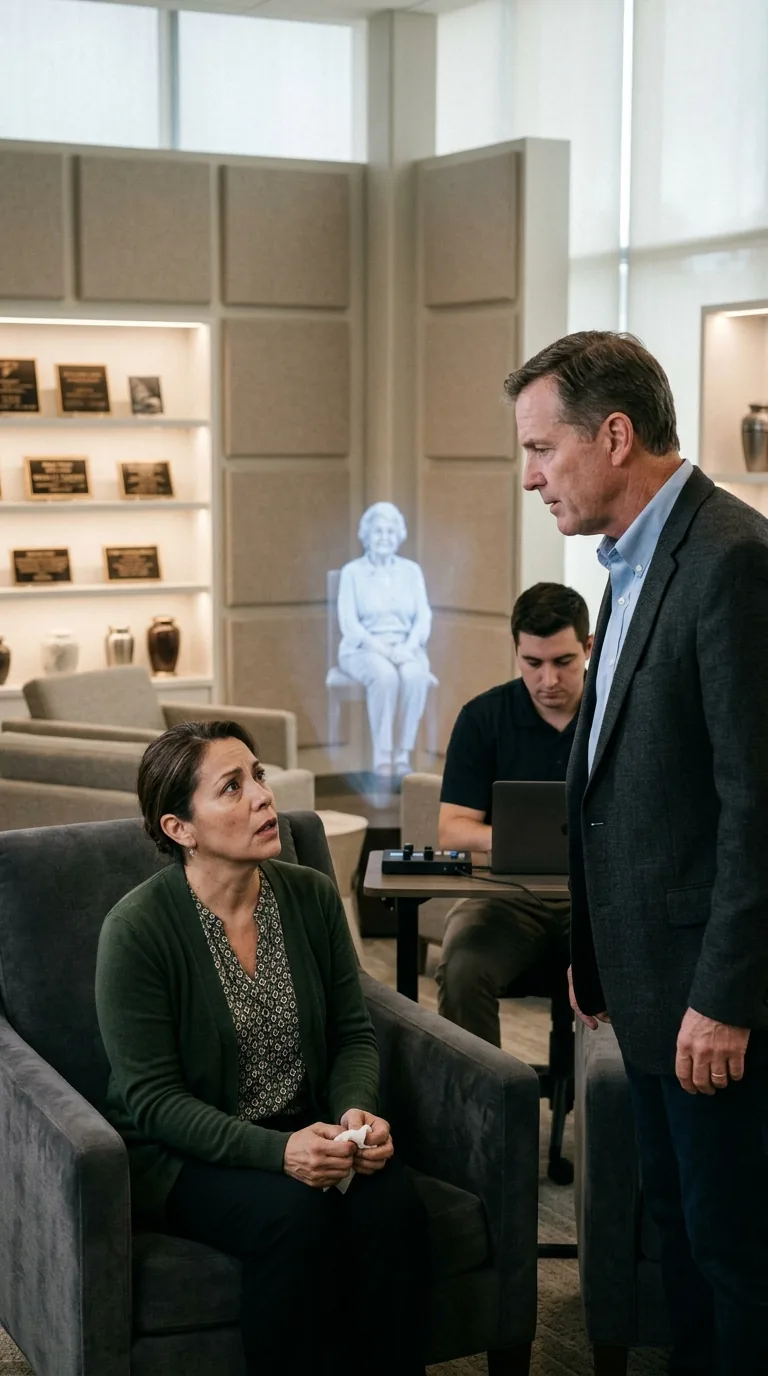
Grant Calder used the wrong word loud enough to make Nina Alvarez stop mid-sentence, and that was the whole point. He stood between the memorial wall and the voice model drive on the counter in Room B, one hand flat on the black housing, the other making that sharp little chopping motion he always used when he wanted the room to follow him. The soft display lights were on, the room audio was muted, and the only thing moving besides him was the tiny status line on the drive screen. He looked at Nina and said, “You’re hearing the carrier bleed. That’s not a fault. That’s the calibration lattice settling.”
Nina had one hand on the edge of the display stand. She asked, very plain, whether the voice was supposed to sound like her brother or like the demo voice in the preview. Grant did not answer the question. He smiled without showing teeth, leaned in toward her, and started talking faster. “If you don’t know the difference between a normalized imprint and a live-paired mesh, you’re going to misread every response this unit gives you.” He said “live-paired mesh” like it settled the whole room. He said it like the phrase itself was proof.
I was at the control rail with my hand on the panel, watching the drive and watching his mouth move. The room was set up for a routine family review, not a performance. The memorial walls held the sample portraits, the cable run was clipped clean along the baseboard, and the voice model drive sat in its cradle with the verification light still amber. On the screen, the current profile was visible in simple labels and plain icons. Nothing in the setup used the word he just threw at her.
Nina tried again. She kept her voice level and pointed at the drive. “So can you show me where that setting is?”
Grant gave a short laugh through his nose and turned his head just enough for the rest of us to hear him. “That’s not a setting. That’s not how this system works.” He tapped the side of the drive twice, like he was patting a student on the shoulder. “People hear a term and think they can argue with the architecture. You can’t.”
The way he said it made the line of silence around the room go tight. Two family members on the bench stopped shifting in their seats. The sales rep by the doorway lowered her tablet a few inches. Nobody interrupted him. He had the kind of voice that kept going because the room let it, one hard sentence after another, all polished and confident and hard to grab.
I kept my eyes on the panel because that was the part I could trust. The display showed the current calibration stage, the stored reference, the speaker match, and the live test button waiting in the lower corner. It showed no lattice. No mesh. No normalized imprint tab. Just the same plain readouts we use on every room check. I saw Nina glance at the screen too. She looked from the labels to Grant and back again.
“I’m asking because I don’t want the wrong voice in there,” she said.
Grant straightened up like he had been insulted by the question itself. “Then let the system do what it was built to do.” He slid his finger over the touch strip without actually starting anything. “This drive doesn’t need a second-guess from somebody who doesn’t understand the signal path.”
That was the moment I stepped closer to the console. Not enough to interrupt. Just enough to make sure he saw me watching the control line. I put my finger near the verification tab, and the amber light stayed steady. Grant saw it. His eyes dropped there for half a second and came back up fast.
He talked right over the pause. “If you’re worried about continuity, the lattice will hold. That’s the point of the paired recovery window.”
Nina frowned at that. So did the sales rep. I did too, because the room had no paired recovery window on the displayed settings. It had a verification cycle, a speaker match, and a stored voice reference. That was all. Grant kept using the new phrase as if repetition could make it appear on the screen.
I looked from the drive to the display and back to him. The term he kept pushing was not printed anywhere I could see, not in the room menu, not in the setup notes, not in the visible status line. He sounded certain anyway. Which left me standing there with one clear problem and one open question: if the term was real, why did the drive show nothing by that name, and why did Grant keep talking like the screen was wrong instead of him?
Grant Calder used the wrong word loud enough to make Nina Alvarez stop mid-sentence, and that was the whole point. He stood between the memorial wall and the voice model drive on the counter in Room B, one hand flat on the black housing, the other making that sharp little chopping motion he always used when he wanted the room to follow him. The soft display lights were on, the room audio was muted, and the only thing moving besides him was the tiny status line on the drive screen. He looked at Nina and said, “You’re hearing the carrier bleed. That’s not a fault. That’s the calibration lattice settling.”
Nina had one hand on the edge of the display stand. She asked, very plain, whether the voice was supposed to sound like her brother or like the demo voice in the preview. Grant did not answer the question. He smiled without showing teeth, leaned in toward her, and started talking faster. “If you don’t know the difference between a normalized imprint and a live-paired mesh, you’re going to misread every response this unit gives you.” He said “live-paired mesh” like it settled the whole room. He said it like the phrase itself was proof.
I was at the control rail with my hand on the panel, watching the drive and watching his mouth move. The room was set up for a routine family review, not a performance. The memorial walls held the sample portraits, the cable run was clipped clean along the baseboard, and the voice model drive sat in its cradle with the verification light still amber. On the screen, the current profile was visible in simple labels and plain icons. Nothing in the setup used the word he just threw at her.
Nina tried again. She kept her voice level and pointed at the drive. “So can you show me where that setting is?”
Grant gave a short laugh through his nose and turned his head just enough for the rest of us to hear him. “That’s not a setting. That’s not how this system works.” He tapped the side of the drive twice, like he was patting a student on the shoulder. “People hear a term and think they can argue with the architecture. You can’t.”
The way he said it made the line of silence around the room go tight. Two family members on the bench stopped shifting in their seats. The sales rep by the doorway lowered her tablet a few inches. Nobody interrupted him. He had the kind of voice that kept going because the room let it, one hard sentence after another, all polished and confident and hard to grab.
I kept my eyes on the panel because that was the part I could trust. The display showed the current calibration stage, the stored reference, the speaker match, and the live test button waiting in the lower corner. It showed no lattice. No mesh. No normalized imprint tab. Just the same plain readouts we use on every room check. I saw Nina glance at the screen too. She looked from the labels to Grant and back again.
“I’m asking because I don’t want the wrong voice in there,” she said.
Grant straightened up like he had been insulted by the question itself. “Then let the system do what it was built to do.” He slid his finger over the touch strip without actually starting anything. “This drive doesn’t need a second-guess from somebody who doesn’t understand the signal path.”
That was the moment I stepped closer to the console. Not enough to interrupt. Just enough to make sure he saw me watching the control line. I put my finger near the verification tab, and the amber light stayed steady. Grant saw it. His eyes dropped there for half a second and came back up fast.
He talked right over the pause. “If you’re worried about continuity, the lattice will hold. That’s the point of the paired recovery window.”
Nina frowned at that. So did the sales rep. I did too, because the room had no paired recovery window on the displayed settings. It had a verification cycle, a speaker match, and a stored voice reference. That was all. Grant kept using the new phrase as if repetition could make it appear on the screen.
I looked from the drive to the display and back to him. The term he kept pushing was not printed anywhere I could see, not in the room menu, not in the setup notes, not in the visible status line. He sounded certain anyway. Which left me standing there with one clear problem and one open question: if the term was real, why did the drive show nothing by that name, and why did Grant keep talking like the screen was wrong instead of him?