Story code: ST-000237
Part 1: He Announced a Rule That Only Existed When I Reached for the Tray
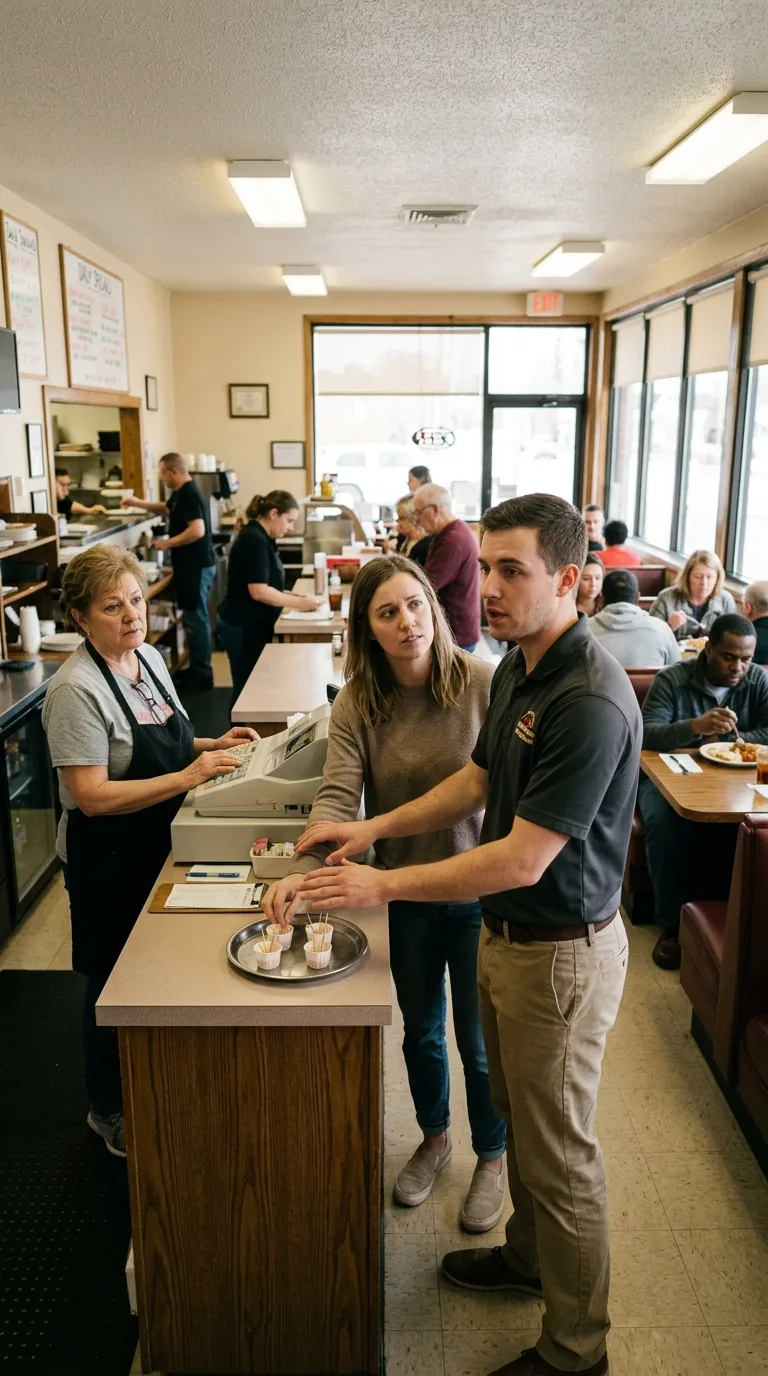
My cousin blocked my hand from the sample tray at our family restaurant and said, right there at the front counter, that I was “not cleared under the new sampling policy.” He said it while tickets were spitting from the register, a customer was waiting on change, and the little paper boats and toothpick cups were sitting in plain view like they had every other day. The shock was not just that he stopped me. It was that nobody around me could point to where this sudden rule had come from.
This happened at Flores Family Grill during lunch, when the counter always gets noisy in that ordinary way that makes people try to sound more official than they are. My aunt Rosa was at the register lane ringing orders. Tasha was bagging takeout and glancing between the sanitizer bottle and the drink station. The sample tray station near the counter had its usual setup: bite-size pieces in paper boats, toothpick cups beside it, a counter sign holder advertising the special, and enough people passing through that nobody could pretend it was some private back-room process.
I reached for one sample the same way I always had, and Evan stepped in from the side like he had been waiting for the moment. He did not lower his voice. He put one hand near the tray, not touching me, and said, “Hold on. New policy. Family doesn’t self-serve samples anymore unless they’re logged through counter handling.”
I looked at him and asked, “Logged where?”
He gave me a flat little smile and said, “We’re tightening food-touch points. It’s standard now.”
That word now was doing a lot of work.
Tasha froze with a stapler in one hand. Rosa kept ringing for a second, then looked up and said, “What policy?”
Evan turned toward her without moving away from the tray. “The sampling control we discussed. We need one point of distribution.”
Rosa did not answer yes. She did not answer no either. She was in the middle of service, and that pause mattered. It gave his sentence room to sit there and sound real.
I said, “Who discussed it?”
He kept his eyes on the tray and said, “It’s already in effect, Maya. I’m not doing this at the counter.”
That was the first move that made the whole thing feel crooked. He was the one who had made it public. He was also trying to act like I was the one dragging it out.
A customer near the salsa cooler glanced over. Tasha set down the stapler and said, carefully, “He told me earlier only staff could hand out samples now.”
I asked her, “Did he tell you where that came from?”
She looked at Evan before she answered. “He just said that’s what we’re doing.”
There it was. No sign in the holder. No note by the register. No change in the tray setup. Just Evan using the kind of polished language he likes to use when he wants everybody else to fill in the missing structure for him.
I asked the simplest version again. “If family can’t self-serve, who can?”
He said, “Customers get samples through staff interaction.”
I pointed to a man at the edge of the counter who had already picked up a toothpick and was chewing on a sample while waiting for his order. Evan saw him too. He shifted fast and said, “We’re transitioning.”
That made Rosa stop ringing entirely. She had one hand on the register tape and one on the drawer. “Transitioning from what?” she said.
Evan answered her like he was leading a meeting, not interrupting lunch rush in a restaurant he did not run. “From informal access points to managed service.”
I said, “So if it’s a food safety thing, why did it start when I reached for one?”
He said, “It didn’t start with you.”
“Then show me one place it’s posted.”
He tapped the counter sign holder with one finger, but the holder still had the special on it. Smoked chicken tacos, Tuesday combo. No policy. No instruction. Nothing about family, self-serve, or logging.
Nico came through the service line carrying two plates and caught the end of it. “What’s being logged?” he asked.
Evan answered too quickly. “Samples. All of them.”
Nico looked at the tray, then at the line, then back at Evan. “All of them? Since when?”
Evan said, “Since we’re cleaning this process up.”
That phrase did not answer the question either.
I did not need to guess what was wrong yet. I only needed to keep the facts in order. He announced a rule with authority. He used it to stop me in public. Tasha repeated it because he had said it loudly enough and early enough that nobody wanted to challenge him mid-shift. And when anyone asked where the rule actually lived, he kept sliding from family restriction to staff handling to food-touch points to process cleanup.
Then Nico asked the question that locked the whole thing open: if every sample now had to be controlled, did that include the cooks tasting sauces off the line before plates went out, or was this brand-new rule somehow only real at the sample tray when I was the one standing there?
My cousin blocked my hand from the sample tray at our family restaurant and said, right there at the front counter, that I was “not cleared under the new sampling policy.” He said it while tickets were spitting from the register, a customer was waiting on change, and the little paper boats and toothpick cups were sitting in plain view like they had every other day. The shock was not just that he stopped me. It was that nobody around me could point to where this sudden rule had come from.
This happened at Flores Family Grill during lunch, when the counter always gets noisy in that ordinary way that makes people try to sound more official than they are. My aunt Rosa was at the register lane ringing orders. Tasha was bagging takeout and glancing between the sanitizer bottle and the drink station. The sample tray station near the counter had its usual setup: bite-size pieces in paper boats, toothpick cups beside it, a counter sign holder advertising the special, and enough people passing through that nobody could pretend it was some private back-room process.
I reached for one sample the same way I always had, and Evan stepped in from the side like he had been waiting for the moment. He did not lower his voice. He put one hand near the tray, not touching me, and said, “Hold on. New policy. Family doesn’t self-serve samples anymore unless they’re logged through counter handling.”
I looked at him and asked, “Logged where?”
He gave me a flat little smile and said, “We’re tightening food-touch points. It’s standard now.”
That word now was doing a lot of work.
Tasha froze with a stapler in one hand. Rosa kept ringing for a second, then looked up and said, “What policy?”
Evan turned toward her without moving away from the tray. “The sampling control we discussed. We need one point of distribution.”
Rosa did not answer yes. She did not answer no either. She was in the middle of service, and that pause mattered. It gave his sentence room to sit there and sound real.
I said, “Who discussed it?”
He kept his eyes on the tray and said, “It’s already in effect, Maya. I’m not doing this at the counter.”
That was the first move that made the whole thing feel crooked. He was the one who had made it public. He was also trying to act like I was the one dragging it out.
A customer near the salsa cooler glanced over. Tasha set down the stapler and said, carefully, “He told me earlier only staff could hand out samples now.”
I asked her, “Did he tell you where that came from?”
She looked at Evan before she answered. “He just said that’s what we’re doing.”
There it was. No sign in the holder. No note by the register. No change in the tray setup. Just Evan using the kind of polished language he likes to use when he wants everybody else to fill in the missing structure for him.
I asked the simplest version again. “If family can’t self-serve, who can?”
He said, “Customers get samples through staff interaction.”
I pointed to a man at the edge of the counter who had already picked up a toothpick and was chewing on a sample while waiting for his order. Evan saw him too. He shifted fast and said, “We’re transitioning.”
That made Rosa stop ringing entirely. She had one hand on the register tape and one on the drawer. “Transitioning from what?” she said.
Evan answered her like he was leading a meeting, not interrupting lunch rush in a restaurant he did not run. “From informal access points to managed service.”
I said, “So if it’s a food safety thing, why did it start when I reached for one?”
He said, “It didn’t start with you.”
“Then show me one place it’s posted.”
He tapped the counter sign holder with one finger, but the holder still had the special on it. Smoked chicken tacos, Tuesday combo. No policy. No instruction. Nothing about family, self-serve, or logging.
Nico came through the service line carrying two plates and caught the end of it. “What’s being logged?” he asked.
Evan answered too quickly. “Samples. All of them.”
Nico looked at the tray, then at the line, then back at Evan. “All of them? Since when?”
Evan said, “Since we’re cleaning this process up.”
That phrase did not answer the question either.
I did not need to guess what was wrong yet. I only needed to keep the facts in order. He announced a rule with authority. He used it to stop me in public. Tasha repeated it because he had said it loudly enough and early enough that nobody wanted to challenge him mid-shift. And when anyone asked where the rule actually lived, he kept sliding from family restriction to staff handling to food-touch points to process cleanup.
Then Nico asked the question that locked the whole thing open: if every sample now had to be controlled, did that include the cooks tasting sauces off the line before plates went out, or was this brand-new rule somehow only real at the sample tray when I was the one standing there?