Story code: ST-000248
Part 1: The Form Derrick Brought In
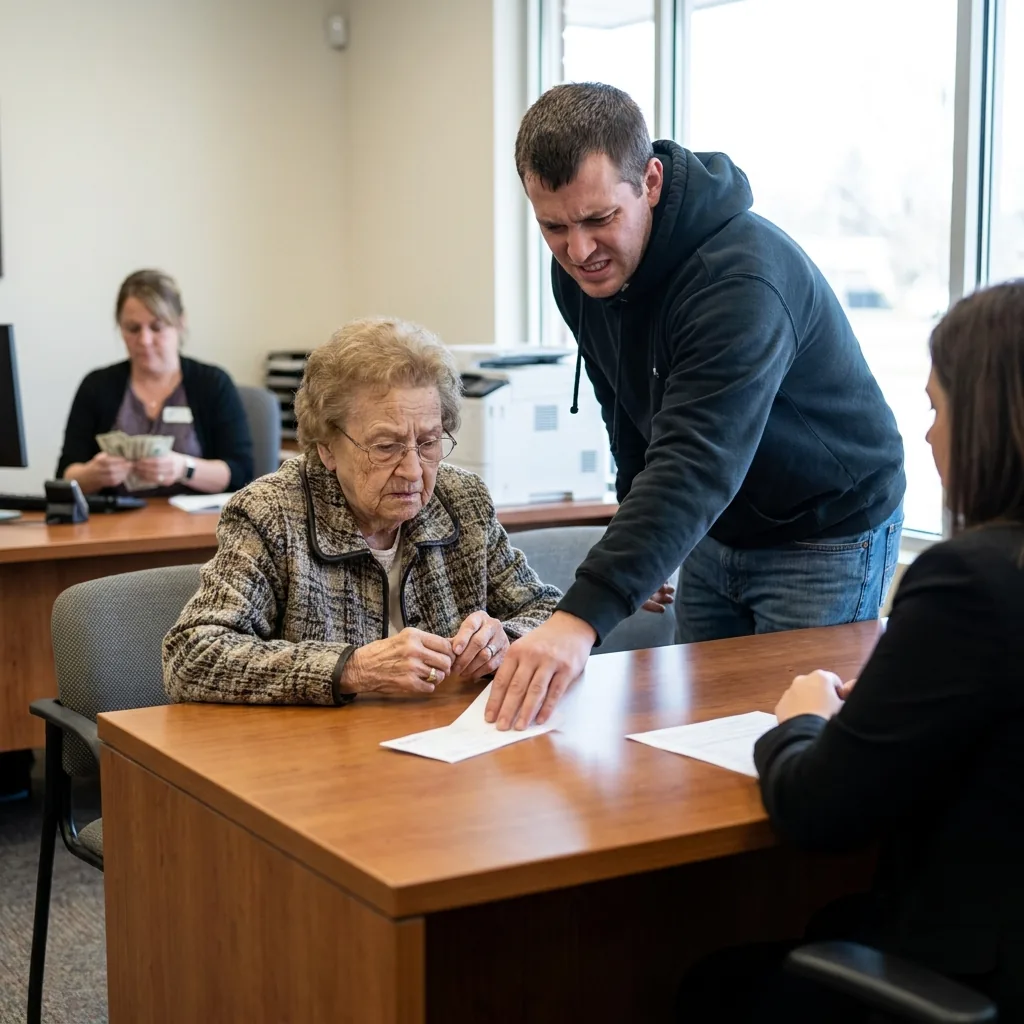
Derrick Cole laid a paper across Elena Ruiz’s desk and asked his grandmother to empty most of her account while the printers hummed and a man at the next station counted twenties into neat stacks. When Marlene Ruiz hesitated, Derrick smiled like he was helping and said, loud enough for the row behind them to hear, that refusing now would leave family stranded. Elena had not even finished verifying the account before she could see the pressure, the fake support document, and one problem she could not place yet.
The branch kept a small desk for longer account meetings, just off the teller line. Elena used it for wire questions, account reviews, and the kind of family visits that started with everybody speaking at once and ended with one person looking at the table instead of the forms. This one had begun with Derrick taking the chair closest to Elena as if the account were his. Tasha Cole stood beside him with one hand around her phone and the other on the back of Marlene’s chair.
“We’re just trying to take care of something urgent for her daughter,” Derrick said, tapping the paper. “Hospital payment. If we don’t move this today, it’s going to get worse.”
Elena kept her hands on the signature card and addressed Marlene directly. “Ms. Ruiz, what would you like to do with your account today?”
Marlene’s handbag sat on her lap, both hands over the clasp. She glanced at Derrick before answering. “They said I need to help right now.”
“Because you’re the only one who can,” Tasha added softly. “And we’re family.”
Elena had heard that tone before: warm enough to sound caring, sharp enough to leave a mark. She looked at the paper Derrick had pushed forward. It was meant to resemble a billing notice, but the layout was off. The logo sat slightly blurred at the top, the phone number had no area code, and the amount due was printed in a different font from the lines above it. Someone had signed nothing. There was a box marked FINAL ATTEMPT in heavy bold letters that looked more dramatic than official.
“Is this the invoice you’re referring to?” Elena asked.
Derrick leaned in before Marlene could answer. “That’s what I just said. We need a cashier’s check or transfer. Whatever is fastest.”
“I can discuss options with the account holder,” Elena said.
He leaned back, but not far. “I’m only trying to stop a disaster here.”
The words sat there long enough for the older man at the next desk to glance over. Marlene gave a small smile toward no one in particular, the kind people use when they want a public scene to stay small.
Elena began with routine questions. She verified Marlene’s identity, confirmed the account, and asked how much Marlene wanted to withdraw or transfer. Each time, Derrick tried to fill the silence first.
“Seventy-two thousand should cover it,” he said.
Marlene looked up at him quickly. “I thought you said sixty.”
Derrick gave a short laugh. “Because of the penalties. I explained that in the car.”
Tasha nodded without looking at Elena. “Everything keeps changing on us. That’s why we had to come in today.”
Elena straightened the forms into one stack. “If the amount changed, I need the account holder to confirm what she understands the payment is for.”
“For your own daughter,” Derrick said, turning toward Marlene now. “Grandma, please don’t do this in front of people.”
That was the first hard turn. He was no longer describing an urgent bill; he was making refusal sound mean. Marlene’s fingers tightened over her handbag clasp. She said, more quietly, “I don’t like doing big things without time.”
Derrick’s smile thinned at the corners. “Time is exactly what we don’t have.”
Elena reached for the account review screen. “Before any large withdrawal, I can go over recent activity and available options with Ms. Ruiz.”
“Why?” Derrick asked at once.
“Because it’s her account,” Elena said.
The printer behind her spat out a short transaction summary. Elena placed it between herself and Marlene, turning it so only the family at the desk could easily see it. Routine movement, routine paper, but the room changed around it. Tasha stopped checking her phone. Derrick’s hand, which had been resting on the fake invoice, moved off it.
Most of the recent entries looked ordinary enough for a retired customer: groceries, a pharmacy, a utility payment, a small check deposit. Then, two days earlier, there was a debit card purchase for $184.27 at a downtown luxury sneaker boutique.
Elena did not say anything at first. She only followed the line with her pen and asked Marlene, still calm, “Do you recognize this recent purchase?”
Marlene blinked at the page and then at Derrick.
Derrick answered before she opened her mouth. “That has nothing to do with this.”
Elena looked back at him for a beat, then returned her attention to Marlene. On the desk, the blurred invoice claimed a hospital crisis. On the transaction sheet, a boutique charge sat fresh and precise under the same account they were trying to drain. And when Marlene finally spoke, she did not explain the charge.
She asked Derrick, in a voice barely above the printer noise, why a hospital bill would start with a shoe store.
Derrick Cole laid a paper across Elena Ruiz’s desk and asked his grandmother to empty most of her account while the printers hummed and a man at the next station counted twenties into neat stacks. When Marlene Ruiz hesitated, Derrick smiled like he was helping and said, loud enough for the row behind them to hear, that refusing now would leave family stranded. Elena had not even finished verifying the account before she could see the pressure, the fake support document, and one problem she could not place yet.
The branch kept a small desk for longer account meetings, just off the teller line. Elena used it for wire questions, account reviews, and the kind of family visits that started with everybody speaking at once and ended with one person looking at the table instead of the forms. This one had begun with Derrick taking the chair closest to Elena as if the account were his. Tasha Cole stood beside him with one hand around her phone and the other on the back of Marlene’s chair.
“We’re just trying to take care of something urgent for her daughter,” Derrick said, tapping the paper. “Hospital payment. If we don’t move this today, it’s going to get worse.”
Elena kept her hands on the signature card and addressed Marlene directly. “Ms. Ruiz, what would you like to do with your account today?”
Marlene’s handbag sat on her lap, both hands over the clasp. She glanced at Derrick before answering. “They said I need to help right now.”
“Because you’re the only one who can,” Tasha added softly. “And we’re family.”
Elena had heard that tone before: warm enough to sound caring, sharp enough to leave a mark. She looked at the paper Derrick had pushed forward. It was meant to resemble a billing notice, but the layout was off. The logo sat slightly blurred at the top, the phone number had no area code, and the amount due was printed in a different font from the lines above it. Someone had signed nothing. There was a box marked FINAL ATTEMPT in heavy bold letters that looked more dramatic than official.
“Is this the invoice you’re referring to?” Elena asked.
Derrick leaned in before Marlene could answer. “That’s what I just said. We need a cashier’s check or transfer. Whatever is fastest.”
“I can discuss options with the account holder,” Elena said.
He leaned back, but not far. “I’m only trying to stop a disaster here.”
The words sat there long enough for the older man at the next desk to glance over. Marlene gave a small smile toward no one in particular, the kind people use when they want a public scene to stay small.
Elena began with routine questions. She verified Marlene’s identity, confirmed the account, and asked how much Marlene wanted to withdraw or transfer. Each time, Derrick tried to fill the silence first.
“Seventy-two thousand should cover it,” he said.
Marlene looked up at him quickly. “I thought you said sixty.”
Derrick gave a short laugh. “Because of the penalties. I explained that in the car.”
Tasha nodded without looking at Elena. “Everything keeps changing on us. That’s why we had to come in today.”
Elena straightened the forms into one stack. “If the amount changed, I need the account holder to confirm what she understands the payment is for.”
“For your own daughter,” Derrick said, turning toward Marlene now. “Grandma, please don’t do this in front of people.”
That was the first hard turn. He was no longer describing an urgent bill; he was making refusal sound mean. Marlene’s fingers tightened over her handbag clasp. She said, more quietly, “I don’t like doing big things without time.”
Derrick’s smile thinned at the corners. “Time is exactly what we don’t have.”
Elena reached for the account review screen. “Before any large withdrawal, I can go over recent activity and available options with Ms. Ruiz.”
“Why?” Derrick asked at once.
“Because it’s her account,” Elena said.
The printer behind her spat out a short transaction summary. Elena placed it between herself and Marlene, turning it so only the family at the desk could easily see it. Routine movement, routine paper, but the room changed around it. Tasha stopped checking her phone. Derrick’s hand, which had been resting on the fake invoice, moved off it.
Most of the recent entries looked ordinary enough for a retired customer: groceries, a pharmacy, a utility payment, a small check deposit. Then, two days earlier, there was a debit card purchase for $184.27 at a downtown luxury sneaker boutique.
Elena did not say anything at first. She only followed the line with her pen and asked Marlene, still calm, “Do you recognize this recent purchase?”
Marlene blinked at the page and then at Derrick.
Derrick answered before she opened her mouth. “That has nothing to do with this.”
Elena looked back at him for a beat, then returned her attention to Marlene. On the desk, the blurred invoice claimed a hospital crisis. On the transaction sheet, a boutique charge sat fresh and precise under the same account they were trying to drain. And when Marlene finally spoke, she did not explain the charge.
She asked Derrick, in a voice barely above the printer noise, why a hospital bill would start with a shoe store.