Story code: ST-000024
Part 1: She Thanked Herself For My Work
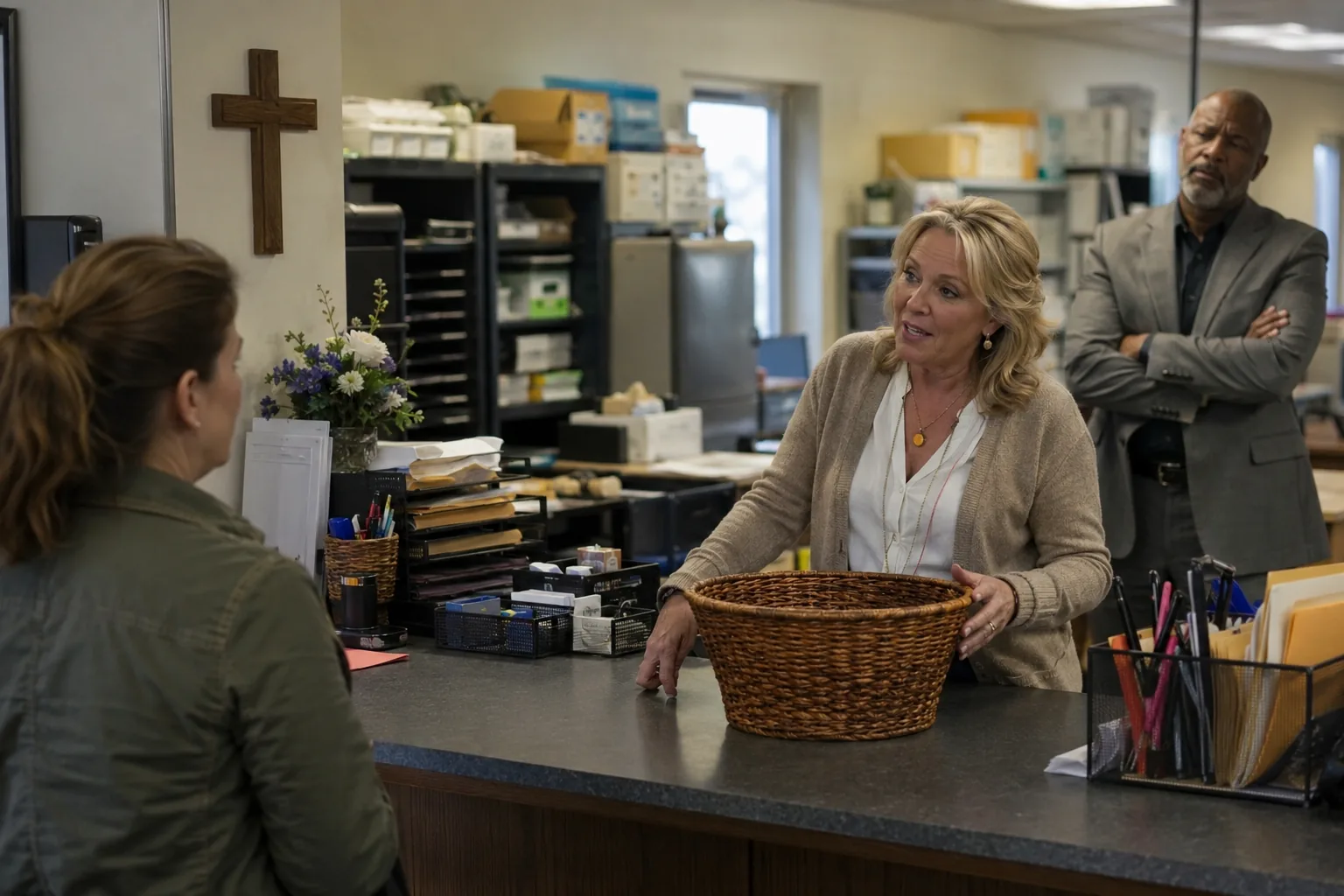
Denise Holloway stood at the long work counter with one hand resting on an offering basket I had rebuilt our whole giving program around, smiled at Pastor Eli Benton, and said, “I finally got this system running the way it needed to run.” I was two feet from her with the volunteer routing notes still in my hand, and the worst part was that she was saying it over the exact labels, bundles, and step cards I had made. By the time I opened my mouth, Pastor Eli was already thanking her for bringing order to a process that had been mine from the first basket to the last follow-up call.
It was a Tuesday morning, the kind where the office never stopped moving. Marisol was sorting mail near the copier. The weekly schedule sheets were spread across the scarred counter between the baskets and the labeled drawer where we kept the basket bands, count slips, and ministry cards. I had spent six weeks building a cleaner workflow after three Sundays in a row of late counts, missing ministry designations, and volunteers asking three different people the same question.
I was the one who mapped where each offering basket landed after service. I was the one who set the order for the count teams, the separation of designated gifts, the routing notes for thank-you follow-up, and the supply drawer labels so volunteers stopped digging through loose envelopes. None of that was complicated when you said it fast. It was only complicated when it had to work every single week with tired volunteers, two pastors passing through, and people dropping checks into the wrong basket because they were talking while they gave.
Denise had not built any of it. What she had built was a polished summary.
Pastor Eli nodded and said, “Denise, I appreciate you tightening this up. This is exactly the kind of stewardship we need.”
I said, “I put the routing sequence together after the March count delays.”
Denise turned toward me before he did, smiling like she was helping me. “Rachel has been a huge support on the administrative side,” she said. Then she tapped the edge of the basket with two fingers. “But this whole structure needed financial oversight to make sense.”
That word hit harder than if she had just cut me off. Support. Like I had been fetching paper clips while she led. Marisol looked up from the copier, then back down at the stack in her hands.
Pastor Eli repeated the smoother version because it was right there for him to use. “Well, good team effort, but Denise, thank you for leading it.”
He moved on to the next thing. That was how it happened. No fight, no scene, just my work sliding sideways in one sentence.
I tried to keep my voice even. “The volunteer cards still have to be sorted by campus code before they go to the blue folder. Otherwise the follow-up list doubles names.”
Denise answered before Pastor Eli could. “We’ve got it covered.”
We.
That became her favorite word once there was praise in the room.
The first real damage showed up before lunch. A deacon’s wife came by asking where to leave the women’s retreat scholarship gifts because she had heard there was finally a better system. Denise walked her through it from the front side of the counter, using my language in broad strokes: cleaner process, better tracking, dedicated handling. Then the woman thanked Denise for “fixing all this,” and Denise accepted it without a pause.
I was still standing there holding the old routing notes I had marked up by hand.
By Wednesday, Denise had started introducing the program to volunteers as “the structure I put in place for the baskets.” Each time, she stayed high-level. Each time, she talked over the parts that actually kept the week from collapsing: which basket tags matched which count sheet, when the ministry cards had to be pulled before deposit prep, why the youth envelopes were separated early instead of late, and how the follow-up list had to be cleared against duplicate giving names before it went to pastoral care.
I noticed something else too. Every time the explanation got close to a real step, Denise slowed down or reached for me.
“Rachel can show you that piece,” she told one volunteer.
“Rachel handles the finer details,” she told another.
It sounded small if you didn’t know what you were hearing. But I did. The finer details were the whole machine.
The clearest moment came late Thursday afternoon. Pastor Eli stepped back into the office while Denise was showing him the supply drawer by the baskets. She pulled it open, looked at the bands, count slips, and color tabs inside, and said, “I organized all this so Sunday would flow better.”
Then she paused.
It was not a dramatic pause. Just long enough for me to see she was looking at the purple and blue tab stacks like they had been switched, though I was the one who had set them in that order. Marisol had a folder in her hand and stopped walking.
Pastor Eli asked, “And the blue tabs go with which basket set again?”
Denise kept her hand on the drawer and said, “The blue is for… the second count grouping.”
It wasn’t.
I answered before the mistake could settle into the room. “Blue tags the ministry-designated basket items before the count sheets are finalized. Purple is second count grouping.”
Denise gave a quick little laugh and said, “That’s what I meant. Rachel knows my shorthand.”
Maybe Pastor Eli accepted that. Maybe he didn’t. He only said, “Right,” and looked down at the drawer one second longer than he had before.
That should have made me feel better. It didn’t. Because now I knew exactly how she planned to keep doing this: she would keep taking the credit in public and pulling me close in private every time the system needed the one thing she could not fake.
And the next time she reached for that missing piece, she did it in front of people.
Denise Holloway stood at the long work counter with one hand resting on an offering basket I had rebuilt our whole giving program around, smiled at Pastor Eli Benton, and said, “I finally got this system running the way it needed to run.” I was two feet from her with the volunteer routing notes still in my hand, and the worst part was that she was saying it over the exact labels, bundles, and step cards I had made. By the time I opened my mouth, Pastor Eli was already thanking her for bringing order to a process that had been mine from the first basket to the last follow-up call.
It was a Tuesday morning, the kind where the office never stopped moving. Marisol was sorting mail near the copier. The weekly schedule sheets were spread across the scarred counter between the baskets and the labeled drawer where we kept the basket bands, count slips, and ministry cards. I had spent six weeks building a cleaner workflow after three Sundays in a row of late counts, missing ministry designations, and volunteers asking three different people the same question.
I was the one who mapped where each offering basket landed after service. I was the one who set the order for the count teams, the separation of designated gifts, the routing notes for thank-you follow-up, and the supply drawer labels so volunteers stopped digging through loose envelopes. None of that was complicated when you said it fast. It was only complicated when it had to work every single week with tired volunteers, two pastors passing through, and people dropping checks into the wrong basket because they were talking while they gave.
Denise had not built any of it. What she had built was a polished summary.
Pastor Eli nodded and said, “Denise, I appreciate you tightening this up. This is exactly the kind of stewardship we need.”
I said, “I put the routing sequence together after the March count delays.”
Denise turned toward me before he did, smiling like she was helping me. “Rachel has been a huge support on the administrative side,” she said. Then she tapped the edge of the basket with two fingers. “But this whole structure needed financial oversight to make sense.”
That word hit harder than if she had just cut me off. Support. Like I had been fetching paper clips while she led. Marisol looked up from the copier, then back down at the stack in her hands.
Pastor Eli repeated the smoother version because it was right there for him to use. “Well, good team effort, but Denise, thank you for leading it.”
He moved on to the next thing. That was how it happened. No fight, no scene, just my work sliding sideways in one sentence.
I tried to keep my voice even. “The volunteer cards still have to be sorted by campus code before they go to the blue folder. Otherwise the follow-up list doubles names.”
Denise answered before Pastor Eli could. “We’ve got it covered.”
We.
That became her favorite word once there was praise in the room.
The first real damage showed up before lunch. A deacon’s wife came by asking where to leave the women’s retreat scholarship gifts because she had heard there was finally a better system. Denise walked her through it from the front side of the counter, using my language in broad strokes: cleaner process, better tracking, dedicated handling. Then the woman thanked Denise for “fixing all this,” and Denise accepted it without a pause.
I was still standing there holding the old routing notes I had marked up by hand.
By Wednesday, Denise had started introducing the program to volunteers as “the structure I put in place for the baskets.” Each time, she stayed high-level. Each time, she talked over the parts that actually kept the week from collapsing: which basket tags matched which count sheet, when the ministry cards had to be pulled before deposit prep, why the youth envelopes were separated early instead of late, and how the follow-up list had to be cleared against duplicate giving names before it went to pastoral care.
I noticed something else too. Every time the explanation got close to a real step, Denise slowed down or reached for me.
“Rachel can show you that piece,” she told one volunteer.
“Rachel handles the finer details,” she told another.
It sounded small if you didn’t know what you were hearing. But I did. The finer details were the whole machine.
The clearest moment came late Thursday afternoon. Pastor Eli stepped back into the office while Denise was showing him the supply drawer by the baskets. She pulled it open, looked at the bands, count slips, and color tabs inside, and said, “I organized all this so Sunday would flow better.”
Then she paused.
It was not a dramatic pause. Just long enough for me to see she was looking at the purple and blue tab stacks like they had been switched, though I was the one who had set them in that order. Marisol had a folder in her hand and stopped walking.
Pastor Eli asked, “And the blue tabs go with which basket set again?”
Denise kept her hand on the drawer and said, “The blue is for… the second count grouping.”
It wasn’t.
I answered before the mistake could settle into the room. “Blue tags the ministry-designated basket items before the count sheets are finalized. Purple is second count grouping.”
Denise gave a quick little laugh and said, “That’s what I meant. Rachel knows my shorthand.”
Maybe Pastor Eli accepted that. Maybe he didn’t. He only said, “Right,” and looked down at the drawer one second longer than he had before.
That should have made me feel better. It didn’t. Because now I knew exactly how she planned to keep doing this: she would keep taking the credit in public and pulling me close in private every time the system needed the one thing she could not fake.
And the next time she reached for that missing piece, she did it in front of people.