Story code: ST-000300
Part 1: She Said We Owed Her
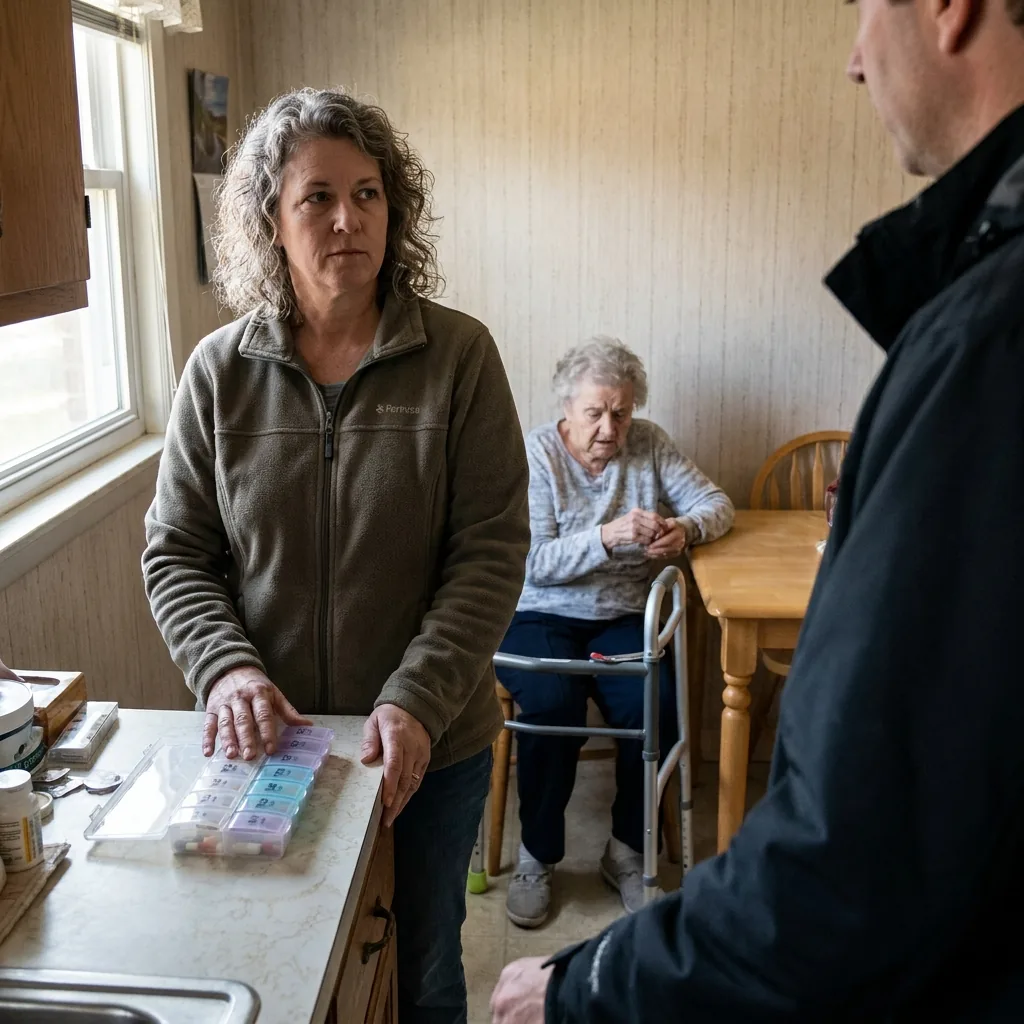
Tracy Boone was standing at my mother’s kitchen counter with one hand on the weekly pill organizer when she told me, like she was reminding me of a utility bill, that after everything she had done for us we owed her more than we could ever repay. My mother was buttering toast at the tiny dining nook three feet away, and Tracy kept tapping the Monday and Tuesday compartments with one fingernail as she listed rides, groceries, extra hours, and the time she had “fixed” Mom’s pills when I was supposedly too busy to show up. It was the first time I understood that what had been entering that apartment as help was leaving it as debt. I had come over on my lunch break to drop off a new refill and make sure my mother had eaten. That had been the plan. In our family, plans got reduced fast inside that apartment because everything happened in the same few steps: entry rug, narrow hallway, kitchen counter, little table, recliner by the window. If somebody raised their voice by the sink, it carried all the way to the front door. Tracy looked at me over the organizer and said, “I don’t think you appreciate how much I do off the clock. The extra pharmacy run alone saved your mother this week.” My mother gave me a quick look and straightened the sugar packets in the little ceramic bowl she kept on the table. “Tracy has been very good to me,” she said. “She didn’t have to do all that.” That phrase snagged me. Didn’t have to. I set the refill bottle beside the organizer and said, “I never asked her to do anything off the clock.” Tracy gave a small shrug like I was missing the point on purpose. “That’s exactly what I mean. I step in because somebody has to. Then when I mention the strain, suddenly I’m the bad guy.” She had a tote bag open on the chair by the wall, and I could see receipt paper sticking out of one side pocket. She noticed me glance at it and pulled the bag upright. Then she started counting again, not money exactly, but favors in a voice that made each one land like a number: the soup she’d brought on Sunday, the late evening check-in, the cab fare she claimed she covered, the refill pickup, the “sorting out” of Mom’s medications when things were “getting mixed up.” That last part made me look down. My mother had used the same kind of pill organizer for years, a cheap plastic one with the days printed in faded block letters. She hated changing brands. She always filled it on Sunday afternoons with me sitting at the table and reading the labels out loud. It was one of those routines that survived everything else getting harder. Now the organizer was turned the wrong way, with Sunday facing the fridge instead of the chair where my mother sat to take her morning pills. It sounds small written out like that. Inside that apartment, it wasn’t small. I asked, “Why is it flipped around?” Tracy let out a short laugh through her nose. “Because I actually use it when I’m here. Function over ceremony.” My mother said, too quickly, “It doesn’t matter which way it faces.” But then she looked at the organizer again before taking her toast to the table. Tracy moved the refill bottle away from my hand and said, “Look, Dana, if we’re being honest, your mother stays stable because I cover what this family doesn’t. If you want to start nickel-and-diming every kindness, that’s your choice, but don’t pretend you’re the one keeping this together.” There it was. Not a request for reimbursement. Not even a direct demand yet. Something worse because it was harder to pin down. She was putting us under a debt that had no amount, no agreement, and no end. My mother heard it as gratitude owed. I heard it as a leash. I kept my voice flat. “If there are actual expenses, write them down and I’ll look at them.” Tracy smiled without moving any other part of her face. “It’s bigger than expenses. It’s about what I carry for this household.” My brother Kyle came in halfway through that line, keys still in his hand, and of course Tracy pivoted smooth as water. She told him she was just explaining how much extra support she’d been giving Mom lately because “things have gotten more complicated.” Kyle looked from her to me to the pill organizer, then put his keys on the counter and asked the practical question first. “How much are we talking?” I said, “That’s not what this is.” Tracy spoke right over me. “I’m not asking for anything today. I’m saying there needs to be some recognition. Some respect. Because without me, a lot would have fallen apart already.” My mother pressed her lips together and said, “I don’t want fighting in here.” Nobody was shouting. That was the worst part. Tracy sounded calm, helpful, tired in a dignified way. If you walked in cold, I would have looked like the difficult daughter who couldn’t stand hearing what caregiving really cost. Then Tracy slid open the Tuesday compartment, glanced inside, and shut it again so fast it almost clicked against her nail. It was one tiny movement, but I caught it because I was already watching her hands more than her face. She picked up her tote and headed for the door, still reciting as she went. “I just hope everybody remembers who has truly been showing up.” After she left, Kyle said, “If she’s covering things, we should probably work something out.” I didn’t answer him. I stepped closer to the counter and turned the pill organizer back the way my mother always kept it. That’s when I saw something that made Tracy’s whole speech about saving us sound wrong in a way I couldn’t prove yet: the compartment.
Tracy Boone was standing at my mother’s kitchen counter with one hand on the weekly pill organizer when she told me, like she was reminding me of a utility bill, that after everything she had done for us we owed her more than we could ever repay. My mother was buttering toast at the tiny dining nook three feet away, and Tracy kept tapping the Monday and Tuesday compartments with one fingernail as she listed rides, groceries, extra hours, and the time she had “fixed” Mom’s pills when I was supposedly too busy to show up. It was the first time I understood that what had been entering that apartment as help was leaving it as debt. I had come over on my lunch break to drop off a new refill and make sure my mother had eaten. That had been the plan. In our family, plans got reduced fast inside that apartment because everything happened in the same few steps: entry rug, narrow hallway, kitchen counter, little table, recliner by the window. If somebody raised their voice by the sink, it carried all the way to the front door. Tracy looked at me over the organizer and said, “I don’t think you appreciate how much I do off the clock. The extra pharmacy run alone saved your mother this week.” My mother gave me a quick look and straightened the sugar packets in the little ceramic bowl she kept on the table. “Tracy has been very good to me,” she said. “She didn’t have to do all that.” That phrase snagged me. Didn’t have to. I set the refill bottle beside the organizer and said, “I never asked her to do anything off the clock.” Tracy gave a small shrug like I was missing the point on purpose. “That’s exactly what I mean. I step in because somebody has to. Then when I mention the strain, suddenly I’m the bad guy.” She had a tote bag open on the chair by the wall, and I could see receipt paper sticking out of one side pocket. She noticed me glance at it and pulled the bag upright. Then she started counting again, not money exactly, but favors in a voice that made each one land like a number: the soup she’d brought on Sunday, the late evening check-in, the cab fare she claimed she covered, the refill pickup, the “sorting out” of Mom’s medications when things were “getting mixed up.” That last part made me look down. My mother had used the same kind of pill organizer for years, a cheap plastic one with the days printed in faded block letters. She hated changing brands. She always filled it on Sunday afternoons with me sitting at the table and reading the labels out loud. It was one of those routines that survived everything else getting harder. Now the organizer was turned the wrong way, with Sunday facing the fridge instead of the chair where my mother sat to take her morning pills. It sounds small written out like that. Inside that apartment, it wasn’t small. I asked, “Why is it flipped around?” Tracy let out a short laugh through her nose. “Because I actually use it when I’m here. Function over ceremony.” My mother said, too quickly, “It doesn’t matter which way it faces.” But then she looked at the organizer again before taking her toast to the table. Tracy moved the refill bottle away from my hand and said, “Look, Dana, if we’re being honest, your mother stays stable because I cover what this family doesn’t. If you want to start nickel-and-diming every kindness, that’s your choice, but don’t pretend you’re the one keeping this together.” There it was. Not a request for reimbursement. Not even a direct demand yet. Something worse because it was harder to pin down. She was putting us under a debt that had no amount, no agreement, and no end. My mother heard it as gratitude owed. I heard it as a leash. I kept my voice flat. “If there are actual expenses, write them down and I’ll look at them.” Tracy smiled without moving any other part of her face. “It’s bigger than expenses. It’s about what I carry for this household.” My brother Kyle came in halfway through that line, keys still in his hand, and of course Tracy pivoted smooth as water. She told him she was just explaining how much extra support she’d been giving Mom lately because “things have gotten more complicated.” Kyle looked from her to me to the pill organizer, then put his keys on the counter and asked the practical question first. “How much are we talking?” I said, “That’s not what this is.” Tracy spoke right over me. “I’m not asking for anything today. I’m saying there needs to be some recognition. Some respect. Because without me, a lot would have fallen apart already.” My mother pressed her lips together and said, “I don’t want fighting in here.” Nobody was shouting. That was the worst part. Tracy sounded calm, helpful, tired in a dignified way. If you walked in cold, I would have looked like the difficult daughter who couldn’t stand hearing what caregiving really cost. Then Tracy slid open the Tuesday compartment, glanced inside, and shut it again so fast it almost clicked against her nail. It was one tiny movement, but I caught it because I was already watching her hands more than her face. She picked up her tote and headed for the door, still reciting as she went. “I just hope everybody remembers who has truly been showing up.” After she left, Kyle said, “If she’s covering things, we should probably work something out.” I didn’t answer him. I stepped closer to the counter and turned the pill organizer back the way my mother always kept it. That’s when I saw something that made Tracy’s whole speech about saving us sound wrong in a way I couldn’t prove yet: the compartment.