Story code: ST-000026
Part 1: The Tag on the Handle
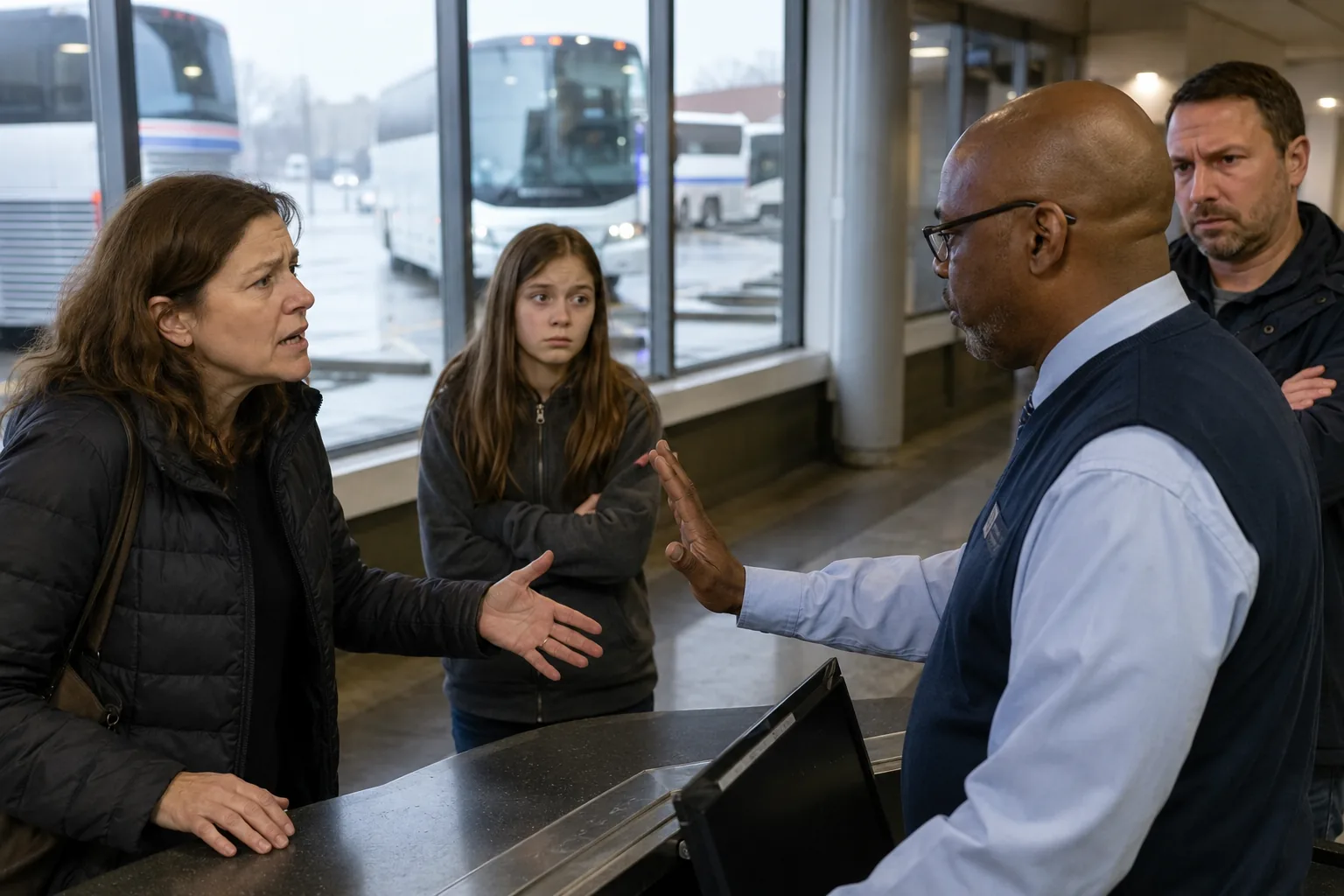
My sister said the bus had already taken my niece hours earlier, and the station supervisor used that claim to block me from stopping anything. We were standing in the bus station office by the counter window while people rolled carry-ons past us and a printer kept spitting out route slips, and the only thing left under Sofia Vega’s name was a hard-shell suitcase with a claim tag still looped around the handle. That tag showed a scan time that made their whole story impossible.
I work intake when a transport issue gets messy enough that nobody wants to be the first one to say the sequence is wrong. That afternoon I had been called to the office counter because Marisol Vega, the child’s aunt and listed sponsor, was demanding that staff stop “holding up” her niece’s transfer. Darnell Price, the shift supervisor, had already placed a printed transfer sheet on the counter like it settled everything.
“The minor was released to the outbound process,” he said, tapping the paper with two fingers. “If she’s already on the route, we can’t interrupt movement based on family disagreement.”
“It isn’t a family disagreement,” I said. “It’s a location question. Where is Sofia right now?”
Marisol answered before he could. “On the bus, or boarding. I told your staff that twice. She’s supposed to be on the Atlanta run. My sister is making this dramatic because she changed her mind too late.”
She said it fast, like speed could close the gap before anyone looked inside it. She had a station visitor sticker on her shirt and one hand on the suitcase handle beside her.
That was the first thing that bothered me.
If Sofia was already hours into the next leg, why was her checked suitcase still parked in the office area instead of in baggage flow or gone entirely?
I asked Darnell, “Why is the bag here?”
He glanced at the tag, then back to his screen. “Could be separated from the passenger in loading. Happens. Not ideal, but it happens.”
Marisol pulled the suitcase half an inch closer to her shoe. “They told me to wait with it because the route was being adjusted.”
I looked from the suitcase to the transfer sheet. “Adjusted from what?”
“From the original route,” she said.
“To Atlanta?”
“Yes.”
Darnell lifted a hand. “Let’s stay with documented facts.”
“That’s exactly what I’m doing,” I said.
I asked him for the incident log and got the standard pause first: eyes on the monitor, jaw tight, fingers hovering over a keyboard. Frontline people learn that if they keep their bodies pointed at procedure long enough, the person asking has to argue with a screen instead of a decision.
He finally turned the log toward me. The entry under Sofia’s name showed office clearance, sponsor confirmation, outbound gate assignment, and a note that movement had proceeded without issue. Clean language. Routine language. The kind that turns into a wall if nobody checks the times.
I asked Marisol to set the suitcase on the counter.
“Why?”
“Because it’s checked under Sofia’s name and it’s part of the route sequence.”
“You don’t need the bag to know where my niece went.”
“I need the tag.”
She didn’t let go right away. Darnell watched us both, then said, “Ma’am, place it on the counter.”
She did, with more noise than the weight required.
The claim tag was still attached under a strip of clear plastic. Sofia Vega. Final destination code. Intermediate handling mark. And a baggage routing sticker under that, crooked, like it had been applied quickly and pressed down with a thumb.
I read the timestamps twice before I spoke.
The office clearance on Darnell’s log showed Sofia released into outbound handling at 1:10 p.m. Marisol’s version had her niece already gone from the office area before that, with the route corrected and the bus process underway. But the suitcase tag showed first baggage scan at 2:04 p.m., and the routing sticker tied that scan to a later destination path than the one she was claiming.
I put one finger on the time.
“This bag was not checked until fifty-four minutes after your log says Sofia had already moved through the outbound sequence,” I said.
Darnell leaned in. “Let me see that.”
Marisol said, “That doesn’t mean anything. Bags get delayed.”
“Delayed loading is one thing,” I said. “Delayed first scan is another. If Sofia had already gone when you said she did, her suitcase could not begin its official baggage path almost an hour later under a different route marker.”
The printer behind us kicked out another strip of paper. Somebody in the concourse yelled for a kid to stay close. Marisol’s hand came off the counter, then back down flat.
Darnell looked from the tag to the incident log and stopped using his supervisor voice. “Who applied this routing sticker?”
Marisol answered too quickly. “One of your people in back.”
“Which one?” I asked.
She turned to me. “I don’t know their names. I am telling you the child was already sent where she was supposed to go.”
I kept my finger on the timestamp. “Then explain how her suitcase started a route after she was supposedly already gone, and why the tag points somewhere else first.”
No one at that counter answered that question. The only thing we had was a child reported as already moved, a suitcase tagged too late to match the official story, and a route marker that sent the timeline in the wrong direction.
My sister said the bus had already taken my niece hours earlier, and the station supervisor used that claim to block me from stopping anything. We were standing in the bus station office by the counter window while people rolled carry-ons past us and a printer kept spitting out route slips, and the only thing left under Sofia Vega’s name was a hard-shell suitcase with a claim tag still looped around the handle. That tag showed a scan time that made their whole story impossible.
I work intake when a transport issue gets messy enough that nobody wants to be the first one to say the sequence is wrong. That afternoon I had been called to the office counter because Marisol Vega, the child’s aunt and listed sponsor, was demanding that staff stop “holding up” her niece’s transfer. Darnell Price, the shift supervisor, had already placed a printed transfer sheet on the counter like it settled everything.
“The minor was released to the outbound process,” he said, tapping the paper with two fingers. “If she’s already on the route, we can’t interrupt movement based on family disagreement.”
“It isn’t a family disagreement,” I said. “It’s a location question. Where is Sofia right now?”
Marisol answered before he could. “On the bus, or boarding. I told your staff that twice. She’s supposed to be on the Atlanta run. My sister is making this dramatic because she changed her mind too late.”
She said it fast, like speed could close the gap before anyone looked inside it. She had a station visitor sticker on her shirt and one hand on the suitcase handle beside her.
That was the first thing that bothered me.
If Sofia was already hours into the next leg, why was her checked suitcase still parked in the office area instead of in baggage flow or gone entirely?
I asked Darnell, “Why is the bag here?”
He glanced at the tag, then back to his screen. “Could be separated from the passenger in loading. Happens. Not ideal, but it happens.”
Marisol pulled the suitcase half an inch closer to her shoe. “They told me to wait with it because the route was being adjusted.”
I looked from the suitcase to the transfer sheet. “Adjusted from what?”
“From the original route,” she said.
“To Atlanta?”
“Yes.”
Darnell lifted a hand. “Let’s stay with documented facts.”
“That’s exactly what I’m doing,” I said.
I asked him for the incident log and got the standard pause first: eyes on the monitor, jaw tight, fingers hovering over a keyboard. Frontline people learn that if they keep their bodies pointed at procedure long enough, the person asking has to argue with a screen instead of a decision.
He finally turned the log toward me. The entry under Sofia’s name showed office clearance, sponsor confirmation, outbound gate assignment, and a note that movement had proceeded without issue. Clean language. Routine language. The kind that turns into a wall if nobody checks the times.
I asked Marisol to set the suitcase on the counter.
“Why?”
“Because it’s checked under Sofia’s name and it’s part of the route sequence.”
“You don’t need the bag to know where my niece went.”
“I need the tag.”
She didn’t let go right away. Darnell watched us both, then said, “Ma’am, place it on the counter.”
She did, with more noise than the weight required.
The claim tag was still attached under a strip of clear plastic. Sofia Vega. Final destination code. Intermediate handling mark. And a baggage routing sticker under that, crooked, like it had been applied quickly and pressed down with a thumb.
I read the timestamps twice before I spoke.
The office clearance on Darnell’s log showed Sofia released into outbound handling at 1:10 p.m. Marisol’s version had her niece already gone from the office area before that, with the route corrected and the bus process underway. But the suitcase tag showed first baggage scan at 2:04 p.m., and the routing sticker tied that scan to a later destination path than the one she was claiming.
I put one finger on the time.
“This bag was not checked until fifty-four minutes after your log says Sofia had already moved through the outbound sequence,” I said.
Darnell leaned in. “Let me see that.”
Marisol said, “That doesn’t mean anything. Bags get delayed.”
“Delayed loading is one thing,” I said. “Delayed first scan is another. If Sofia had already gone when you said she did, her suitcase could not begin its official baggage path almost an hour later under a different route marker.”
The printer behind us kicked out another strip of paper. Somebody in the concourse yelled for a kid to stay close. Marisol’s hand came off the counter, then back down flat.
Darnell looked from the tag to the incident log and stopped using his supervisor voice. “Who applied this routing sticker?”
Marisol answered too quickly. “One of your people in back.”
“Which one?” I asked.
She turned to me. “I don’t know their names. I am telling you the child was already sent where she was supposed to go.”
I kept my finger on the timestamp. “Then explain how her suitcase started a route after she was supposedly already gone, and why the tag points somewhere else first.”
No one at that counter answered that question. The only thing we had was a child reported as already moved, a suitcase tagged too late to match the official story, and a route marker that sent the timeline in the wrong direction.