Story code: ST-000040
Part 1: She Said the Canvas Meant I Owed Her
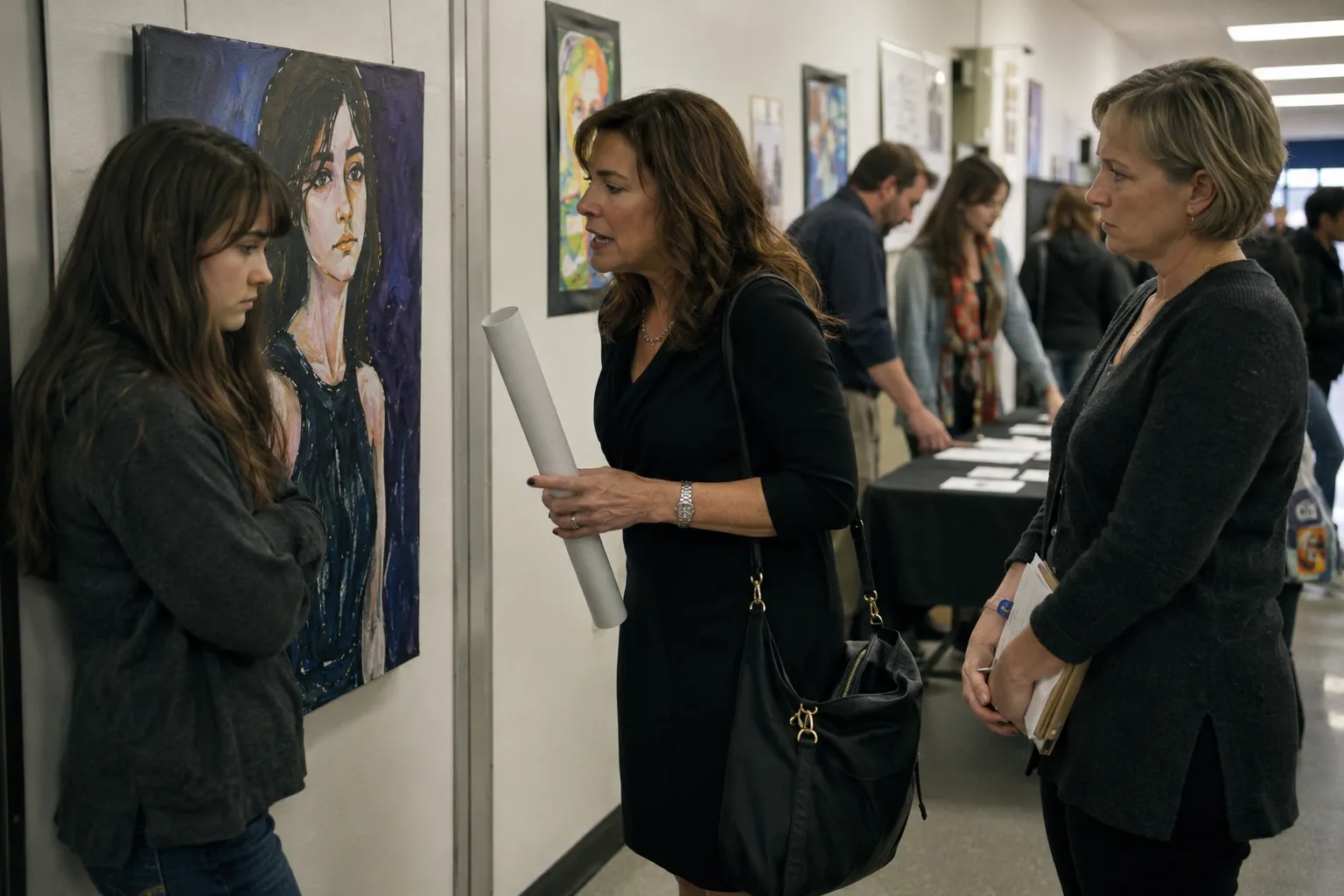
My mom stood beside my painting in the main exhibition hallway at Roosevelt High and said, loud enough for two other families at the check-in table to hear, that the canvas roll in her hand proved I owed her. She was smiling while kids adjusted labels and parents carried cookies past us, and she kept reciting everything she had supposedly done for me like she was reading charges instead of helping at a school art show. Then she tapped the rolled canvas against my display card and told me that if my painting sold, the money needed to come to her first.
I had spent three weeks on the piece hanging under my name. It was a large acrylic cityscape, the one Mr. Alvarez kept telling me to push further because the reflections in the windows were finally doing what I wanted them to do. I had nearly not finished it at all, because every time I needed uninterrupted hours, something at home got dropped in my lap first.
But standing there, none of that mattered to my mother. Dana Mercer had on her good tan coat, the one she wore when she wanted to look organized and supportive. She held the cardboard canvas roll under one arm like an exhibit in a trial.
“Let’s not act confused now,” she said. “I paid for materials. I drove you here. I spent my afternoon dealing with your art stuff. The least you can do is remember who made this possible.”
I kept my voice low because my teacher was ten feet away helping a sophomore straighten hanging clips. “You bought one canvas roll after saying I needed to hurry because you wanted to leave. That wasn’t a loan agreement.”
She gave a short laugh through her nose and looked past me toward a woman studying a charcoal portrait nearby, the way she always did when she wanted an audience without admitting she wanted one.
“One canvas roll, gesso, clips, gas, entry fee snacks for your brother while I waited. It adds up, Leah. Don’t get dramatic because I said you should pay me back before you start acting independent.”
That word, independent, landed harder than the money part. My price card was clipped beside the painting. Mr. Alvarez had convinced a few seniors to list prices in case local buyers asked, and mine was modest enough to feel almost apologetic. I had already told myself not to count on anyone buying it. My mother was acting like the sale had happened and the proceeds were hers by moral law.
I could feel people close enough to hear fragments. Not enough to understand. Just enough to make me look like an ungrateful daughter arguing over a favor.
“I didn’t ask you to make my work your expense report,” I said.
Her mouth tightened, but her tone stayed smooth. “You asked me to take you to the art store. You asked me to help carry this in. You asked me to support this whole thing. That roll right there says otherwise.”
She lifted the canvas roll again. Brown paper edges, one dent near the cap, black marker line across the side from where I’d written my last name. Ordinary object. Stupid object. Suddenly it was the center of the room for me.
I remembered standing in the parking lot two days earlier with that same roll balanced against my leg while she searched her purse. She had told me to stop making everything harder than it needed to be. At the time I thought she meant the show setup. Now I wasn’t sure what she had been counting.
Tessa Kim came up on my left holding a box of spare labels. She slowed when she heard my mom say, “If you had any gratitude, you’d hand over the sale money without this performance.”
Tessa looked at me first. “Do you need tape?”
It was the kind of question people ask when they know tape is not the issue.
“We’re fine,” my mother answered before I could speak.
Tessa didn’t move. “Mr. Alvarez wants all rolled pieces kept off the floor by the side wall.”
“This one’s ours,” my mother said, giving the roll a little shake. “And apparently it’s very important, since it’s what bought me an attitude tonight.”
Tessa’s eyes went to the marker line on the roll, then to me. She opened her mouth like she might say something else, but Mr. Alvarez called her name from the opposite display row and she backed away.
My brother Evan darted up then, carrying a half-empty pack of bottled water from the refreshments table. He stopped when he saw my mother’s face.
“Mom, do you still want me to put the other roll back in the car?” he asked.
I turned to him. “Other roll?”
He shifted the plastic against his chest. “The one from Tuesday. The big one from your store stop before we went to Aunt Celine’s office.”
My mother cut in so fast it made him flinch. “Not now, Evan. Go help with the cups.”
He looked at me once, then hurried off.
I stared at the canvas roll in her hand. Tuesday had not been a trip arranged around me. Tuesday was the afternoon she said she was already out and that if I wanted supplies, I had to be ready when she was because she had other places to go. I had taken that ride because I didn’t have another one.
She saw my face change and spoke before I could. “Don’t start rewriting things. I went out of my way for you.”
But the sequence in my head had shifted. If the art store stop happened on her route because of her errand first, then the story she was selling in front of my painting was missing a piece. And if Evan was talking about another roll, then the one she kept waving at me might not prove what she thought it did at all.
My mom stood beside my painting in the main exhibition hallway at Roosevelt High and said, loud enough for two other families at the check-in table to hear, that the canvas roll in her hand proved I owed her. She was smiling while kids adjusted labels and parents carried cookies past us, and she kept reciting everything she had supposedly done for me like she was reading charges instead of helping at a school art show. Then she tapped the rolled canvas against my display card and told me that if my painting sold, the money needed to come to her first.
I had spent three weeks on the piece hanging under my name. It was a large acrylic cityscape, the one Mr. Alvarez kept telling me to push further because the reflections in the windows were finally doing what I wanted them to do. I had nearly not finished it at all, because every time I needed uninterrupted hours, something at home got dropped in my lap first.
But standing there, none of that mattered to my mother. Dana Mercer had on her good tan coat, the one she wore when she wanted to look organized and supportive. She held the cardboard canvas roll under one arm like an exhibit in a trial.
“Let’s not act confused now,” she said. “I paid for materials. I drove you here. I spent my afternoon dealing with your art stuff. The least you can do is remember who made this possible.”
I kept my voice low because my teacher was ten feet away helping a sophomore straighten hanging clips. “You bought one canvas roll after saying I needed to hurry because you wanted to leave. That wasn’t a loan agreement.”
She gave a short laugh through her nose and looked past me toward a woman studying a charcoal portrait nearby, the way she always did when she wanted an audience without admitting she wanted one.
“One canvas roll, gesso, clips, gas, entry fee snacks for your brother while I waited. It adds up, Leah. Don’t get dramatic because I said you should pay me back before you start acting independent.”
That word, independent, landed harder than the money part. My price card was clipped beside the painting. Mr. Alvarez had convinced a few seniors to list prices in case local buyers asked, and mine was modest enough to feel almost apologetic. I had already told myself not to count on anyone buying it. My mother was acting like the sale had happened and the proceeds were hers by moral law.
I could feel people close enough to hear fragments. Not enough to understand. Just enough to make me look like an ungrateful daughter arguing over a favor.
“I didn’t ask you to make my work your expense report,” I said.
Her mouth tightened, but her tone stayed smooth. “You asked me to take you to the art store. You asked me to help carry this in. You asked me to support this whole thing. That roll right there says otherwise.”
She lifted the canvas roll again. Brown paper edges, one dent near the cap, black marker line across the side from where I’d written my last name. Ordinary object. Stupid object. Suddenly it was the center of the room for me.
I remembered standing in the parking lot two days earlier with that same roll balanced against my leg while she searched her purse. She had told me to stop making everything harder than it needed to be. At the time I thought she meant the show setup. Now I wasn’t sure what she had been counting.
Tessa Kim came up on my left holding a box of spare labels. She slowed when she heard my mom say, “If you had any gratitude, you’d hand over the sale money without this performance.”
Tessa looked at me first. “Do you need tape?”
It was the kind of question people ask when they know tape is not the issue.
“We’re fine,” my mother answered before I could speak.
Tessa didn’t move. “Mr. Alvarez wants all rolled pieces kept off the floor by the side wall.”
“This one’s ours,” my mother said, giving the roll a little shake. “And apparently it’s very important, since it’s what bought me an attitude tonight.”
Tessa’s eyes went to the marker line on the roll, then to me. She opened her mouth like she might say something else, but Mr. Alvarez called her name from the opposite display row and she backed away.
My brother Evan darted up then, carrying a half-empty pack of bottled water from the refreshments table. He stopped when he saw my mother’s face.
“Mom, do you still want me to put the other roll back in the car?” he asked.
I turned to him. “Other roll?”
He shifted the plastic against his chest. “The one from Tuesday. The big one from your store stop before we went to Aunt Celine’s office.”
My mother cut in so fast it made him flinch. “Not now, Evan. Go help with the cups.”
He looked at me once, then hurried off.
I stared at the canvas roll in her hand. Tuesday had not been a trip arranged around me. Tuesday was the afternoon she said she was already out and that if I wanted supplies, I had to be ready when she was because she had other places to go. I had taken that ride because I didn’t have another one.
She saw my face change and spoke before I could. “Don’t start rewriting things. I went out of my way for you.”
But the sequence in my head had shifted. If the art store stop happened on her route because of her errand first, then the story she was selling in front of my painting was missing a piece. And if Evan was talking about another roll, then the one she kept waving at me might not prove what she thought it did at all.