Story code: ST-000505
Part 1: The Joke That Split the Room
I lost the room because Gavin Pike played one comfort line too soon. We were in the catered meal area inside Remembrance Light Memorial Showroom, guests balancing coffee cups beside side tables, when Elaine Mercer’s hologram voice came through the room speakers with a joke Brooke Mercer said was only for family, and a woman at the back answered the punch line before anyone else moved.
That was the moment the memorial stopped being private.
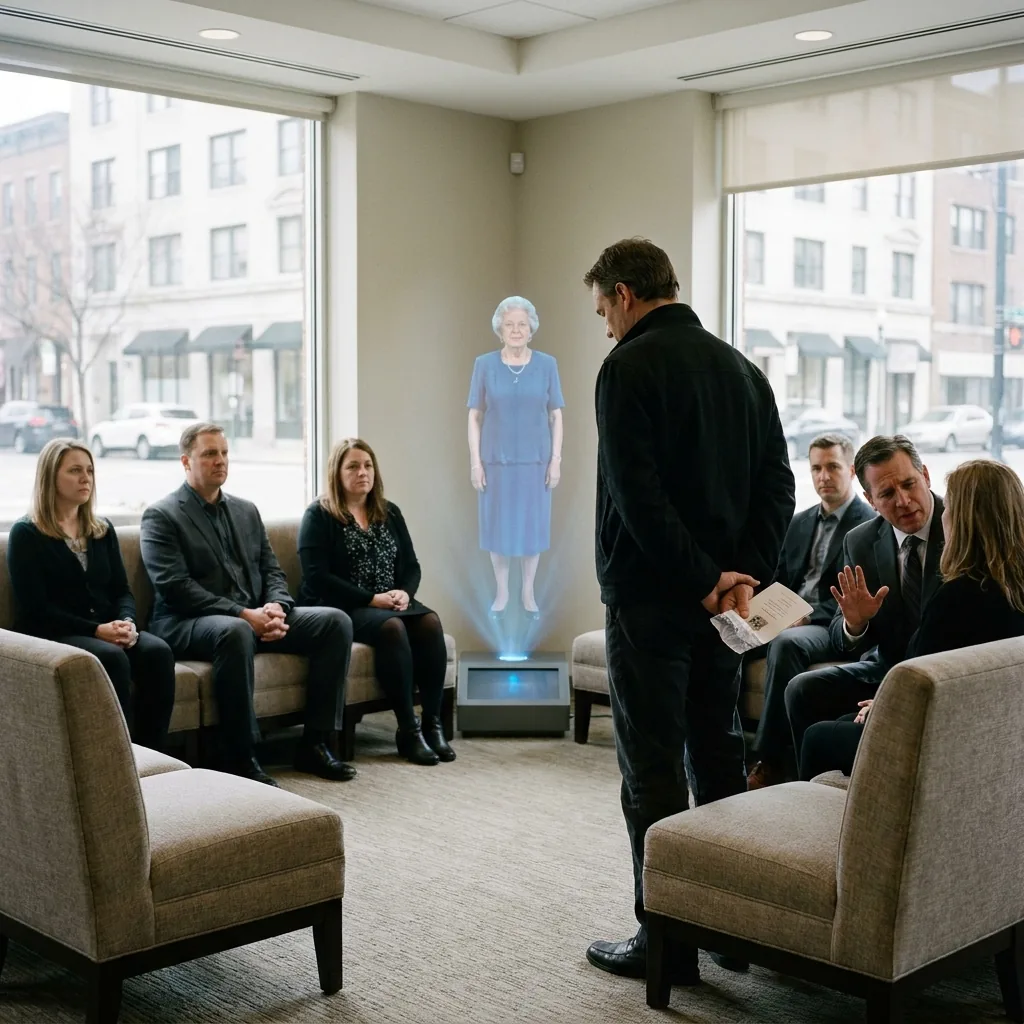
I work the floor, which means I watch doors, timing, catering, and the handoff between the projection room and the meal service. The ceremony itself had gone the way these things are supposed to go. Elaine’s hologram had stood near the photo wall in the projection room set, blue light clean around the edges, her recorded cadence warm and steady. Brooke gave the toast in a formal black dress, one hand flat on the table while she spoke. People cried quietly. Chairs scraped. Napkins opened. Nothing looked unstable.
Then the meal started, and Gavin leaned out from the operator booth behind the frosted glass panel and gave me a two-finger signal that he was cueing the comfort segment. We do that sometimes after the main tribute, just a short voice line over the speaker array while families settle with food. It is meant to soften the drop after the program ends.
I had just set a fresh tray of rolls near the coffee urns when Elaine’s voice filled the room.
“If anybody burns the biscuits again, I’m haunting the oven first.”
Brooke’s face changed fast. She looked toward the ceiling speakers instead of the booth, like she needed one more second to place what she’d heard. Before she spoke, the woman by the doorway laughed once and said, “Then check the left rack first, because that’s where you always hid the good pan.”
Not loud. Not performative. Quick. Automatic.
Every head in the room turned to her.
She had come in late with a teenage boy and taken the last two seats near the wall. I had assumed they were from a branch of the family that missed the ceremony. That happens. People get delayed, they slip in, they try not to pull focus. But this woman had her hand over her mouth now, and the boy beside her was staring at the speaker like he recognized the rhythm of the line.
Brooke set down her fork. “Who are you?”
The woman lowered her hand slowly. “Tessa.”
“Tessa who?”
The boy said, “Hale,” before she could answer him.
You could hear the refrigeration unit from the dessert case in the silence after that.
Gavin came out of the booth smiling too fast, one palm lifted in the calming way operators use when a projection freezes or a clip starts at the wrong timestamp. “I’m sorry, everybody. That was a training composite line. We had a voice bleed from another memorial pack in the queue. It shouldn’t have fired in this room.”
I looked at him because the phrase was polished enough to sound ready. He did not look at me back. He was looking at Brooke.
Brooke stood. “No. That was my mother’s voice. And that joke was from our kitchen.”
Tessa stayed seated. She had gone still except for one thumb rubbing the edge of her napkin. “Elaine used that line all the time.”
Brooke snapped toward her. “You don’t say her name like that if you don’t know her.”
The boy spoke before Tessa could stop him. He had one earbud looped around his fingers, twisting the wire tight. “She said it when the smoke alarm went off too. She’d hit it with a dish towel and blame the biscuits even when it was chicken.”
Brooke’s chair legs scraped hard against the floor. “Excuse me?”
Several guests started talking at once, but not to each other. It was fragments, all crossing in the middle. “Who invited them?” “What is this?” “That boy knows her.” “Gavin, shut that off.” One older man kept asking whether the speakers were still live.
I moved between Brooke’s table and the aisle, partly to keep space clear, partly because that is what my job turns into when grief breaks shape in public. “Ma’am,” I said to Brooke, “let me get the room settled.”
She pointed at Tessa without looking at me. “Settled after she tells me why she knows my mother’s oven jokes.”
Gavin stepped in before Tessa answered. “Brooke, please. The voice drive sometimes pulls rehearsal metadata. Families can hear familiar patterns where there aren’t any. Let me clear the feed and explain.”
It was the wrong thing to say. Not because of Brooke. Because of the boy.
He looked straight at the frosted glass booth and said, “That wasn’t random. That’s the joke she told before she called him Gav.”
The room went flat and quiet around that one word.
Gavin’s smile held for half a second too long. Then he said, too quickly, “Kid, you’re mistaken. I’ve never met you before in my life.”
Tessa finally stood, chair pushing back into the wall behind her. She did not raise her voice. “Owen. Don’t say anything else.”
But she had already answered the joke, and the boy had already used Gavin’s nickname like he had heard it at a family table that did not belong in this room.
Brooke turned from them to Gavin, and that was worse than when she looked at Tessa. “Why does he know what she called you?”
Gavin put one hand behind his back, blocking the path to the booth as if the console mattered more than the question.
Nobody touched a plate after that.
Because by then it was clear at least one person in that room knew there had been another life around Elaine Mercer, and I still didn’t know whether Gavin had just exposed it by mistake or tried to bury it before anyone could hear the rest.
I lost the room because Gavin Pike played one comfort line too soon. We were in the catered meal area inside Remembrance Light Memorial Showroom, guests balancing coffee cups beside side tables, when Elaine Mercer’s hologram voice came through the room speakers with a joke Brooke Mercer said was only for family, and a woman at the back answered the punch line before anyone else moved.
That was the moment the memorial stopped being private.
I work the floor, which means I watch doors, timing, catering, and the handoff between the projection room and the meal service. The ceremony itself had gone the way these things are supposed to go. Elaine’s hologram had stood near the photo wall in the projection room set, blue light clean around the edges, her recorded cadence warm and steady. Brooke gave the toast in a formal black dress, one hand flat on the table while she spoke. People cried quietly. Chairs scraped. Napkins opened. Nothing looked unstable.
Then the meal started, and Gavin leaned out from the operator booth behind the frosted glass panel and gave me a two-finger signal that he was cueing the comfort segment. We do that sometimes after the main tribute, just a short voice line over the speaker array while families settle with food. It is meant to soften the drop after the program ends.
I had just set a fresh tray of rolls near the coffee urns when Elaine’s voice filled the room.
“If anybody burns the biscuits again, I’m haunting the oven first.”
Brooke’s face changed fast. She looked toward the ceiling speakers instead of the booth, like she needed one more second to place what she’d heard. Before she spoke, the woman by the doorway laughed once and said, “Then check the left rack first, because that’s where you always hid the good pan.”
Not loud. Not performative. Quick. Automatic.
Every head in the room turned to her.
She had come in late with a teenage boy and taken the last two seats near the wall. I had assumed they were from a branch of the family that missed the ceremony. That happens. People get delayed, they slip in, they try not to pull focus. But this woman had her hand over her mouth now, and the boy beside her was staring at the speaker like he recognized the rhythm of the line.
Brooke set down her fork. “Who are you?”
The woman lowered her hand slowly. “Tessa.”
“Tessa who?”
The boy said, “Hale,” before she could answer him.
You could hear the refrigeration unit from the dessert case in the silence after that.
Gavin came out of the booth smiling too fast, one palm lifted in the calming way operators use when a projection freezes or a clip starts at the wrong timestamp. “I’m sorry, everybody. That was a training composite line. We had a voice bleed from another memorial pack in the queue. It shouldn’t have fired in this room.”
I looked at him because the phrase was polished enough to sound ready. He did not look at me back. He was looking at Brooke.
Brooke stood. “No. That was my mother’s voice. And that joke was from our kitchen.”
Tessa stayed seated. She had gone still except for one thumb rubbing the edge of her napkin. “Elaine used that line all the time.”
Brooke snapped toward her. “You don’t say her name like that if you don’t know her.”
The boy spoke before Tessa could stop him. He had one earbud looped around his fingers, twisting the wire tight. “She said it when the smoke alarm went off too. She’d hit it with a dish towel and blame the biscuits even when it was chicken.”
Brooke’s chair legs scraped hard against the floor. “Excuse me?”
Several guests started talking at once, but not to each other. It was fragments, all crossing in the middle. “Who invited them?” “What is this?” “That boy knows her.” “Gavin, shut that off.” One older man kept asking whether the speakers were still live.
I moved between Brooke’s table and the aisle, partly to keep space clear, partly because that is what my job turns into when grief breaks shape in public. “Ma’am,” I said to Brooke, “let me get the room settled.”
She pointed at Tessa without looking at me. “Settled after she tells me why she knows my mother’s oven jokes.”
Gavin stepped in before Tessa answered. “Brooke, please. The voice drive sometimes pulls rehearsal metadata. Families can hear familiar patterns where there aren’t any. Let me clear the feed and explain.”
It was the wrong thing to say. Not because of Brooke. Because of the boy.
He looked straight at the frosted glass booth and said, “That wasn’t random. That’s the joke she told before she called him Gav.”
The room went flat and quiet around that one word.
Gavin’s smile held for half a second too long. Then he said, too quickly, “Kid, you’re mistaken. I’ve never met you before in my life.”
Tessa finally stood, chair pushing back into the wall behind her. She did not raise her voice. “Owen. Don’t say anything else.”
But she had already answered the joke, and the boy had already used Gavin’s nickname like he had heard it at a family table that did not belong in this room.
Brooke turned from them to Gavin, and that was worse than when she looked at Tessa. “Why does he know what she called you?”
Gavin put one hand behind his back, blocking the path to the booth as if the console mattered more than the question.
Nobody touched a plate after that.
Because by then it was clear at least one person in that room knew there had been another life around Elaine Mercer, and I still didn’t know whether Gavin had just exposed it by mistake or tried to bury it before anyone could hear the rest.