Story code: ST-000541
Part 1: He Said It Loud Enough for the Street
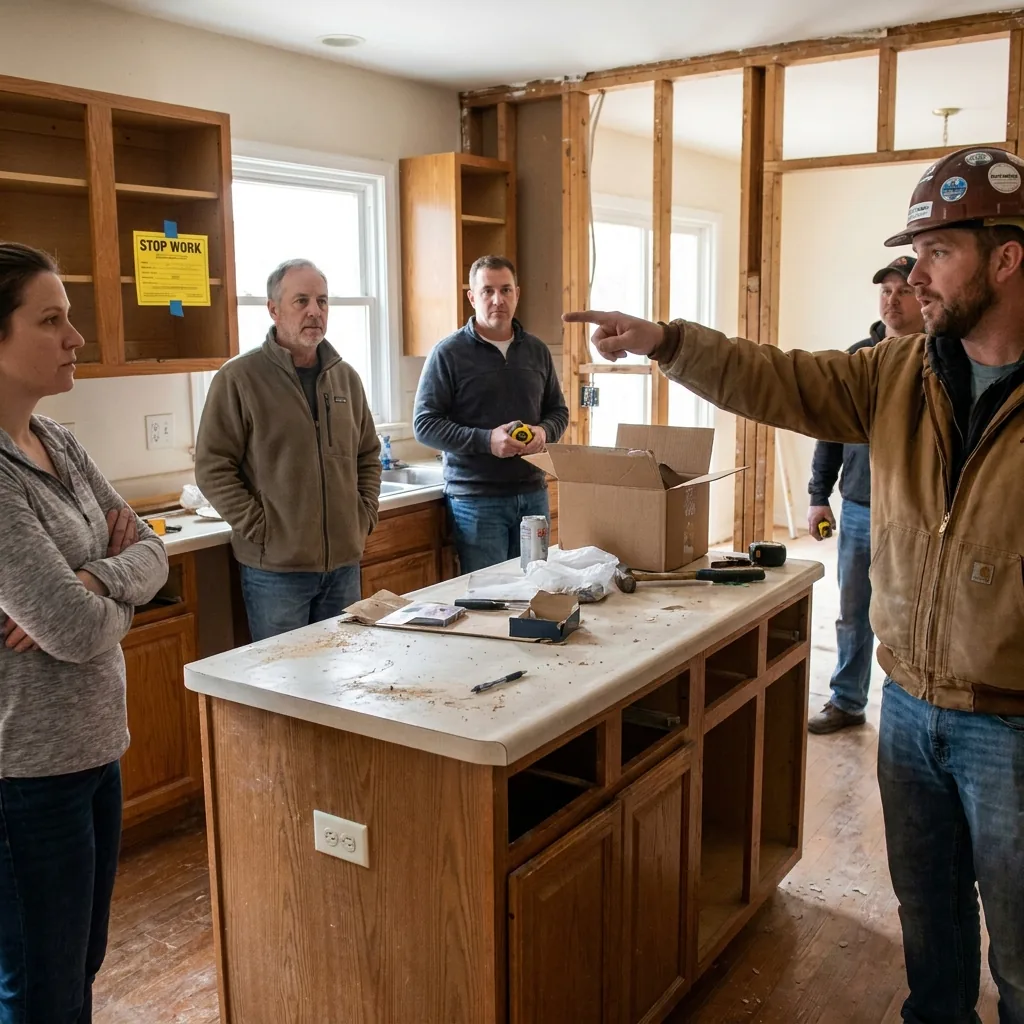
Derek Mercer jabbed his finger across the unfinished kitchen and told a room full of people that his sister had just cost everyone the inspection because she “couldn’t stop changing things like a child.” Lena was standing at the plastic-folding table rinsing berries in a metal bowl because the main sink was disconnected, and before the water stopped dripping from her hands, two workers, a neighbor, and their own aunt were already looking at her like the open studs and hanging wires were her fault. The only thing in that kitchen that did not match Derek’s version was the permit tag clipped beside the doorway where anybody could see it. Marta Ruiz had only stepped in to return a casserole dish. The Mercer kitchen had been half-demolished for weeks, and the room was the kind of place people crossed through without thinking about whether they belonged there. Plastic sheeting covered the dining-room opening. Cabinet faces were stacked against one wall. A coil of wire sat on a drop cloth beside a box of tile spacers. The refrigerator was pushed crooked into the breakfast nook, and a card table had taken over as the place where groceries got sorted. Lena had been standing there with a dish towel over one shoulder, trying to salvage lunch from a paper bag while Caleb Dunn carried a bundle of trim through the side door. Then Derek came in from the driveway talking before he was fully inside. “There it is,” he said, sweeping his hand at the exposed counter run and the wall cut open around the outlets. “This is what happens when a homeowner starts making side decisions after plans are set. Inspector took one look and shut it down.” He did not lower his voice for family. He raised it for witnesses. Caleb stopped with the trim in his hands. Janice Mercer, who had been standing near the coffee maker plugged into an extension cord, pressed her lips together and looked straight at Lena. A second worker near the back door glanced toward Derek and stayed quiet. Marta stayed just outside the worst of the dust, casserole dish against her hip, feeling suddenly as if she had walked into something already underway, except it had not been underway. Ten seconds earlier, Lena had been washing fruit. “Don’t do that,” Lena said. Her voice was level, but she had not moved from the table yet. “You know that isn’t what happened.” Derek gave a short laugh through his nose and pointed again, this time toward the bare section where the island would go. “Tell them when you asked to move the electrical. Tell them how many times you changed your mind.” He said it like he was helping the room understand a difficult person. Janice stepped in first, not between them, but close enough to be seen doing it. “Let’s not make this worse in front of everybody. Lena, if there were changes, just say there were changes.” That landed exactly where Derek seemed to want it. The accusation widened and settled. Marta could see it happen in small movements: Caleb shifting his weight and looking down, the second worker setting his tape measure on the counter instead of keeping his hands on it, Janice’s face tightening as if the embarrassment had already chosen a target. Lena set the berry bowl down carefully. A few drops of water hit the folding table and rolled through drywall dust. “I asked questions,” she said. “I didn’t tear open that wall. I didn’t schedule work. And I didn’t fail an inspection.” “No, you just created the condition for it,” Derek shot back. The room was open enough that a neighbor passing the front walk could hear him. One actually slowed outside the doorway and looked in. Marta saw that too. Once strangers can hear family blame, the house stops being private. Derek kept going. He moved with the confidence of somebody who knew construction language sounded heavier than plain speech. He talked about code, change orders, delays, cabinets on hold, the electrician having to redo work. He did not wave papers or point to hidden records. He used the room itself: the stripped wall, the unfinished counters, the dust, the missing outlet covers. Every ugly visible thing became a prop in his explanation. Lena answered only what he said in front of her. “The electrician was here before that wall was open.” “You told me the island placement was already submitted.” “The permit is posted right there.” At that, Derek’s head turned sharply toward the doorway for only a second. Marta looked where Lena had looked. The permit tag was clipped to the stud beside the plastic sheet, just above eye level, curled at one corner from humidity. She had noticed it before only as one more construction item. Now she noticed the lines on it. Address. Scope. Dates. A box with a posted notice. Another line below, plain enough to read from a few feet away if a person stepped closer. Derek stepped half in front of it while answering. “The permit doesn’t show what people do after filing.” “Maybe not,” Lena said. “But it does show what was filed.” Nobody replied to that right away. Caleb looked from Derek to the tag and back again. Janice followed his glance, then looked away as if the permit were suddenly impolite. Marta shifted the casserole dish to her other hand and took two steps closer to the doorway under the excuse of setting it down. She was near enough now to see the typed issue date and the listed work category. Derek had just told the whole room the inspection failed because Lena made fresh changes after everything was set. The tag hanging in public view suggested the kitchen work had been posted later than Derek was making it sound, and the scope line did not read like a finished job thrown off by some last-minute homeowner whim. It looked narrower. Newer. Wrong for the speech.
Derek Mercer jabbed his finger across the unfinished kitchen and told a room full of people that his sister had just cost everyone the inspection because she “couldn’t stop changing things like a child.” Lena was standing at the plastic-folding table rinsing berries in a metal bowl because the main sink was disconnected, and before the water stopped dripping from her hands, two workers, a neighbor, and their own aunt were already looking at her like the open studs and hanging wires were her fault. The only thing in that kitchen that did not match Derek’s version was the permit tag clipped beside the doorway where anybody could see it. Marta Ruiz had only stepped in to return a casserole dish. The Mercer kitchen had been half-demolished for weeks, and the room was the kind of place people crossed through without thinking about whether they belonged there. Plastic sheeting covered the dining-room opening. Cabinet faces were stacked against one wall. A coil of wire sat on a drop cloth beside a box of tile spacers. The refrigerator was pushed crooked into the breakfast nook, and a card table had taken over as the place where groceries got sorted. Lena had been standing there with a dish towel over one shoulder, trying to salvage lunch from a paper bag while Caleb Dunn carried a bundle of trim through the side door. Then Derek came in from the driveway talking before he was fully inside. “There it is,” he said, sweeping his hand at the exposed counter run and the wall cut open around the outlets. “This is what happens when a homeowner starts making side decisions after plans are set. Inspector took one look and shut it down.” He did not lower his voice for family. He raised it for witnesses. Caleb stopped with the trim in his hands. Janice Mercer, who had been standing near the coffee maker plugged into an extension cord, pressed her lips together and looked straight at Lena. A second worker near the back door glanced toward Derek and stayed quiet. Marta stayed just outside the worst of the dust, casserole dish against her hip, feeling suddenly as if she had walked into something already underway, except it had not been underway. Ten seconds earlier, Lena had been washing fruit. “Don’t do that,” Lena said. Her voice was level, but she had not moved from the table yet. “You know that isn’t what happened.” Derek gave a short laugh through his nose and pointed again, this time toward the bare section where the island would go. “Tell them when you asked to move the electrical. Tell them how many times you changed your mind.” He said it like he was helping the room understand a difficult person. Janice stepped in first, not between them, but close enough to be seen doing it. “Let’s not make this worse in front of everybody. Lena, if there were changes, just say there were changes.” That landed exactly where Derek seemed to want it. The accusation widened and settled. Marta could see it happen in small movements: Caleb shifting his weight and looking down, the second worker setting his tape measure on the counter instead of keeping his hands on it, Janice’s face tightening as if the embarrassment had already chosen a target. Lena set the berry bowl down carefully. A few drops of water hit the folding table and rolled through drywall dust. “I asked questions,” she said. “I didn’t tear open that wall. I didn’t schedule work. And I didn’t fail an inspection.” “No, you just created the condition for it,” Derek shot back. The room was open enough that a neighbor passing the front walk could hear him. One actually slowed outside the doorway and looked in. Marta saw that too. Once strangers can hear family blame, the house stops being private. Derek kept going. He moved with the confidence of somebody who knew construction language sounded heavier than plain speech. He talked about code, change orders, delays, cabinets on hold, the electrician having to redo work. He did not wave papers or point to hidden records. He used the room itself: the stripped wall, the unfinished counters, the dust, the missing outlet covers. Every ugly visible thing became a prop in his explanation. Lena answered only what he said in front of her. “The electrician was here before that wall was open.” “You told me the island placement was already submitted.” “The permit is posted right there.” At that, Derek’s head turned sharply toward the doorway for only a second. Marta looked where Lena had looked. The permit tag was clipped to the stud beside the plastic sheet, just above eye level, curled at one corner from humidity. She had noticed it before only as one more construction item. Now she noticed the lines on it. Address. Scope. Dates. A box with a posted notice. Another line below, plain enough to read from a few feet away if a person stepped closer. Derek stepped half in front of it while answering. “The permit doesn’t show what people do after filing.” “Maybe not,” Lena said. “But it does show what was filed.” Nobody replied to that right away. Caleb looked from Derek to the tag and back again. Janice followed his glance, then looked away as if the permit were suddenly impolite. Marta shifted the casserole dish to her other hand and took two steps closer to the doorway under the excuse of setting it down. She was near enough now to see the typed issue date and the listed work category. Derek had just told the whole room the inspection failed because Lena made fresh changes after everything was set. The tag hanging in public view suggested the kitchen work had been posted later than Derek was making it sound, and the scope line did not read like a finished job thrown off by some last-minute homeowner whim. It looked narrower. Newer. Wrong for the speech.