Story code: ST-000542
Part 1: She Put My Name on the Screen Before Anyone Asked a Question
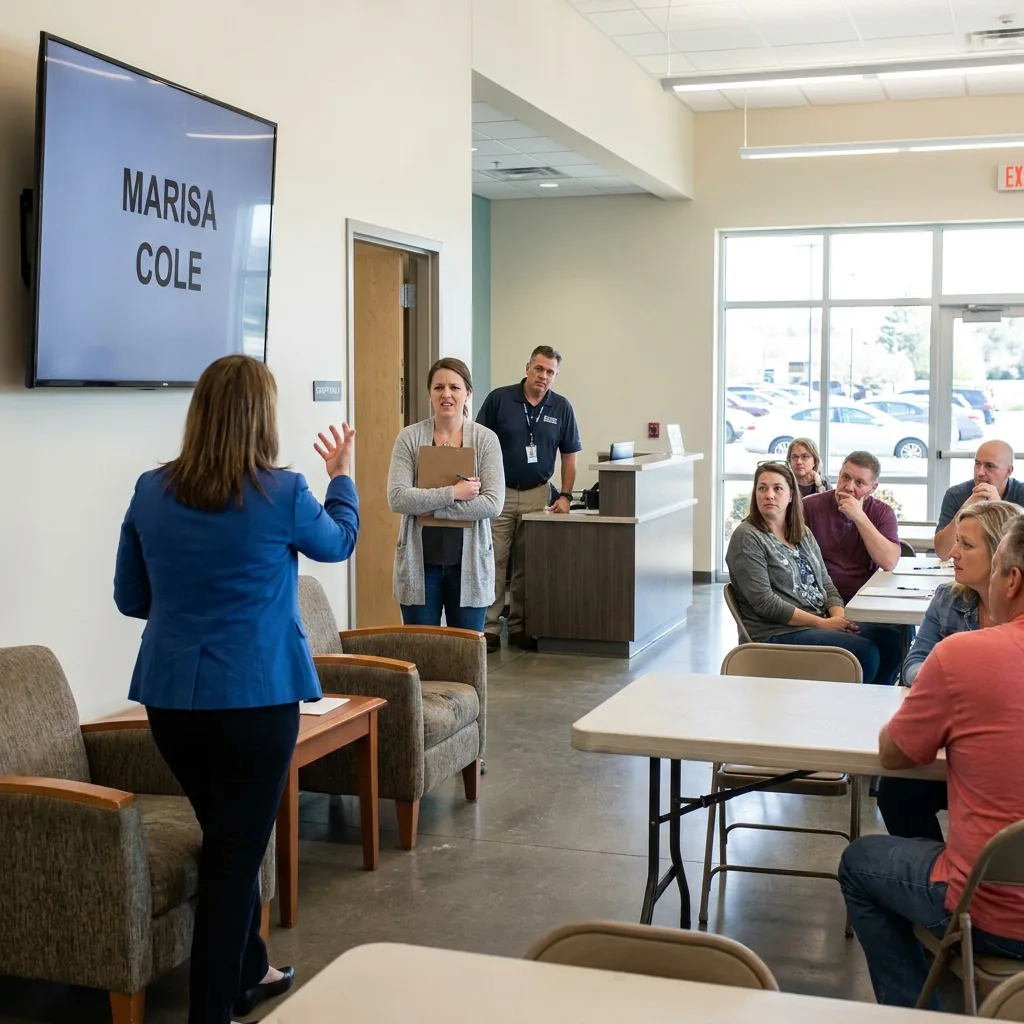
Dana Pike crossed into Marisa Cole’s prep room without permission, came back out to the front multipurpose room, put MARISA COLE across the center announcement screen, and told a room full of parents and volunteers that Marisa had caused a serious disruption. Kids were still weaving between folding tables, people were unloading board-game bins, and Marisa was standing three steps from the side hall with her tote, phone, and key ring in her hand when her own name lit up the wall like a warning. The part that stopped everybody cold was this: Dana was talking like she had proof from inside a space she was not supposed to be in.
I was there at Riverton Community Center that night, close enough to see the doorway line between the public room and the side hall near the staff-only door. The center always had that awkward layout where families spread out in the front room while staff-only and semi-private spaces sat just off to the side. You could see the threshold from almost anywhere, which mattered once the story started breaking apart.
Before Dana touched the microphone, Marisa had already said one sentence that made a few heads turn.
“Why were you in my prep room?”
She did not shout it. She said it flat, with that kind of direct voice that makes other people go quiet so they can hear the answer.
Dana did not answer it. She reached for the screen remote sitting on the cart by the announcement wall, tapped it twice, and the center screen switched from the evening schedule to a white slide with black letters. MARISA COLE. Under it, Dana added, “This is the person who interfered with tonight’s setup and created a safety issue in a restricted area.”
A few people actually looked at Marisa’s hands, like they expected to see her holding something she should not have had. That was the ugly part of it. The screen did the work before anybody asked what happened.
Marisa stopped moving. Her tote stayed hooked to her forearm. Her key ring stayed in her fist.
“Say what I did,” she said.
Dana kept the microphone near her mouth and used that clipped organizer tone some people get when they want procedure to sound like proof. “You know exactly what you did. You entered where you were not supposed to be, disrupted materials, and now you’re trying to argue in front of families.”
That would have landed harder if half the room had not already seen where Marisa had been standing for the last several minutes: near the threshold, not inside the staff side. And it would have landed cleaner if Dana had not just come out of Marisa’s assigned prep area herself.
That room was not a public supply closet. It was a small prep space used for class materials and personal staging, right at the private threshold by the side hall. People at the center knew the difference. Public room on one side. Staff-only door and semi-private rooms on the other. You did not drift through there because you were curious.
Marisa pointed toward the hall. “You were in there touching my things.”
Dana cut right across her. “I checked an area after a report. That is what organizers do when a problem is brought to us.”
“By who?”
Dana did not say.
The screen stayed frozen on Marisa’s name. That made everything worse. Anybody walking in from the lobby got the same first impression: there must be a reason her name was up there.
Ron Becker, the center director, was near the doorway line by then. He had that measured habit of waiting through the first burst of noise before stepping in. He looked at the screen, then at Dana, then at Marisa. He did not back Dana immediately, which was the first sign this was not going to stay simple.
Marisa lifted her key ring a little, not like a threat, just like a fact. “My things were moved. My tote was open when I got back. My phone was under the papers instead of on top. And she had no permission to be in there.”
Nobody laughed that off. A woman near me muttered, “She went through her stuff?”
Dana heard it and snapped back into procedure language. “No one went through personal belongings. We responded to a disruption involving access.”
There was that word again. Access.
It mattered because of what Dana was claiming. If Marisa had caused some problem in that side area, Dana had to explain how she knew, when she knew, and why she had the authority to enter that room first and put a public accusation on the screen second.
Then Tessa Pike came out of the side hall pushing a supply cart.
That would not have meant much on another night. Tessa volunteered there all the time. She carried bins, cords, markers, extension strips, all the unglamorous stuff. But when Ron asked, “Who was back there with you?” Dana answered too fast with, “No one relevant,” at the exact moment Tessa stopped the cart and looked straight at Dana before saying anything.
Ron noticed. Marisa noticed. A lot of us noticed.
Eli Navarro, the facilities assistant, had been checking a wall panel by the staff-only door. He looked up when Ron said, “Eli, who had reason to be moving between the side hall and the screen setup tonight?”
Eli did not answer right away. He looked from the door panel to the remote cart to Tessa’s hands on the supply cart handle.
And that was the moment the accusation stopped looking like a clean public warning and started looking like it had a private path behind it.
Because if Dana’s whole story depended on access, the first access trail in that room was not pointing at Marisa anymore. It was pointing straight at someone standing next to Dana’s own family name.
Dana Pike crossed into Marisa Cole’s prep room without permission, came back out to the front multipurpose room, put MARISA COLE across the center announcement screen, and told a room full of parents and volunteers that Marisa had caused a serious disruption. Kids were still weaving between folding tables, people were unloading board-game bins, and Marisa was standing three steps from the side hall with her tote, phone, and key ring in her hand when her own name lit up the wall like a warning. The part that stopped everybody cold was this: Dana was talking like she had proof from inside a space she was not supposed to be in.
I was there at Riverton Community Center that night, close enough to see the doorway line between the public room and the side hall near the staff-only door. The center always had that awkward layout where families spread out in the front room while staff-only and semi-private spaces sat just off to the side. You could see the threshold from almost anywhere, which mattered once the story started breaking apart.
Before Dana touched the microphone, Marisa had already said one sentence that made a few heads turn.
“Why were you in my prep room?”
She did not shout it. She said it flat, with that kind of direct voice that makes other people go quiet so they can hear the answer.
Dana did not answer it. She reached for the screen remote sitting on the cart by the announcement wall, tapped it twice, and the center screen switched from the evening schedule to a white slide with black letters. MARISA COLE. Under it, Dana added, “This is the person who interfered with tonight’s setup and created a safety issue in a restricted area.”
A few people actually looked at Marisa’s hands, like they expected to see her holding something she should not have had. That was the ugly part of it. The screen did the work before anybody asked what happened.
Marisa stopped moving. Her tote stayed hooked to her forearm. Her key ring stayed in her fist.
“Say what I did,” she said.
Dana kept the microphone near her mouth and used that clipped organizer tone some people get when they want procedure to sound like proof. “You know exactly what you did. You entered where you were not supposed to be, disrupted materials, and now you’re trying to argue in front of families.”
That would have landed harder if half the room had not already seen where Marisa had been standing for the last several minutes: near the threshold, not inside the staff side. And it would have landed cleaner if Dana had not just come out of Marisa’s assigned prep area herself.
That room was not a public supply closet. It was a small prep space used for class materials and personal staging, right at the private threshold by the side hall. People at the center knew the difference. Public room on one side. Staff-only door and semi-private rooms on the other. You did not drift through there because you were curious.
Marisa pointed toward the hall. “You were in there touching my things.”
Dana cut right across her. “I checked an area after a report. That is what organizers do when a problem is brought to us.”
“By who?”
Dana did not say.
The screen stayed frozen on Marisa’s name. That made everything worse. Anybody walking in from the lobby got the same first impression: there must be a reason her name was up there.
Ron Becker, the center director, was near the doorway line by then. He had that measured habit of waiting through the first burst of noise before stepping in. He looked at the screen, then at Dana, then at Marisa. He did not back Dana immediately, which was the first sign this was not going to stay simple.
Marisa lifted her key ring a little, not like a threat, just like a fact. “My things were moved. My tote was open when I got back. My phone was under the papers instead of on top. And she had no permission to be in there.”
Nobody laughed that off. A woman near me muttered, “She went through her stuff?”
Dana heard it and snapped back into procedure language. “No one went through personal belongings. We responded to a disruption involving access.”
There was that word again. Access.
It mattered because of what Dana was claiming. If Marisa had caused some problem in that side area, Dana had to explain how she knew, when she knew, and why she had the authority to enter that room first and put a public accusation on the screen second.
Then Tessa Pike came out of the side hall pushing a supply cart.
That would not have meant much on another night. Tessa volunteered there all the time. She carried bins, cords, markers, extension strips, all the unglamorous stuff. But when Ron asked, “Who was back there with you?” Dana answered too fast with, “No one relevant,” at the exact moment Tessa stopped the cart and looked straight at Dana before saying anything.
Ron noticed. Marisa noticed. A lot of us noticed.
Eli Navarro, the facilities assistant, had been checking a wall panel by the staff-only door. He looked up when Ron said, “Eli, who had reason to be moving between the side hall and the screen setup tonight?”
Eli did not answer right away. He looked from the door panel to the remote cart to Tessa’s hands on the supply cart handle.
And that was the moment the accusation stopped looking like a clean public warning and started looking like it had a private path behind it.
Because if Dana’s whole story depended on access, the first access trail in that room was not pointing at Marisa anymore. It was pointing straight at someone standing next to Dana’s own family name.