Story code: ST-000050
Part 1: The Clip at the Door
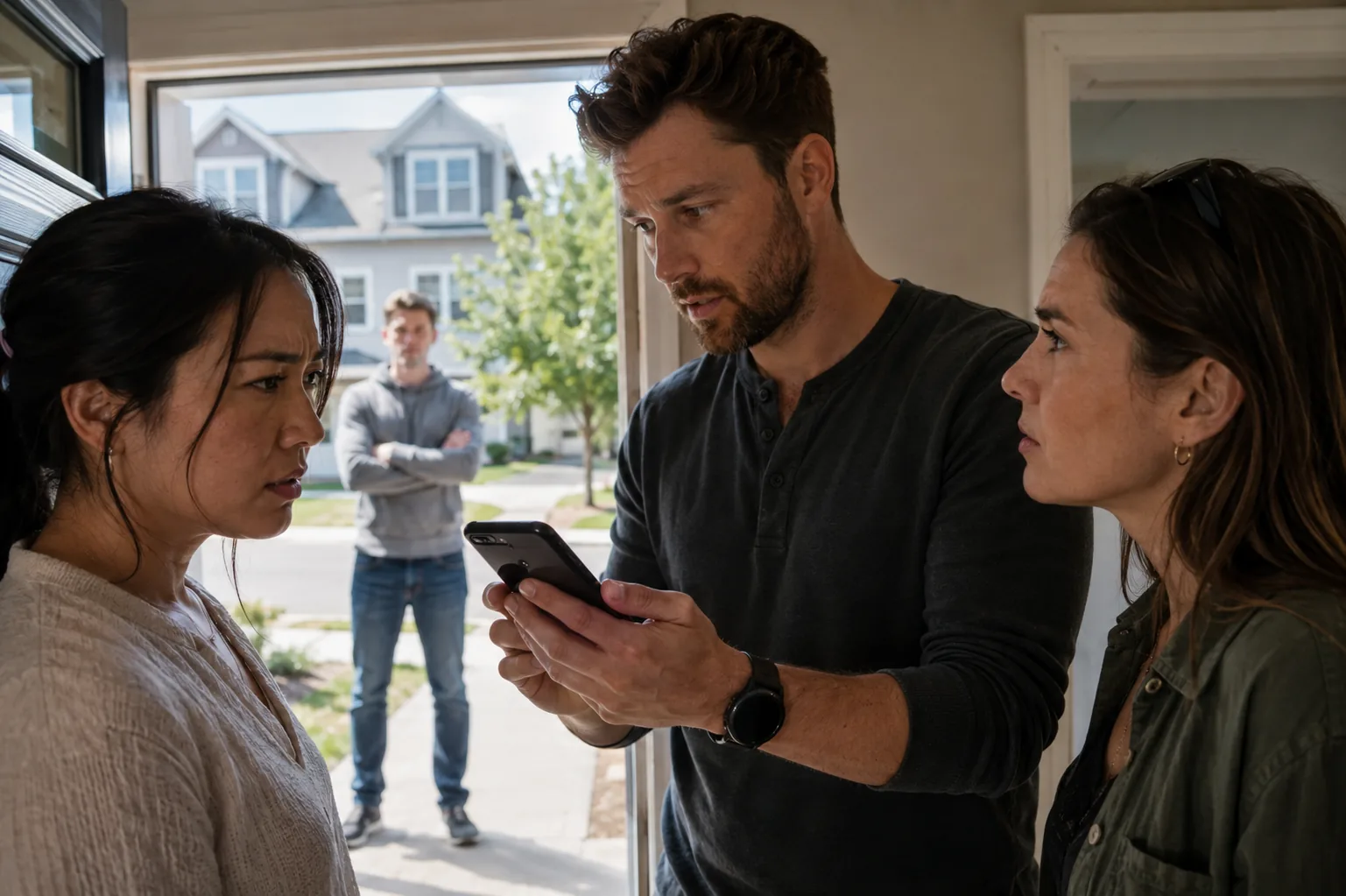
At the front door smart-home threshold, Evan Reed had Maya Reed’s doorbell camera clip up on a shared phone and in the group chat before she was fully inside, turning an ordinary activity inside the smart-home entry into a live display of privacy exposure without consent. The screen showed the same front steps, the same porch light, and the same doorbell camera texture everyone in the room could see, but the first cut of the video was short enough to make the moment look simple. Maya stopped where the entry mat ended, looked from the phone to the mounted screen, and asked who had shared her face with the whole room.
Evan stood near the console table with his phone held chest-high so everyone could see it. He did not lower it when Maya entered. He swiped once, twice, and kept the clip on the short version, as if a shorter recording made it cleaner. The group chat name was visible at the top of the screen. Three names were lit up in the thread. One of them was Tara Singh. Another was Luis Ortega. The comments below the video had already stacked up around the same point: a frozen frame of Maya at the door, the timestamp, and a line from Evan saying, “This is what I mean.”
Maya did not step toward him. She stayed by the threshold and looked at the screen in his hand, then at the larger display on the wall where the same clip had been mirrored. The image on both screens was cropped tight. It showed her coming up to the door, pausing, and reaching toward the handle. It did not show what led up to that pause. It did not show the second person in the frame until the cut was already over. It did not show why her hand had stopped short.
Tara, standing near the kitchen opening, pointed at the bottom edge of the video. “Why does it end there?” she asked. Her finger stayed on the timestamp. “That cut is too clean.”
Evan answered fast. “It’s enough to see what happened.”
Luis was looking from the screen to Maya’s face and back again. He stopped smiling after the second replay. On the third replay, he took one step backward and folded his arms instead of keeping his phone up. That change was small, but it changed the room. Nobody was treating the clip like a joke anymore. They were watching the gap.
Maya asked again, still in the entry, “Who sent that out?” Her voice stayed level. “And why is this part missing?”
Evan tilted the phone toward her as if the angle itself proved something. “I posted the relevant part.”
That was the first problem. The part he called relevant was the part that made her look abrupt and silent, the part that let the room fill in its own story. Tara leaned closer to the screen, tapped the image, and asked to see the full version. Evan said he already showed enough. The mirrored screen flashed the same cropped section again. Maya watched the doorbell camera frame stop exactly where the background should have continued.
In the chat, a new message appeared from an unnamed contact: “What happened before this?” Another followed: “Send the full clip.” Evan saw both messages. He did not answer them. He kept his thumb over the playback bar as if that could hold the line in place.
Maya finally stepped one pace forward, not toward him but toward the wall screen, and said, “Play the whole thing.”
Evan did not move. The clip stayed on the cropped ending. The room stayed on the cropped ending. And on the screen, just before the cut, there was one blurred motion at the edge of the frame that did not match the story being told. It was too brief to explain itself, and too specific to ignore.
At the front door smart-home threshold, Evan Reed had Maya Reed’s doorbell camera clip up on a shared phone and in the group chat before she was fully inside, turning an ordinary activity inside the smart-home entry into a live display of privacy exposure without consent. The screen showed the same front steps, the same porch light, and the same doorbell camera texture everyone in the room could see, but the first cut of the video was short enough to make the moment look simple. Maya stopped where the entry mat ended, looked from the phone to the mounted screen, and asked who had shared her face with the whole room.
Evan stood near the console table with his phone held chest-high so everyone could see it. He did not lower it when Maya entered. He swiped once, twice, and kept the clip on the short version, as if a shorter recording made it cleaner. The group chat name was visible at the top of the screen. Three names were lit up in the thread. One of them was Tara Singh. Another was Luis Ortega. The comments below the video had already stacked up around the same point: a frozen frame of Maya at the door, the timestamp, and a line from Evan saying, “This is what I mean.”
Maya did not step toward him. She stayed by the threshold and looked at the screen in his hand, then at the larger display on the wall where the same clip had been mirrored. The image on both screens was cropped tight. It showed her coming up to the door, pausing, and reaching toward the handle. It did not show what led up to that pause. It did not show the second person in the frame until the cut was already over. It did not show why her hand had stopped short.
Tara, standing near the kitchen opening, pointed at the bottom edge of the video. “Why does it end there?” she asked. Her finger stayed on the timestamp. “That cut is too clean.”
Evan answered fast. “It’s enough to see what happened.”
Luis was looking from the screen to Maya’s face and back again. He stopped smiling after the second replay. On the third replay, he took one step backward and folded his arms instead of keeping his phone up. That change was small, but it changed the room. Nobody was treating the clip like a joke anymore. They were watching the gap.
Maya asked again, still in the entry, “Who sent that out?” Her voice stayed level. “And why is this part missing?”
Evan tilted the phone toward her as if the angle itself proved something. “I posted the relevant part.”
That was the first problem. The part he called relevant was the part that made her look abrupt and silent, the part that let the room fill in its own story. Tara leaned closer to the screen, tapped the image, and asked to see the full version. Evan said he already showed enough. The mirrored screen flashed the same cropped section again. Maya watched the doorbell camera frame stop exactly where the background should have continued.
In the chat, a new message appeared from an unnamed contact: “What happened before this?” Another followed: “Send the full clip.” Evan saw both messages. He did not answer them. He kept his thumb over the playback bar as if that could hold the line in place.
Maya finally stepped one pace forward, not toward him but toward the wall screen, and said, “Play the whole thing.”
Evan did not move. The clip stayed on the cropped ending. The room stayed on the cropped ending. And on the screen, just before the cut, there was one blurred motion at the edge of the frame that did not match the story being told. It was too brief to explain itself, and too specific to ignore.