Story code: ST-000551
Part 4: I Left the Gate Where He Built It
I did not answer Dale’s lunch text until after work.
Only by message, I wrote. Put it in writing.
He sent back a reply within two minutes.
Need your car moved farther back through Friday so I can get in and out clean with the trailer. After that we can revisit.
I sat in Renee’s parked car outside my house and read that one with the morning photo still in my camera roll and the old side-camera clips saved on my phone. His words had finally caught up to his bins. He needed my part of the arrangement adjusted for his schedule, and the fastest way he had tried to get it was to block me first.
Renee tapped the steering wheel once. “You want me to stay while you go in?”
I looked at the driveway. Dale’s truck was there. The bins were at the curb. My car was still in the exact place where I had left it the morning before. “No,” I said. “I’m good. Thank you for the rides.”
She gave me a quick nod. “If he starts up again, text me.”
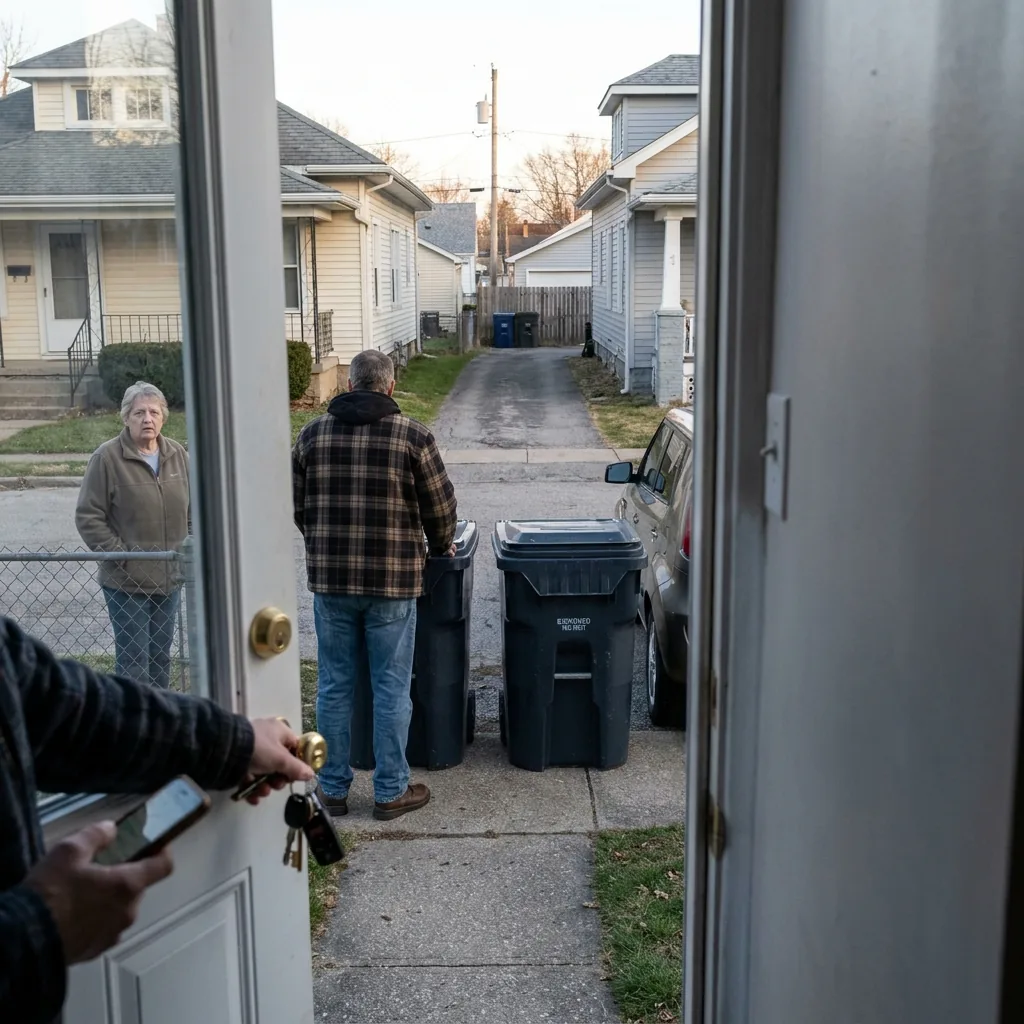
I got out, shut the door, and walked to my porch. Dale opened his side door before I reached the steps. He had his phone in one hand. He did not come all the way over.
“So?” he asked.
I took my keys out and stood by my own rail. “I’m not doing a temporary arrangement.”
His shoulders lifted and dropped once. “It’s four days.”
“Yesterday was supposed to be thirty seconds,” I said.
He looked past me at my car and spoke through a tight mouth. “Then at least pull forward tonight so I can get the angle tomorrow morning.”
I shook my head. “No.”
There was a long quiet after that. No big scene. No speech from either side. A dog barked somewhere behind the next row of houses. One of the bin lids at the curb knocked lightly in the wind.
He said, lower this time, “You’re really going to do this over parking.”
I answered, “You already did it over bins.”
I went inside and did not reopen the door.
The next morning I left for work the same way as the day before, riding with Renee. I passed my own car, locked in place by my choice now, not his. Dale was outside before sunrise moving things around. First his truck. Then the bins. Then a long metal hitch piece that I saw him carry from his garage and set down near the side wall. He tried backing his truck deeper into the driveway once, pulled out, then tried again from a wider street angle. Tires rolled, stopped, corrected, rolled again.
I did not narrate any of it to him. I just kept walking to Renee’s car.
By Thursday evening, the visible consequence had settled over his side of the property like bad weather. His trailer was there at last, hitched at the curb instead of tucked beside his house. It took up legal street space in front of his own place and hung far enough back that he could not swing it neatly where he wanted without the turn he had been trying to force from me. His truck stayed on the street too. The bins, the same bins he had used like a gate, were no longer anywhere near the driveway mouth. He had them lined up flat against his garage and tied together with a bungee cord through the handles so they would not drift or tempt another argument.
Friday morning I left in my own car.
Not because Dale helped. Not because we worked it out face-to-face. I had arranged for a friend from work to drive me home late Thursday so I could bring my car out after midnight, when the street was empty and his truck and trailer were both still parked along the curb. With the driveway clear and no bins at the mouth, I eased out in one clean turn. The first blocked departure from Monday finally paid itself back in silence.
When I came home that evening, the trailer was still on the street. So was the truck. Dale was kneeling by the hitch with a wrench beside him. He looked up when I got out of my car, then looked at the driveway, where nothing blocked anything now except the limits of the space itself.
He stood slowly and wiped his hands on a rag. “You could have just said no,” he said.
I held up my phone for half a second, not close enough for him to read it, just long enough for him to see the screen lit with a photo grid and message thumbnails. “I did.”
That was all.
I went inside with my keys and my bag and locked my own door. I never posted the pictures. I never sent the clips to anybody on the block. I kept them because keeping them meant I did not have to explain myself again.
After that, he stopped using the bins as a boundary marker. His trailer stayed on the street another week before it disappeared. His truck started living out there too more often than not. The shared driveway still existed, narrow and awkward and real, but the little private system he had tried to run through it had failed in plain sight.
I got my way out back. He lost the easy one he had been protecting. That was enough, and it did not feel good the way people think winning should. It felt expensive, useful, and final.