Story code: ST-000595
Part 1: He Grabbed the Trophy Bag First
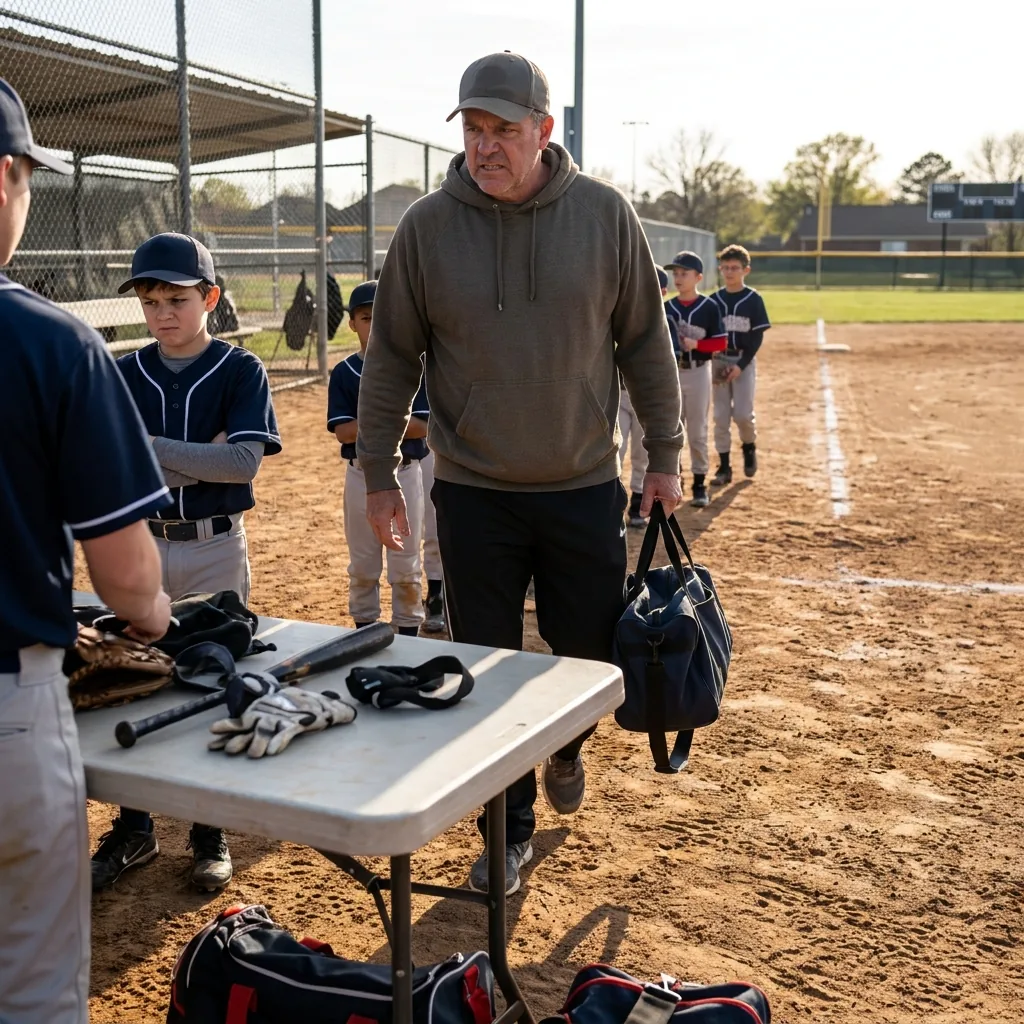
A dad snatched the trophy bag off my equipment table beside the dugout and came straight at me while kids were still lining up for awards. He said, loud enough for the fence line to hear, that his son could not breathe, and he used that bag like a handle to drag me out of the normal chain in front of everyone. The part that still sits wrong is that the second I moved to get real help, he started trying to stop the exact rescue he had just demanded.
I was standing at the check-in table with my clipboard tucked under one arm, sorting the last stack of medal cards and making sure the team trophies matched the names we had posted. It was normal game-day noise for that field complex. Cleats on concrete. Dugout chatter. Parents pressed along the fence asking if we were doing team photos before or after awards.
Then the trophy bag jerked sideways.
I looked up and Brent Haskell already had both handles wrapped in his fist. Not lifting it to help. Taking it.
“Where’s the inhaler?” he barked. “My son can’t breathe. Move. Right now.”
When somebody says a kid can’t breathe, you don’t stand there arguing. League staff are trained to treat that as urgent first and sort details second. I put my hand out for the bag and said, “Set that down and point me to Evan.”
He didn’t set it down.
“No, you come with me now,” he said, tugging the bag once like I was attached to it. “You people keep all the emergency stuff up here and my kid is over there choking.”
That pulled eyes instantly. A couple parents near the first-base fence stopped talking. One of the assistant coaches turned from the dugout opening. I could hear a few players go quiet the way kids do when adult voices snap above the regular field noise.
I grabbed my phone off the table with my free hand and stepped around the corner of the bench, trying to get a clear line toward the player cluster. “Where is Evan?” I said again.
Brent pointed hard toward the third-base side without looking at where he was pointing. “Over there. Hurry up.”
I started moving and raised my voice toward the dugout. “Coach Lena, where’s Evan Haskell?”
Coach Lena Brooks was already coming out from the bench rail. She didn’t look at Brent first. She looked straight toward the kids. “Evan was just here,” she said, scanning past the helmets and bat rack. “Evan?”
Brent cut across her voice. “Don’t stand there doing roll call. He needs help now.”
By then I had my phone unlocked. Our rule is simple on breathing issues: get eyes on the kid and activate proper outside help fast if there’s any doubt. I said, “If he can’t breathe, I’m calling 911 while we get to him.”
That was the exact moment the rhythm changed.
Brent stopped pulling forward.
It was small, just half a step, but it was enough that the trophy bag handles tightened in his hand and the bag swung into my leg. The metal inside knocked together. Awards trophies. Loud little clinks in the middle of a claimed emergency.
“No, no, don’t do that,” he said quickly. “Just come here first. We don’t need all that.”
I looked at him, then at the field access opening where an ambulance would come in if one was needed. “You just told me your son can’t breathe.”
“He’s having an episode,” Brent said. “I said he needs help. I didn’t say call an ambulance onto the field.”
Coach Lena had reached the dugout rail by then and was looking beyond Brent toward the bench area. “Evan!” she called again, louder. “Answer me.”
A boy near the water cooler lifted his head. I could see a jersey with HASKELL across the back as he turned. He was upright. He was not near Brent. He was not on the ground. From where I stood, I could not tell anything beyond that because other players shifted in front of him.
I started walking that direction anyway, phone in my hand. “I’m making the call while we move,” I said.
Brent moved sideways into my path. Not a full block, but enough to make me stop or hit him. The trophy bag was still in his fist.
“You are not listening,” he said, voice lower now but sharper. “Do not make this bigger than it is. Just get the inhaler or whatever you keep up here.”
“We don’t keep prescription inhalers for kids,” I said. “Step aside.”
Behind him, Coach Lena was already at the bench, bending to talk to someone out of my view. Parents along the fence had started leaning in. A little girl with eye black still on one cheek was clutching her medal envelope and staring straight at us.
I lifted the phone higher and said, clear enough for anybody close to hear, “Darnell, I need you at Field Three right now. Parent reporting breathing emergency.”
Brent’s head snapped toward my phone.
Then he reached for my wrist and said the one thing that made every adult near us turn all the way around.
“Hang up,” he said. “He’s breathing fine now.”
A dad snatched the trophy bag off my equipment table beside the dugout and came straight at me while kids were still lining up for awards. He said, loud enough for the fence line to hear, that his son could not breathe, and he used that bag like a handle to drag me out of the normal chain in front of everyone. The part that still sits wrong is that the second I moved to get real help, he started trying to stop the exact rescue he had just demanded.
I was standing at the check-in table with my clipboard tucked under one arm, sorting the last stack of medal cards and making sure the team trophies matched the names we had posted. It was normal game-day noise for that field complex. Cleats on concrete. Dugout chatter. Parents pressed along the fence asking if we were doing team photos before or after awards.
Then the trophy bag jerked sideways.
I looked up and Brent Haskell already had both handles wrapped in his fist. Not lifting it to help. Taking it.
“Where’s the inhaler?” he barked. “My son can’t breathe. Move. Right now.”
When somebody says a kid can’t breathe, you don’t stand there arguing. League staff are trained to treat that as urgent first and sort details second. I put my hand out for the bag and said, “Set that down and point me to Evan.”
He didn’t set it down.
“No, you come with me now,” he said, tugging the bag once like I was attached to it. “You people keep all the emergency stuff up here and my kid is over there choking.”
That pulled eyes instantly. A couple parents near the first-base fence stopped talking. One of the assistant coaches turned from the dugout opening. I could hear a few players go quiet the way kids do when adult voices snap above the regular field noise.
I grabbed my phone off the table with my free hand and stepped around the corner of the bench, trying to get a clear line toward the player cluster. “Where is Evan?” I said again.
Brent pointed hard toward the third-base side without looking at where he was pointing. “Over there. Hurry up.”
I started moving and raised my voice toward the dugout. “Coach Lena, where’s Evan Haskell?”
Coach Lena Brooks was already coming out from the bench rail. She didn’t look at Brent first. She looked straight toward the kids. “Evan was just here,” she said, scanning past the helmets and bat rack. “Evan?”
Brent cut across her voice. “Don’t stand there doing roll call. He needs help now.”
By then I had my phone unlocked. Our rule is simple on breathing issues: get eyes on the kid and activate proper outside help fast if there’s any doubt. I said, “If he can’t breathe, I’m calling 911 while we get to him.”
That was the exact moment the rhythm changed.
Brent stopped pulling forward.
It was small, just half a step, but it was enough that the trophy bag handles tightened in his hand and the bag swung into my leg. The metal inside knocked together. Awards trophies. Loud little clinks in the middle of a claimed emergency.
“No, no, don’t do that,” he said quickly. “Just come here first. We don’t need all that.”
I looked at him, then at the field access opening where an ambulance would come in if one was needed. “You just told me your son can’t breathe.”
“He’s having an episode,” Brent said. “I said he needs help. I didn’t say call an ambulance onto the field.”
Coach Lena had reached the dugout rail by then and was looking beyond Brent toward the bench area. “Evan!” she called again, louder. “Answer me.”
A boy near the water cooler lifted his head. I could see a jersey with HASKELL across the back as he turned. He was upright. He was not near Brent. He was not on the ground. From where I stood, I could not tell anything beyond that because other players shifted in front of him.
I started walking that direction anyway, phone in my hand. “I’m making the call while we move,” I said.
Brent moved sideways into my path. Not a full block, but enough to make me stop or hit him. The trophy bag was still in his fist.
“You are not listening,” he said, voice lower now but sharper. “Do not make this bigger than it is. Just get the inhaler or whatever you keep up here.”
“We don’t keep prescription inhalers for kids,” I said. “Step aside.”
Behind him, Coach Lena was already at the bench, bending to talk to someone out of my view. Parents along the fence had started leaning in. A little girl with eye black still on one cheek was clutching her medal envelope and staring straight at us.
I lifted the phone higher and said, clear enough for anybody close to hear, “Darnell, I need you at Field Three right now. Parent reporting breathing emergency.”
Brent’s head snapped toward my phone.
Then he reached for my wrist and said the one thing that made every adult near us turn all the way around.
“Hang up,” he said. “He’s breathing fine now.”