Story code: ST-000055
Part 1: The Clip on Monitor 4
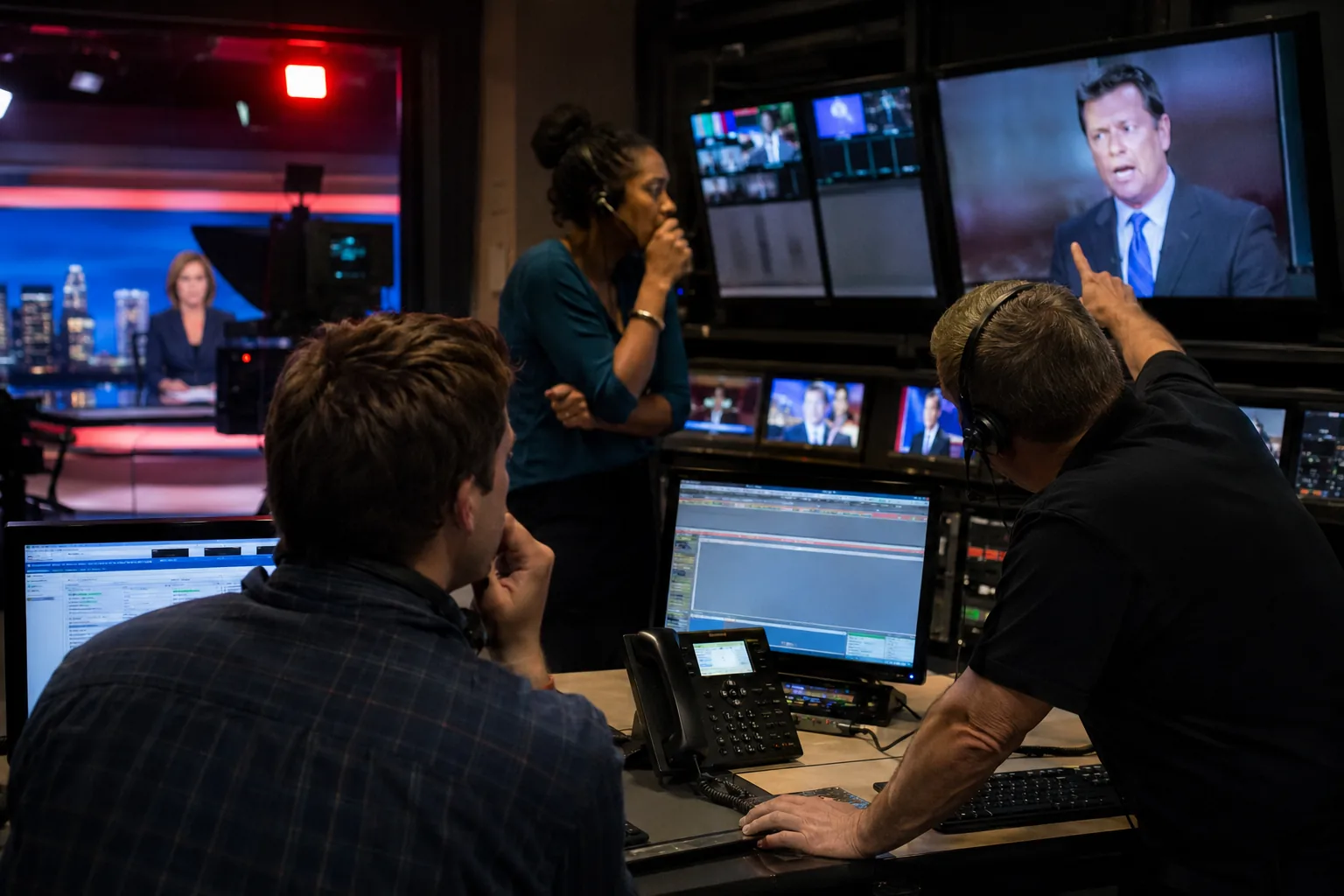
The deepfake clip hit Monitor 4 while the red cue light was still blinking over the anchor desk, and the anonymous uploader was already demanding we treat it like an emergency in our local news studio. I was at the rundown board in the deepfake_family_scandal_local_news_studio_manufactured_crisis_backpedal micro-location, crossing out a tease for the six o’clock open, when Cal Mercer pointed at the screen and said, “This goes now.” The clip showed a woman in a kitchen I did not recognize, crying hard enough to shake the frame, while a man off camera shouted a family name that made three people in the room stop moving at once. That was the whole trick: a deepfake family scandal packaged as a same-day crisis, with a burner email demanding immediate compliance and a caption that read, in all caps, CALL NOW BEFORE THIS HITS AIR.
Nobody in the room treated it like a normal upload. The asset tag was already on the file header, and I could see the timestamps jumping by odd seconds as the preview looped. Nina Vale stayed at the desk with both hands flat beside the prompter, eyes locked on the glass, waiting for a script line that was not there yet. Cal had one finger on the timing screen and another hand at his headset, talking over the producer channel in short bursts. “If this is real, we need to move.” He said it twice. The second time he looked at me instead of the screen.
I did not move the clip into the rundown. I clicked open the metadata pane, then the file properties, then the upload history. The contact line had already changed once. The sender name was blank, then a public inbox, then a number that rang once and dropped. The message thread said the family was in danger and the studio needed to call a listed outside contact, a cousin or advocate or some kind of emergency helper. The problem was right there in the room: if we reached out on air or pushed it to a wider public source, we would not be calming anything down. We would be widening the lie before we knew where it ended.
Cal leaned over my shoulder. “We can’t sit on a family emergency,” he said, and his voice had that clipped producer edge he used when the clock got loud.
“Then don’t call it one yet,” I said. “Pull the source chain first.”
I checked the frame one shot at a time. The crying woman’s hand hit the counter in the same place twice. The kitchen light flickered in a loop that did not match the rest of the image. The man at the edge of the frame used the family name again, but his mouth shape lagged behind the sound by a fraction too clean to trust. I wrote the times on a pad next to the board and held the page up toward Nina without speaking. She glanced once, then back to the prompter.
Cal took the phone call anyway. I heard him ask for verification, heard a hard pause, then a fast change in tone. The voice on the other end had been urgent a minute earlier. Now it was all corrections.
“No, don’t contact them directly,” Cal said into the headset.
That was the first break in the pressure. The anonymous uploader who had begged us to act now was suddenly telling us not to involve the exact person they claimed was in danger. Cal froze with the phone at his ear. I watched him look from the screen to me and back again. The clip kept looping, the kitchen never changing, the same hand slapping the same counter in the same second.
“What did they just say?” I asked.
Cal lowered the phone a little. “They said not to call the outside contact. They said it’s too messy.”
The deepfake clip hit Monitor 4 while the red cue light was still blinking over the anchor desk, and the anonymous uploader was already demanding we treat it like an emergency in our local news studio. I was at the rundown board in the deepfake_family_scandal_local_news_studio_manufactured_crisis_backpedal micro-location, crossing out a tease for the six o’clock open, when Cal Mercer pointed at the screen and said, “This goes now.” The clip showed a woman in a kitchen I did not recognize, crying hard enough to shake the frame, while a man off camera shouted a family name that made three people in the room stop moving at once. That was the whole trick: a deepfake family scandal packaged as a same-day crisis, with a burner email demanding immediate compliance and a caption that read, in all caps, CALL NOW BEFORE THIS HITS AIR.
Nobody in the room treated it like a normal upload. The asset tag was already on the file header, and I could see the timestamps jumping by odd seconds as the preview looped. Nina Vale stayed at the desk with both hands flat beside the prompter, eyes locked on the glass, waiting for a script line that was not there yet. Cal had one finger on the timing screen and another hand at his headset, talking over the producer channel in short bursts. “If this is real, we need to move.” He said it twice. The second time he looked at me instead of the screen.
I did not move the clip into the rundown. I clicked open the metadata pane, then the file properties, then the upload history. The contact line had already changed once. The sender name was blank, then a public inbox, then a number that rang once and dropped. The message thread said the family was in danger and the studio needed to call a listed outside contact, a cousin or advocate or some kind of emergency helper. The problem was right there in the room: if we reached out on air or pushed it to a wider public source, we would not be calming anything down. We would be widening the lie before we knew where it ended.
Cal leaned over my shoulder. “We can’t sit on a family emergency,” he said, and his voice had that clipped producer edge he used when the clock got loud.
“Then don’t call it one yet,” I said. “Pull the source chain first.”
I checked the frame one shot at a time. The crying woman’s hand hit the counter in the same place twice. The kitchen light flickered in a loop that did not match the rest of the image. The man at the edge of the frame used the family name again, but his mouth shape lagged behind the sound by a fraction too clean to trust. I wrote the times on a pad next to the board and held the page up toward Nina without speaking. She glanced once, then back to the prompter.
Cal took the phone call anyway. I heard him ask for verification, heard a hard pause, then a fast change in tone. The voice on the other end had been urgent a minute earlier. Now it was all corrections.
“No, don’t contact them directly,” Cal said into the headset.
That was the first break in the pressure. The anonymous uploader who had begged us to act now was suddenly telling us not to involve the exact person they claimed was in danger. Cal froze with the phone at his ear. I watched him look from the screen to me and back again. The clip kept looping, the kitchen never changing, the same hand slapping the same counter in the same second.
“What did they just say?” I asked.
Cal lowered the phone a little. “They said not to call the outside contact. They said it’s too messy.”