Story code: ST-000601
Part 4: The Tote Still Had To Go First
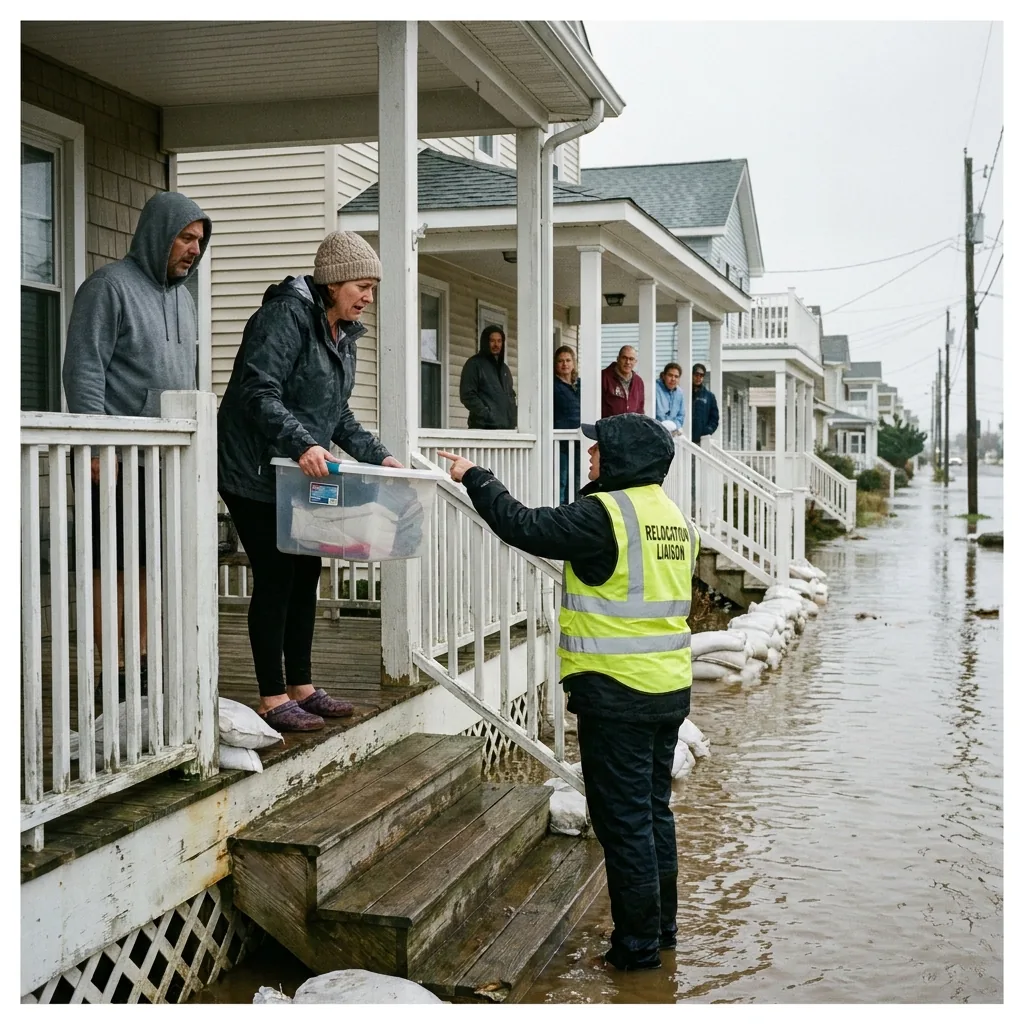
Marlene stayed on the porch one second too long, like she was waiting for the street to clear itself for her. It did not. Rina remained by the rail with her trash bag hanging forgotten at her side. The duplex couple stood ankle-deep in the yard water. My mother kept one hand on the screen door and the other around the dish towel, twisted so tight it looked like rope.
Then Marlene lifted her head and used the same carrying voice she had used on me.
“I was wrong about Tessa,” she said. “She did not take a placement from her sister. The extra rider band was stored in Elena’s evacuation tote, and I called it before I checked it.”
Nobody answered her.
She looked down at the orange band in her hand and added, flatter now, “The dependent rider code on this one is for Devin traveling with Elena if necessary. That is the assignment tied to this address.”
It was not an apology. It was a correction. But it traveled the same distance her accusation had. I watched it hit the porches across from us, the people in their driveways, the boy with the bottled water, the woman dragging a cooler two houses down. Heads turned back to me differently than they had a few minutes before. Not warmly. Just differently.
Rina said, almost to herself, “So she got called out for nothing.”
Marlene slid the wristband back into its folded shape. “I need this secured properly,” she said, and held it toward me.
I did not take it at first. “No,” I said. “You can put it where it was supposed to be put after you say one more thing.”
Her mouth tightened.
“You told this block I switched a family placement,” I said. “Tell them the tote goes with my mother, not whoever’s holding it when you walk up.”
The couple in the yard kept watching. Rina looked directly at Marlene now.
Marlene bent, hooked the orange band back over the cracked clock handle inside the side pocket, and said without looking at me, “The tote is the Morales household medical bag. It travels with Elena Morales. Possession of it by another family member does not change rider assignment.”
That was the closest thing to public repair I was going to get.
I nodded once and zipped the side pocket shut.
Then Marlene looked at her phone through the cloudy waterproof pouch and said, all business again but thinner, “Bus one is at the church lot. Bus two is delayed. Elena and Devin stay together on first available boarding if water rises past the porch line.”
No one missed what she had just done. She had reduced our whole family to a logistics sentence because that was the only ground she still had.
She stepped down into the water and moved to the next house without another word.
The porch did not erupt after she left. There was no rush of people telling me they knew all along. Rina muttered, “Damn,” and finally shifted her trash bag to the other hip. The duplex couple went back to their car. The boy with the bottled water kept walking. The block resumed its emergency in pieces.
I repacked the clock, the pill organizer, the reading glasses, and the medication sheet with hands that stayed steady because they had to. The tote still had to go first. The flood did not care that the truth had caught up.
When I turned, my mother had already moved back from the screen door. Devin picked up the rolled bedding and carried it inside without brushing my shoulder on the way past. He did not say my name. He did not say thank you for not stopping him sooner, and he did not say sorry for letting Marlene build the wrong story around me. He just went down the hallway and set the bedding somewhere I could not see.
Inside, the house felt smaller than it had that morning. Not because anything had changed in the walls. Because the porch had heard too much.
I set the tote by the front room chair where my mother always reached for it. The orange band hung again from the cracked clock handle, bright and ugly against the blue pill case. It looked ordinary now that it was back where it belonged. That almost made me angrier than the accusation had.
My mother came in slowly and stood beside the chair. She touched the red tape on the handle with two fingers. “You were right to make her say it,” she said.
Her voice was soft enough that it barely crossed the room. Then she let her hand fall and went to the kitchen for a bottle of water. That was all.
Devin stayed in the hall until Marlene’s voice carried faintly from another porch. After that he came out, picked up his phone from the windowsill, and asked my mother if she needed another towel. He asked her, not me. She answered him without looking my way.
That was the part that stayed. Not Marlene’s correction. Not Rina hearing it. Not the neighbors turning their heads back to their own problems.
It was my mother drinking water beside the chair where the tote sat packed and ready. It was my brother moving around me like I was another piece of furniture we had shoved out of the flood line. It was the orange wristband back on the clock handle, proof in plain sight, while the house filled with the kind of silence that does not break just because the facts are settled.
When the call finally came to move toward the church lot, I lifted the tote by the red-taped handle and nobody argued with me. That was the relief.
Nobody reached for it with me. That was the cost.