Story code: ST-000602
Part 1: The Chair Was Wrong
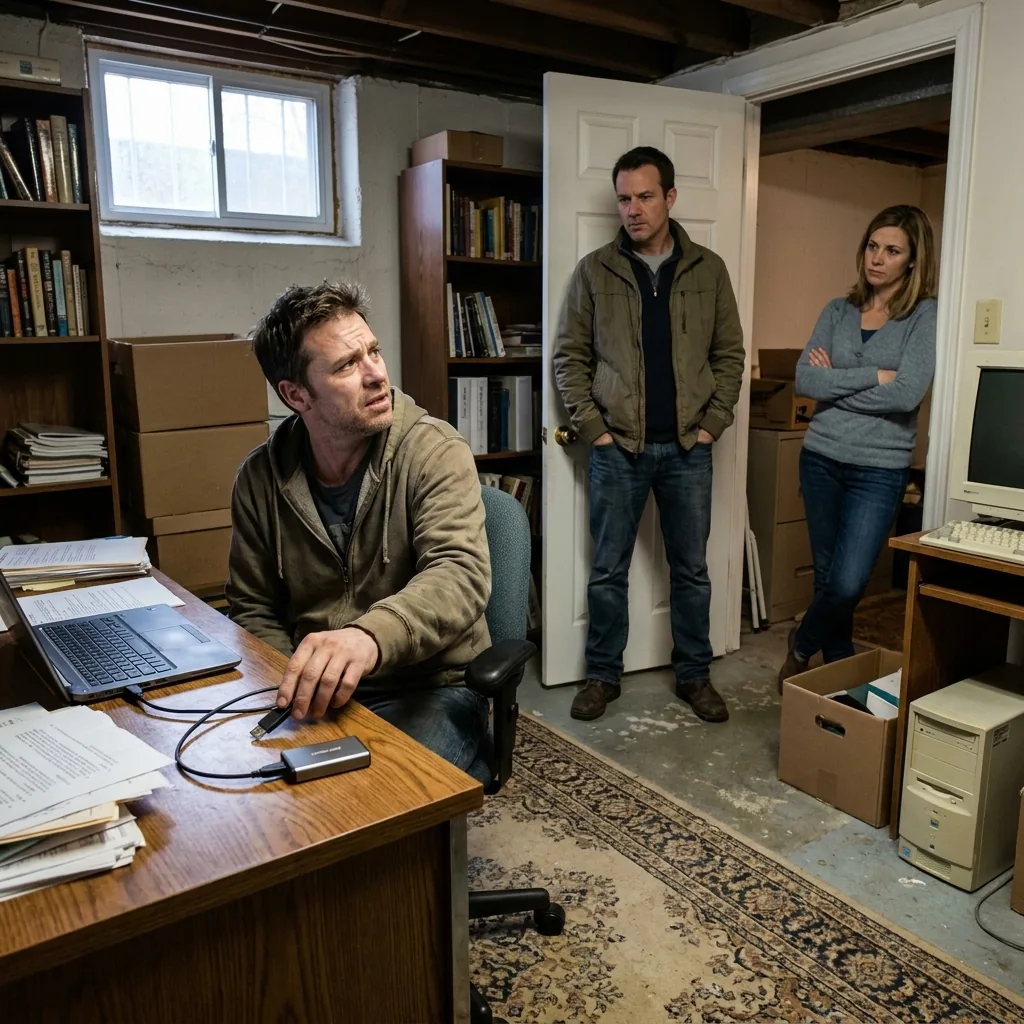
My brother walked into my basement office like it was a hallway, and the first thing I saw was my hardware wallet cable laid across my desk instead of coiled in the drawer where I keep it. My chair was pushed back from the monitor, my notebook was open to a page I had not left open, and Evan stood there with one hand on the back of the chair acting like none of it meant anything. He said, “Relax, I was just looking for a charger,” but there is no charger in that room he would ever need, and he knew that.
I had been downstairs doing ordinary Tuesday work, invoices on one screen, exchange prices on the other, coffee cooling next to my keyboard. I had gone up for less than ten minutes to sign for a delivery. When I came back down, the basement office door was cracked wider than I leave it, and the overhead light was on full brightness instead of the lamp I use during the day.
Nothing was smashed. That would have been easier.
The harm was smaller and worse. Small enough that anybody who did not know my routines could shrug it off. Big enough that I knew, standing on the last basement step, that someone had crossed into the one room in the house I keep under my own control.
Evan gave me that loose, overfamiliar half smile he uses when he wants to make a question sound stupid.
“You really lock this place down like Fort Knox,” he said.
I looked at the desk instead of answering him. The hardware wallet itself was still there, but it was turned ninety degrees from the angle I leave it. The cable was plugged into the side port instead of wrapped with the rubber tie in the drawer. My notebook had shifted just enough that the top edge was crooked against the keyboard.
I straightened the notebook before I spoke. That is one of my habits when I need to keep from arguing too early.
“Why were you in here?”
“I told you. Charger.”
“For what?”
He lifted his phone and rolled one shoulder. “My battery was low.”
“You have your own charger upstairs.”
He looked at the monitor, then at the little wallet device on the desk, then back at me. “You want to do this over a cable?”
That was the wrong answer. Not because it proved anything by itself, but because I had not said cable. I had asked why he was in my office.
I moved to the desk and checked what I could see without touching more than necessary. Chair pushed back. Mouse on the left side instead of the right. Wallet cable out. Drawer not fully closed. The locking cabinet beside the desk had a faint scrape near the keyhole, like a ring had brushed it. My phone was in my hand before I even decided to pick it up. I opened the account app I use for routine checks, not because I expected to see a disaster in real time, but because habit matters when money is involved.
No outgoing transfer showed on the surface screen. Balances looked the same. Recent activity looked ordinary. That should have calmed me down. It did not.
A private room is part of the security setup when you self-custody. People who do not hold crypto at home hear “wallet” and picture something casual. They do not understand that a touched device, a moved notebook, or a family member standing too close to your desk can be the first bad sign.
Evan kept talking while I checked my phone, broad reassuring phrases instead of direct answers.
“Nothing happened.”
“You are making this bigger than it is.”
“If I wanted anything, I would just ask you.”
That last line sat there between us. It was supposed to sound innocent. It landed wrong because it assumed the point was whether he succeeded at taking something. The point was that he had crossed the threshold at all.
I said, “Did you touch my wallet?”
He gave a quick laugh through his nose and spread his hands. “I barely even know which thing you mean.”
That was a lie I could hear without needing a blockchain explorer or a police report or a dramatic confession. Evan talks about crypto at family dinners like he is hosting a panel. He has explained seed phrases to Marlene twice, badly, while she was trying to serve potatoes. He knows exactly what the device is.
I repeated the question, because repeating steps out loud helps me keep the sequence clean.
“Did you touch the hardware wallet on my desk?”
He looked past me toward the basement stairs. “You really think I came down here to steal from you?”
I had not used the word steal either.
Marlene called down from the hallway that the delivery guy had left another package by the front door. Evan stepped around me before I could answer. He brushed the edge of the desk with two fingers as he passed, then stopped touching everything the second he saw me notice.
After he went upstairs, I stayed in the doorway and rebuilt the room with my eyes. Monitor angle. Chair position. Drawer gap. Cable. Notebook page. Cabinet scrape. Nothing in that office looked the way a stranger would have left it. It looked like somebody who already knew the room had tried to move through it fast and leave it ordinary.
I checked the basement door lock next. No damage. No sign of forced entry. No reason to pretend this was random.
By dinner, one fact had settled harder than the rest: whoever crossed into my office knew what was worth touching and what was not. And if Evan wanted me to believe he had only wandered in for a charger, then I needed to know why his story only worked if I never tested how close he had gotten to my wallet setup.
My brother walked into my basement office like it was a hallway, and the first thing I saw was my hardware wallet cable laid across my desk instead of coiled in the drawer where I keep it. My chair was pushed back from the monitor, my notebook was open to a page I had not left open, and Evan stood there with one hand on the back of the chair acting like none of it meant anything. He said, “Relax, I was just looking for a charger,” but there is no charger in that room he would ever need, and he knew that.
I had been downstairs doing ordinary Tuesday work, invoices on one screen, exchange prices on the other, coffee cooling next to my keyboard. I had gone up for less than ten minutes to sign for a delivery. When I came back down, the basement office door was cracked wider than I leave it, and the overhead light was on full brightness instead of the lamp I use during the day.
Nothing was smashed. That would have been easier.
The harm was smaller and worse. Small enough that anybody who did not know my routines could shrug it off. Big enough that I knew, standing on the last basement step, that someone had crossed into the one room in the house I keep under my own control.
Evan gave me that loose, overfamiliar half smile he uses when he wants to make a question sound stupid.
“You really lock this place down like Fort Knox,” he said.
I looked at the desk instead of answering him. The hardware wallet itself was still there, but it was turned ninety degrees from the angle I leave it. The cable was plugged into the side port instead of wrapped with the rubber tie in the drawer. My notebook had shifted just enough that the top edge was crooked against the keyboard.
I straightened the notebook before I spoke. That is one of my habits when I need to keep from arguing too early.
“Why were you in here?”
“I told you. Charger.”
“For what?”
He lifted his phone and rolled one shoulder. “My battery was low.”
“You have your own charger upstairs.”
He looked at the monitor, then at the little wallet device on the desk, then back at me. “You want to do this over a cable?”
That was the wrong answer. Not because it proved anything by itself, but because I had not said cable. I had asked why he was in my office.
I moved to the desk and checked what I could see without touching more than necessary. Chair pushed back. Mouse on the left side instead of the right. Wallet cable out. Drawer not fully closed. The locking cabinet beside the desk had a faint scrape near the keyhole, like a ring had brushed it. My phone was in my hand before I even decided to pick it up. I opened the account app I use for routine checks, not because I expected to see a disaster in real time, but because habit matters when money is involved.
No outgoing transfer showed on the surface screen. Balances looked the same. Recent activity looked ordinary. That should have calmed me down. It did not.
A private room is part of the security setup when you self-custody. People who do not hold crypto at home hear “wallet” and picture something casual. They do not understand that a touched device, a moved notebook, or a family member standing too close to your desk can be the first bad sign.
Evan kept talking while I checked my phone, broad reassuring phrases instead of direct answers.
“Nothing happened.”
“You are making this bigger than it is.”
“If I wanted anything, I would just ask you.”
That last line sat there between us. It was supposed to sound innocent. It landed wrong because it assumed the point was whether he succeeded at taking something. The point was that he had crossed the threshold at all.
I said, “Did you touch my wallet?”
He gave a quick laugh through his nose and spread his hands. “I barely even know which thing you mean.”
That was a lie I could hear without needing a blockchain explorer or a police report or a dramatic confession. Evan talks about crypto at family dinners like he is hosting a panel. He has explained seed phrases to Marlene twice, badly, while she was trying to serve potatoes. He knows exactly what the device is.
I repeated the question, because repeating steps out loud helps me keep the sequence clean.
“Did you touch the hardware wallet on my desk?”
He looked past me toward the basement stairs. “You really think I came down here to steal from you?”
I had not used the word steal either.
Marlene called down from the hallway that the delivery guy had left another package by the front door. Evan stepped around me before I could answer. He brushed the edge of the desk with two fingers as he passed, then stopped touching everything the second he saw me notice.
After he went upstairs, I stayed in the doorway and rebuilt the room with my eyes. Monitor angle. Chair position. Drawer gap. Cable. Notebook page. Cabinet scrape. Nothing in that office looked the way a stranger would have left it. It looked like somebody who already knew the room had tried to move through it fast and leave it ordinary.
I checked the basement door lock next. No damage. No sign of forced entry. No reason to pretend this was random.
By dinner, one fact had settled harder than the rest: whoever crossed into my office knew what was worth touching and what was not. And if Evan wanted me to believe he had only wandered in for a charger, then I needed to know why his story only worked if I never tested how close he had gotten to my wallet setup.