Story code: ST-000064
Part 1: The Token at the Desk
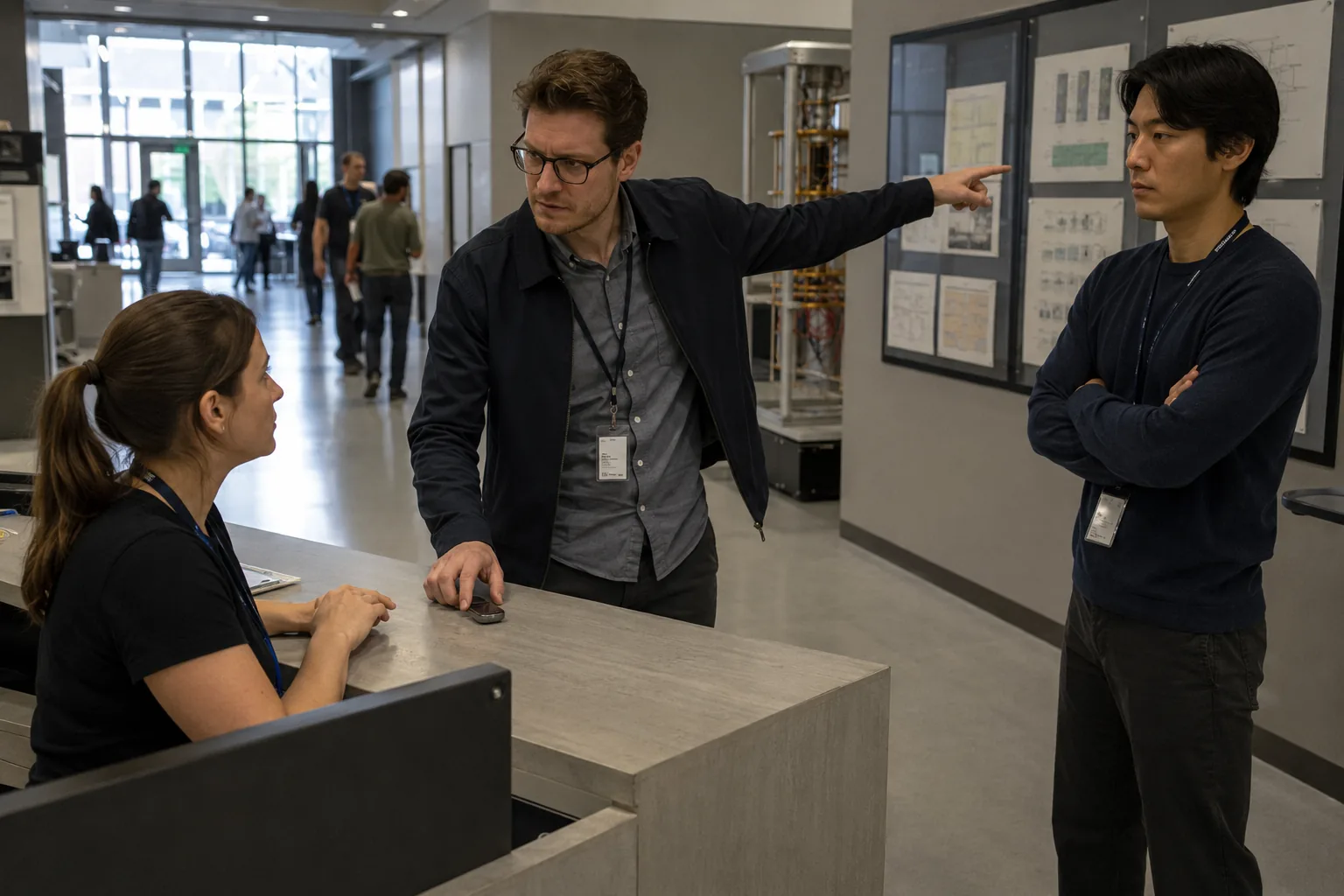
Evan Reed slid the access token across my lobby counter before I could finish checking the next badge, and in the same motion he pointed at Noah Kim’s work board like it was his own. The badge scanner was beeping, a cart wheel rattled over the tile behind him, and Dr. Priya Sen had just stepped through the glass doors when Evan said, loud enough for the whole front desk to hear, “I handled the setup.”
I was at the public-facing desk in the research lab lobby, with the badge scanner in my left hand and the project board right behind Evan’s shoulder. The token he pushed at me was one of our gray access tokens, the kind that opens the inner doors after hours. He set it on the counter like a receipt and kept his palm on it until I looked down at it. Noah stood six feet away near the visitor side of the lobby, holding a worn lanyard and a folder of notes, with his cart parked by the wall and his coffee gone cold beside the sign-in sheet.
“Evan,” I said, “Noah has the token record for this project.”
He gave me a tight smile and reached for the scanner as if we were just moving the line along. Two staffers passed behind Dr. Sen, one carrying a laptop bag, one balancing a tray of sample tubes. Nobody stopped moving. That was the part that made it worse. The lobby kept acting normal while Evan kept talking over the real work.
Dr. Sen came straight to the desk, eyes on the token in my hand. “Which project is this?” she asked.
Evan answered first. “The quantum calibration run. I already briefed it.”
Noah looked up from his notes, but he did not cut in. He just held the folder against his chest and stayed where the security line ended. I scanned Evan’s badge, then Noah’s, then the access token he had dropped on the counter. The scanner flashed green for the token, and Evan immediately leaned toward Dr. Sen like that green light had put him in charge.
He used the same phrases Noah had used at the morning stand-up. He said “cross-check the qubit pairing” and “run the cooling sequence” with the same speed, but he skipped the step that always came before the rest. Dr. Sen caught that right away. She rested one hand on the counter and asked, “What is the sequence after the token handoff?”
Evan did not answer fast enough. He laughed once, short and dry, and tried again. “We just finalize the load and go live.”
Noah’s eyes went to the token in my hand. I had seen him carry that exact token on his lanyard last week, worn down at the corner. I had seen him set it on the desk this morning when he was still talking to me about the board update. I had seen Evan walk in ten minutes later and stand too close to the counter, close enough to touch the token before anyone else reached the lobby.
A delivery cart rolled through the side corridor. One of the techs called hello to me without slowing down. Dr. Sen kept looking from Evan to Noah and back to the token, and I could see the shape of the problem in the way the room stayed polite while the wrong name sat on top of the work.
“Who updated the board?” she asked.
Evan raised his chin toward the project display. “I did.”
Noah finally moved. Not much. Just one step toward the desk, enough for Dr. Sen to turn her head. He opened the folder and set one page flat under the counter lamp. It was not a dramatic gesture. It was a practical one, the kind you make when a room needs a fact more than a speech.
Dr. Sen read the page, then looked at the token again. Her hand stayed on the counter, fingers spread, while the scanner kept blinking beside my wrist. Evan was still standing there with his badge half out and his mouth open like he was waiting for the room to catch up.
Then Dr. Sen asked the question that changed the whole desk: “If you handled the setup, Evan, why is Noah’s access token the one that opens this run?”
Evan Reed slid the access token across my lobby counter before I could finish checking the next badge, and in the same motion he pointed at Noah Kim’s work board like it was his own. The badge scanner was beeping, a cart wheel rattled over the tile behind him, and Dr. Priya Sen had just stepped through the glass doors when Evan said, loud enough for the whole front desk to hear, “I handled the setup.”
I was at the public-facing desk in the research lab lobby, with the badge scanner in my left hand and the project board right behind Evan’s shoulder. The token he pushed at me was one of our gray access tokens, the kind that opens the inner doors after hours. He set it on the counter like a receipt and kept his palm on it until I looked down at it. Noah stood six feet away near the visitor side of the lobby, holding a worn lanyard and a folder of notes, with his cart parked by the wall and his coffee gone cold beside the sign-in sheet.
“Evan,” I said, “Noah has the token record for this project.”
He gave me a tight smile and reached for the scanner as if we were just moving the line along. Two staffers passed behind Dr. Sen, one carrying a laptop bag, one balancing a tray of sample tubes. Nobody stopped moving. That was the part that made it worse. The lobby kept acting normal while Evan kept talking over the real work.
Dr. Sen came straight to the desk, eyes on the token in my hand. “Which project is this?” she asked.
Evan answered first. “The quantum calibration run. I already briefed it.”
Noah looked up from his notes, but he did not cut in. He just held the folder against his chest and stayed where the security line ended. I scanned Evan’s badge, then Noah’s, then the access token he had dropped on the counter. The scanner flashed green for the token, and Evan immediately leaned toward Dr. Sen like that green light had put him in charge.
He used the same phrases Noah had used at the morning stand-up. He said “cross-check the qubit pairing” and “run the cooling sequence” with the same speed, but he skipped the step that always came before the rest. Dr. Sen caught that right away. She rested one hand on the counter and asked, “What is the sequence after the token handoff?”
Evan did not answer fast enough. He laughed once, short and dry, and tried again. “We just finalize the load and go live.”
Noah’s eyes went to the token in my hand. I had seen him carry that exact token on his lanyard last week, worn down at the corner. I had seen him set it on the desk this morning when he was still talking to me about the board update. I had seen Evan walk in ten minutes later and stand too close to the counter, close enough to touch the token before anyone else reached the lobby.
A delivery cart rolled through the side corridor. One of the techs called hello to me without slowing down. Dr. Sen kept looking from Evan to Noah and back to the token, and I could see the shape of the problem in the way the room stayed polite while the wrong name sat on top of the work.
“Who updated the board?” she asked.
Evan raised his chin toward the project display. “I did.”
Noah finally moved. Not much. Just one step toward the desk, enough for Dr. Sen to turn her head. He opened the folder and set one page flat under the counter lamp. It was not a dramatic gesture. It was a practical one, the kind you make when a room needs a fact more than a speech.
Dr. Sen read the page, then looked at the token again. Her hand stayed on the counter, fingers spread, while the scanner kept blinking beside my wrist. Evan was still standing there with his badge half out and his mouth open like he was waiting for the room to catch up.
Then Dr. Sen asked the question that changed the whole desk: “If you handled the setup, Evan, why is Noah’s access token the one that opens this run?”