Story code: ST-000653
Part 1: He Said She Imagined It
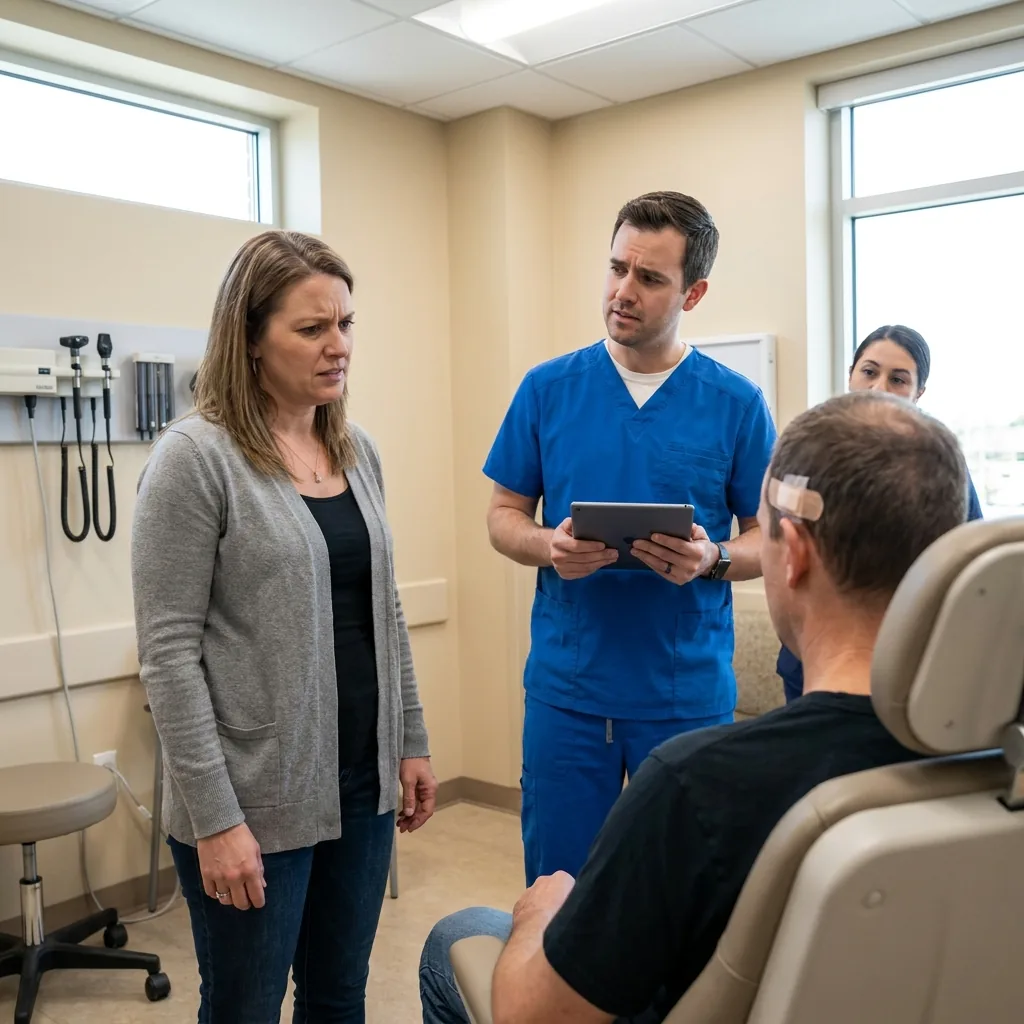
The memory technician said my sister had agreed to a permanent implant setting, then looked at her like she was confused for asking about the limited reversible version he had already described to her. He said it in a neuro clinic review room with a nurse printing labels, a doctor at the counter, and the consent tablet standing between them like a plain little judge. The worst part was how fast the room shifted from checking a procedure to checking whether Nina could be trusted to remember her own.
Mara had come in carrying Nina’s water cup and the folded visit itinerary, expecting the same routine pace they had seen at intake. Jules Han had just fastened Nina’s wristband and stepped aside to enter something on the wall computer. Dr. Leah Brenner stood near the side counter, reading from the chart in the calm voice people use when they are trying to keep a schedule moving.
Evan Pike was the one with the tablet. It sat upright in its stand, stylus tethered to the side, angled toward Nina. He tapped the screen once and said, clipped and almost bored, “We’re ready for final consent.”
Nina did not touch the stylus. “Before I sign anything,” she said, “I need you to put back what you showed me last time. The limited calibration. The reversible one.”
Evan looked at her, then at the screen, then back at her. “That was never offered,” he said.
The room did not go loud. It went smaller.
Mara saw Nina’s fingers close around the edge of the chair. “You said that was the whole reason to do this first,” Nina said. She stopped, started again. “You said we could begin with a narrow range and see how I responded before anything broader.”
Evan gave one short shake of his head. “No. That is not a thing I would tell a patient in this protocol.”
Jules stopped typing. Dr. Brenner looked up at the last sentence, not the first one.
Nina glanced at Mara, then back to Evan. “Then why would I be here?” she asked. “I delayed this twice because I was deciding whether I could live with the limited version. Why would I keep showing up if you told me from the beginning it was all-or-nothing?”
Evan touched the top edge of the tablet and turned it a few degrees toward himself. “Nina, memory concerns are exactly why this process is structured the way it is. We rely on the documented consent path, not impressions from prior conversations.”
It was a clean sentence. It also landed like a slap.
Mara heard what it did to the room. He had not only denied the promise. He had folded the subject of the appointment around Nina’s neck and tightened it. If Nina insisted she remembered correctly, she sounded like someone arguing with a clinic process designed for people whose recall could be questioned.
“She’s not talking about an impression,” Mara said. “She’s talking about the option that got her into this room.”
Evan did not answer Mara directly. He kept his eyes on Nina. “Do you want me to ask Dr. Brenner to reassess whether you’re oriented enough to continue today?”
Jules looked down at the keyboard. Dr. Brenner stepped forward half a pace, not enough to interrupt, just enough to show she had heard the word reassess.
Nina swallowed and sat straighter. “I’m oriented,” she said. “I’m asking a practical question. If the limited reversible calibration was never part of this, why did you walk me through different settings on that tablet?”
Evan answered right away, too quickly for someone searching. “What patients often misunderstand is demonstration language. We explain categories. That does not mean those categories are available under their plan of care.”
Mara watched his hand. Every time Nina said tablet, his thumb settled on the bezel as if he needed to hold the thing still.
Dr. Brenner said, “Let’s keep this focused. Nina, if there is confusion, we can pause and restate the standard procedure.”
“Restate whose version?” Nina asked.
No one answered that for a second.
A printer in the corridor started spitting out labels. Someone laughed faintly outside the room. Inside, the sounds made the silence around the chair and tablet feel even tighter.
Nina tried again, slower now. “If that option was never offered, then I need somebody to explain why I was shown something I could compare. Because I did compare it. That’s why I’m still here.”
Evan’s voice got more exact. “You were shown educational material, not selectable treatment promises.”
Mara looked at the tablet stand, then at the stylus tether. Nina had not signed. Nothing had been completed. But Evan was asking the room to accept something bigger than a disagreement about wording. He was asking them to accept that Nina had built weeks of decisions around a version of the process that existed nowhere except in a memory he was now calling unreliable.
Nina said, “Then say it plainly. You’re telling me I invented the only condition under which I would have agreed to this.”
Evan gave the small professional nod people use when they think a plain statement will help them. “I’m telling you the clinic would not have presented a reversible implant calibration as an approved consent choice in this protocol.”
Mara watched Jules at that sentence. The nurse did not move, but her eyes went to the tablet and stayed there.
That was the first moment Mara saw a second problem inside the first one. If Evan was right, then the tablet in front of them was not just a screen waiting for a signature. It was the one object in the room that should have made his version easy to show. So why was he still correcting Nina with language instead of turning the screen around and proving it?
The memory technician said my sister had agreed to a permanent implant setting, then looked at her like she was confused for asking about the limited reversible version he had already described to her. He said it in a neuro clinic review room with a nurse printing labels, a doctor at the counter, and the consent tablet standing between them like a plain little judge. The worst part was how fast the room shifted from checking a procedure to checking whether Nina could be trusted to remember her own.
Mara had come in carrying Nina’s water cup and the folded visit itinerary, expecting the same routine pace they had seen at intake. Jules Han had just fastened Nina’s wristband and stepped aside to enter something on the wall computer. Dr. Leah Brenner stood near the side counter, reading from the chart in the calm voice people use when they are trying to keep a schedule moving.
Evan Pike was the one with the tablet. It sat upright in its stand, stylus tethered to the side, angled toward Nina. He tapped the screen once and said, clipped and almost bored, “We’re ready for final consent.”
Nina did not touch the stylus. “Before I sign anything,” she said, “I need you to put back what you showed me last time. The limited calibration. The reversible one.”
Evan looked at her, then at the screen, then back at her. “That was never offered,” he said.
The room did not go loud. It went smaller.
Mara saw Nina’s fingers close around the edge of the chair. “You said that was the whole reason to do this first,” Nina said. She stopped, started again. “You said we could begin with a narrow range and see how I responded before anything broader.”
Evan gave one short shake of his head. “No. That is not a thing I would tell a patient in this protocol.”
Jules stopped typing. Dr. Brenner looked up at the last sentence, not the first one.
Nina glanced at Mara, then back to Evan. “Then why would I be here?” she asked. “I delayed this twice because I was deciding whether I could live with the limited version. Why would I keep showing up if you told me from the beginning it was all-or-nothing?”
Evan touched the top edge of the tablet and turned it a few degrees toward himself. “Nina, memory concerns are exactly why this process is structured the way it is. We rely on the documented consent path, not impressions from prior conversations.”
It was a clean sentence. It also landed like a slap.
Mara heard what it did to the room. He had not only denied the promise. He had folded the subject of the appointment around Nina’s neck and tightened it. If Nina insisted she remembered correctly, she sounded like someone arguing with a clinic process designed for people whose recall could be questioned.
“She’s not talking about an impression,” Mara said. “She’s talking about the option that got her into this room.”
Evan did not answer Mara directly. He kept his eyes on Nina. “Do you want me to ask Dr. Brenner to reassess whether you’re oriented enough to continue today?”
Jules looked down at the keyboard. Dr. Brenner stepped forward half a pace, not enough to interrupt, just enough to show she had heard the word reassess.
Nina swallowed and sat straighter. “I’m oriented,” she said. “I’m asking a practical question. If the limited reversible calibration was never part of this, why did you walk me through different settings on that tablet?”
Evan answered right away, too quickly for someone searching. “What patients often misunderstand is demonstration language. We explain categories. That does not mean those categories are available under their plan of care.”
Mara watched his hand. Every time Nina said tablet, his thumb settled on the bezel as if he needed to hold the thing still.
Dr. Brenner said, “Let’s keep this focused. Nina, if there is confusion, we can pause and restate the standard procedure.”
“Restate whose version?” Nina asked.
No one answered that for a second.
A printer in the corridor started spitting out labels. Someone laughed faintly outside the room. Inside, the sounds made the silence around the chair and tablet feel even tighter.
Nina tried again, slower now. “If that option was never offered, then I need somebody to explain why I was shown something I could compare. Because I did compare it. That’s why I’m still here.”
Evan’s voice got more exact. “You were shown educational material, not selectable treatment promises.”
Mara looked at the tablet stand, then at the stylus tether. Nina had not signed. Nothing had been completed. But Evan was asking the room to accept something bigger than a disagreement about wording. He was asking them to accept that Nina had built weeks of decisions around a version of the process that existed nowhere except in a memory he was now calling unreliable.
Nina said, “Then say it plainly. You’re telling me I invented the only condition under which I would have agreed to this.”
Evan gave the small professional nod people use when they think a plain statement will help them. “I’m telling you the clinic would not have presented a reversible implant calibration as an approved consent choice in this protocol.”
Mara watched Jules at that sentence. The nurse did not move, but her eyes went to the tablet and stayed there.
That was the first moment Mara saw a second problem inside the first one. If Evan was right, then the tablet in front of them was not just a screen waiting for a signature. It was the one object in the room that should have made his version easy to show. So why was he still correcting Nina with language instead of turning the screen around and proving it?