Story code: ST-000068
Part 1: He Said It Was for the Edit
My cousin asked me to pay for a gene-editing bill in the middle of a genetics clinic budget conversation, and when I said no, he said that refusing would be the same as abandoning family. He did it in the open administrative area, with a lab report on the counter, a billing screen turned toward us, and parents carrying diaper bags past the chairs like this was a normal Tuesday. The part that made everyone look at me like I was the problem was that he kept saying the money was urgently tied to the report, but one tiny charge on his phone did not fit that story at all.
I am Mara, and this is how it happened as cleanly as I can lay it out.
Maya Bennett was already standing at the family payment desk when I walked back from the coffee kiosk near the elevators. Dana Ruiz, the clinic financial coordinator, had a clipboard under one hand and a half-turned monitor in front of her. On the counter were a printed estimate, a folded lab report with highlighted sections, and a capped pen rolling toward the edge every time somebody shifted the stack.
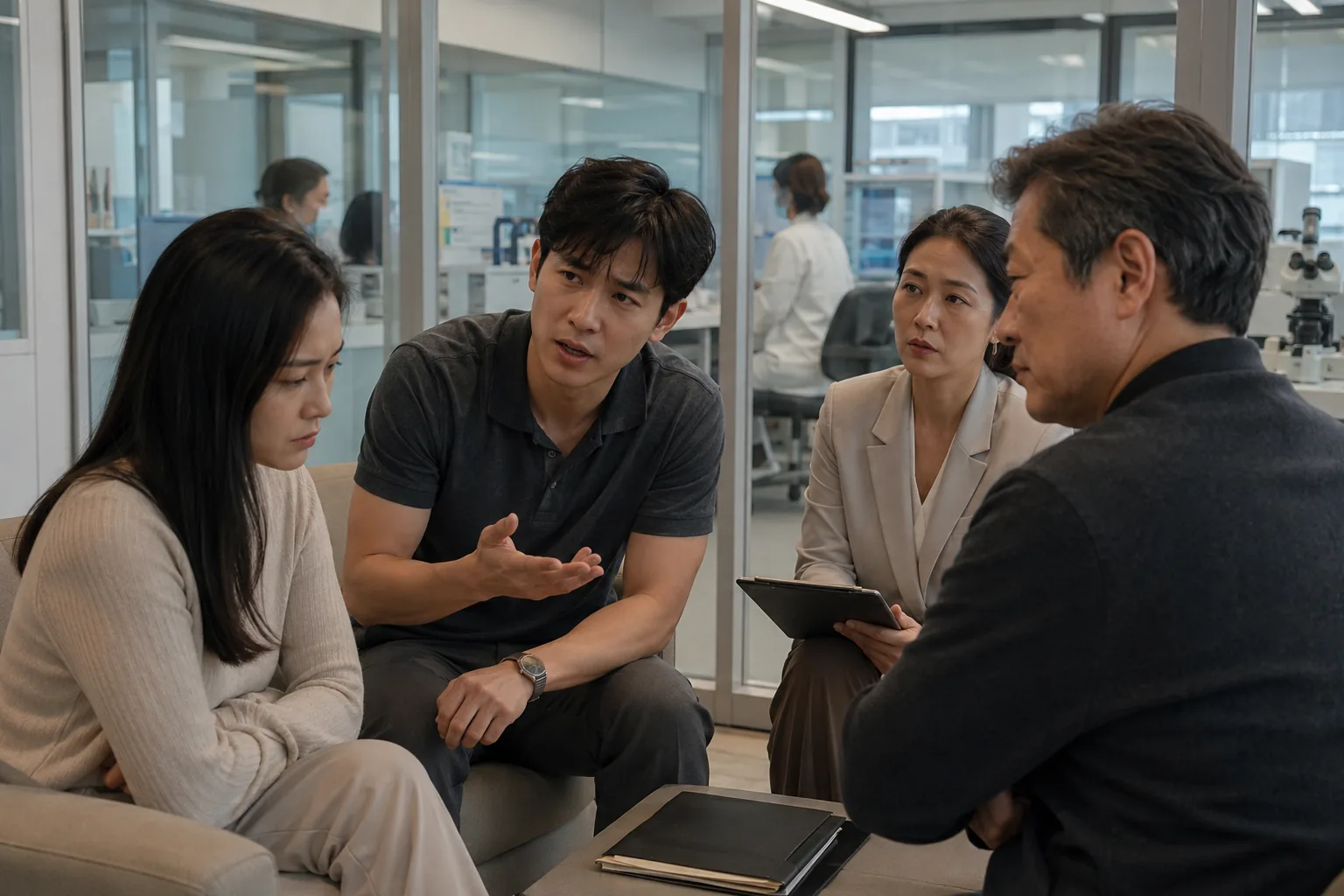
Evan Mercer was doing most of the talking. He had one palm on the desk and the other hand open in Maya’s direction like he was introducing a speaker at a conference instead of asking his cousin for money.
“It’s not extra,” he said. “It’s what has to happen if we’re going to handle this responsibly. You know what I do. You know how this works.”
Maya did not raise her voice. “Then say the amount again. And say exactly what the payment is for.”
That was her pattern the whole time. Specific question. Short pause. Let the other person fill it.
Evan named a number, then wrapped right around it. He said timing mattered. He said family should not let family sit exposed when there was a genetics issue on the table. He tapped the edge of the report with two fingers but did not open it. Noah Bennett, who had been by the wall near the brochures, pushed off and came closer when he heard the word family.
“If she can cover it, why is this even a fight?” Noah said.
Maya kept her eyes on Evan. “What service. What line item.”
Dana glanced at her screen. “I can explain clinic billing if you want me to.”
Before she could continue, Evan cut across her. “This isn’t about line items. This is about whether Maya is really going to stand here and nickel-and-dime something this serious.”
That was the first turn. He stopped arguing numbers and started arguing character.
The people nearest the payment area did what people do in medical buildings when a voice gets too sharp. They did not stare directly, but their heads shifted. One older man lowered the magazine in his lap. A woman holding a toddler moved to the farther row of chairs. Noah folded his arms and looked at Maya like she had just refused to help with rent instead of asking a question in a clinic.
“You brought me here saying you needed help with a clinic payment,” Maya said. “So I’m asking about the clinic payment.”
Evan looked at Dana again, this time with the tone people use when they want staff to lend authority to a personal story. “Can you tell her this can’t just wait?”
Dana did not take the bait. She checked the screen, then the report. “I can explain what today’s estimate covers and what it doesn’t cover.”
That should have settled the lane of the conversation. It did not.
Evan let out a breath and spoke louder. “You always do this. You make people prove they deserve help from you. If this delays because you need some perfect accounting moment, that’s on you.”
Noah repeated the worst part instantly. “That’s cold, Maya.”
Maya’s answer was flat. “No. Cold is using a clinic lobby to pressure me instead of telling the truth before we got here.”
There was a small silence after that. Not agreement. Just the kind of pause that happens when somebody says something more precise than the room expected.
Dr. Leah Park stepped out from the consult side then, not rushing, just moving with the practiced speed of someone who has heard her clinic spill into shared space one too many times. She looked at the report, then at Dana, then at Evan.
“Treatment discussion and family payment discussion are separate things,” she said. “Let’s keep them separate.”
Evan gave a tight nod and tried to slide the papers together. That was when his phone lit up on the counter.
Nobody hacked anything. Nobody grabbed it. The screen just woke up from a new card alert while it was faceup beside the estimate.
The notification banner was short, but it sat there long enough to read: a same-day charge from a luxury hotel bar, less than sixty dollars, timestamped under an hour before he told Maya this clinic matter was so urgent he could not carry it himself.
Maya did not touch the phone. She only looked at it, then at the estimate, then back at Evan.
“What was that purchase?” she asked.
He snatched the phone off the counter so fast the pen dropped to the floor.
And that was the first crack, because if the money was truly for what he had just accused her of refusing to save, that little charge had no place in the story he was telling.
My cousin asked me to pay for a gene-editing bill in the middle of a genetics clinic budget conversation, and when I said no, he said that refusing would be the same as abandoning family. He did it in the open administrative area, with a lab report on the counter, a billing screen turned toward us, and parents carrying diaper bags past the chairs like this was a normal Tuesday. The part that made everyone look at me like I was the problem was that he kept saying the money was urgently tied to the report, but one tiny charge on his phone did not fit that story at all.
I am Mara, and this is how it happened as cleanly as I can lay it out.
Maya Bennett was already standing at the family payment desk when I walked back from the coffee kiosk near the elevators. Dana Ruiz, the clinic financial coordinator, had a clipboard under one hand and a half-turned monitor in front of her. On the counter were a printed estimate, a folded lab report with highlighted sections, and a capped pen rolling toward the edge every time somebody shifted the stack.
Evan Mercer was doing most of the talking. He had one palm on the desk and the other hand open in Maya’s direction like he was introducing a speaker at a conference instead of asking his cousin for money.
“It’s not extra,” he said. “It’s what has to happen if we’re going to handle this responsibly. You know what I do. You know how this works.”
Maya did not raise her voice. “Then say the amount again. And say exactly what the payment is for.”
That was her pattern the whole time. Specific question. Short pause. Let the other person fill it.
Evan named a number, then wrapped right around it. He said timing mattered. He said family should not let family sit exposed when there was a genetics issue on the table. He tapped the edge of the report with two fingers but did not open it. Noah Bennett, who had been by the wall near the brochures, pushed off and came closer when he heard the word family.
“If she can cover it, why is this even a fight?” Noah said.
Maya kept her eyes on Evan. “What service. What line item.”
Dana glanced at her screen. “I can explain clinic billing if you want me to.”
Before she could continue, Evan cut across her. “This isn’t about line items. This is about whether Maya is really going to stand here and nickel-and-dime something this serious.”
That was the first turn. He stopped arguing numbers and started arguing character.
The people nearest the payment area did what people do in medical buildings when a voice gets too sharp. They did not stare directly, but their heads shifted. One older man lowered the magazine in his lap. A woman holding a toddler moved to the farther row of chairs. Noah folded his arms and looked at Maya like she had just refused to help with rent instead of asking a question in a clinic.
“You brought me here saying you needed help with a clinic payment,” Maya said. “So I’m asking about the clinic payment.”
Evan looked at Dana again, this time with the tone people use when they want staff to lend authority to a personal story. “Can you tell her this can’t just wait?”
Dana did not take the bait. She checked the screen, then the report. “I can explain what today’s estimate covers and what it doesn’t cover.”
That should have settled the lane of the conversation. It did not.
Evan let out a breath and spoke louder. “You always do this. You make people prove they deserve help from you. If this delays because you need some perfect accounting moment, that’s on you.”
Noah repeated the worst part instantly. “That’s cold, Maya.”
Maya’s answer was flat. “No. Cold is using a clinic lobby to pressure me instead of telling the truth before we got here.”
There was a small silence after that. Not agreement. Just the kind of pause that happens when somebody says something more precise than the room expected.
Dr. Leah Park stepped out from the consult side then, not rushing, just moving with the practiced speed of someone who has heard her clinic spill into shared space one too many times. She looked at the report, then at Dana, then at Evan.
“Treatment discussion and family payment discussion are separate things,” she said. “Let’s keep them separate.”
Evan gave a tight nod and tried to slide the papers together. That was when his phone lit up on the counter.
Nobody hacked anything. Nobody grabbed it. The screen just woke up from a new card alert while it was faceup beside the estimate.
The notification banner was short, but it sat there long enough to read: a same-day charge from a luxury hotel bar, less than sixty dollars, timestamped under an hour before he told Maya this clinic matter was so urgent he could not carry it himself.
Maya did not touch the phone. She only looked at it, then at the estimate, then back at Evan.
“What was that purchase?” she asked.
He snatched the phone off the counter so fast the pen dropped to the floor.
And that was the first crack, because if the money was truly for what he had just accused her of refusing to save, that little charge had no place in the story he was telling.