Story code: ST-000713
Part 3: Sign Here If It Means Nothing
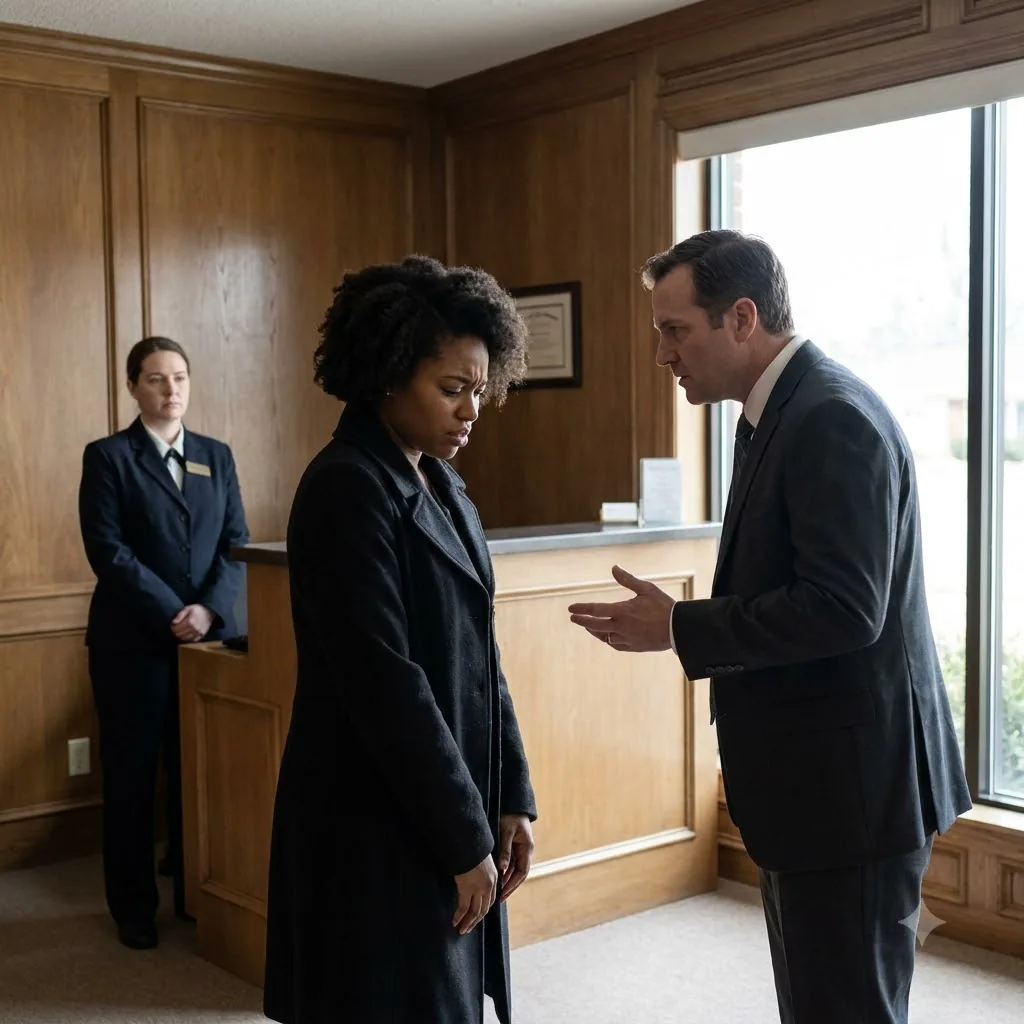
Grant’s hand stayed out for a moment, then lowered to the edge of the front desk. Marlene had already opened the intake folder to a blank line. Her pen rested over the paper without touching it.
“The person requesting that treatment signs,” she said again. “Then the item is identified in front of staff and family present.”
Grant looked at the envelope in Ava’s hand and then at the folder. He had spent the last several minutes saying the envelope was nothing, then saying it might contain something important enough to verify. Now the next step sat in plain view between those two positions.
Denise cleared her throat. “If it’s private, let Ava keep it private.”
Grant answered without turning. “And then she keeps telling people Dad left her something and nobody checks it. No. Let’s do it the clean way.”
Ava’s chin lifted slightly. She did not move closer. “You want it logged?”
“I want the story tested,” Grant said.
Mara watched Marlene slide the folder a few inches forward across the desk. Not dramatic, just enough that the line for requested identification faced the family side.
“Name of requesting family member,” Marlene said. “Description of item. Reason for identification before placement.”
Grant glanced down. His mouth flattened. He picked up the pen, wrote his name, and paused at the third field.
Marlene waited.
He said, “Sealed envelope marked for Ava Mercer. To verify contents before any placement with memorial effects.”
“And reason,” Marlene said.
He set the pen down harder than necessary, then wrote again. Marlene turned the folder back toward herself when he finished. From where Mara stood, only the last two handwritten words were easy to make out: estate relevance.
Nobody spoke for a second.
Ava did.
“You said there was no promise,” she said. “Now you signed that it could matter to Dad’s estate.”
Grant’s eyes stayed on Marlene, not on her. “I signed that it should be checked before anything gets mixed in. That’s responsible.”
Marlene read the line once, then held out her hand. “If you’re requesting identification, I need the item.”
Ava did not surrender it to Grant. She stepped to the desk and placed the envelope directly in Marlene’s palm. The motion was small, careful, and final. Marlene turned it over once, looking at the front, then at the sealed flap.
“This would not go on the memorial display table unopened,” she said. “And it would not go into tagged effects without notation if a family member requested verification.”
Grant nodded at once, fast enough that Denise looked at him instead of the envelope.
“Right,” he said. “So open it.”
Marlene did not. She looked at Ava. “You said your father gave this to you personally. Are you authorizing staff to identify it for the limited purpose requested here?”
Ava’s fingers touched the edge of the desk. “If it stays in front of everybody. If nobody walks off with it.”
“It stays here,” Marlene said.
The flower delivery man had gone back to his ribbon, but slowly. A couple who had entered the lobby for another service stopped near the guest chairs, then angled away when they understood enough to keep their distance. Mercy Hill kept functioning around the argument, which somehow made the desk feel narrower.
Marlene reached for a small letter opener from a tray beside the folders. Grant’s shoulders set as she brought the blade under the flap. Ava stood very still. Denise pressed her lips together and looked from the opening paper to the intake line Grant had signed.
The flap lifted with one dry pull.
Marlene tipped the envelope gently and caught a key ring and a folded card in her hand. No cash. No stack of papers. Just one brass safety-deposit-box key with a numbered tag and a white card folded once.
Grant spoke first, too quickly.
“That doesn’t prove anything.”
Marlene unfolded the card because it had come out with the key and because the identification request was already active on her clipboard. Her eyes moved across the writing. Then she stopped and looked at the front of the card again, as if checking the addressee against the envelope.
“Read it,” Ava said.
Marlene did not perform it like a revelation. She simply read in the same voice she might have used for a flower enclosure card.
“Ava. This key is for the box at First County on Maple. Grant is not to sign for it. Bring your ID.”
The air in the lobby seemed to contract around the desk.
Denise made a small sound in her throat. Grant’s head came up sharply.
“Let me see that,” he said.
Marlene kept the card beside the envelope and did not hand it over. She looked at the intake note he had signed, then back at the key tag lying in her palm.
“Sir,” she said, “you requested identification because of possible estate relevance. If this references a bank box and directs that one family member is not to sign for it, I need to note exactly what was identified and who was present.”
Grant’s jaw moved once. He did not answer right away.
The new fact was visible now on the desk in brass and white cardstock. The line he had signed had put it there.
And because he had made it procedure, Marlene pulled the folder closer and said, “Before this leaves my sight, I need one more confirming step on the item description for the record.”