Story code: ST-000725
Part 1: The Wrong Tag at the Pavilion
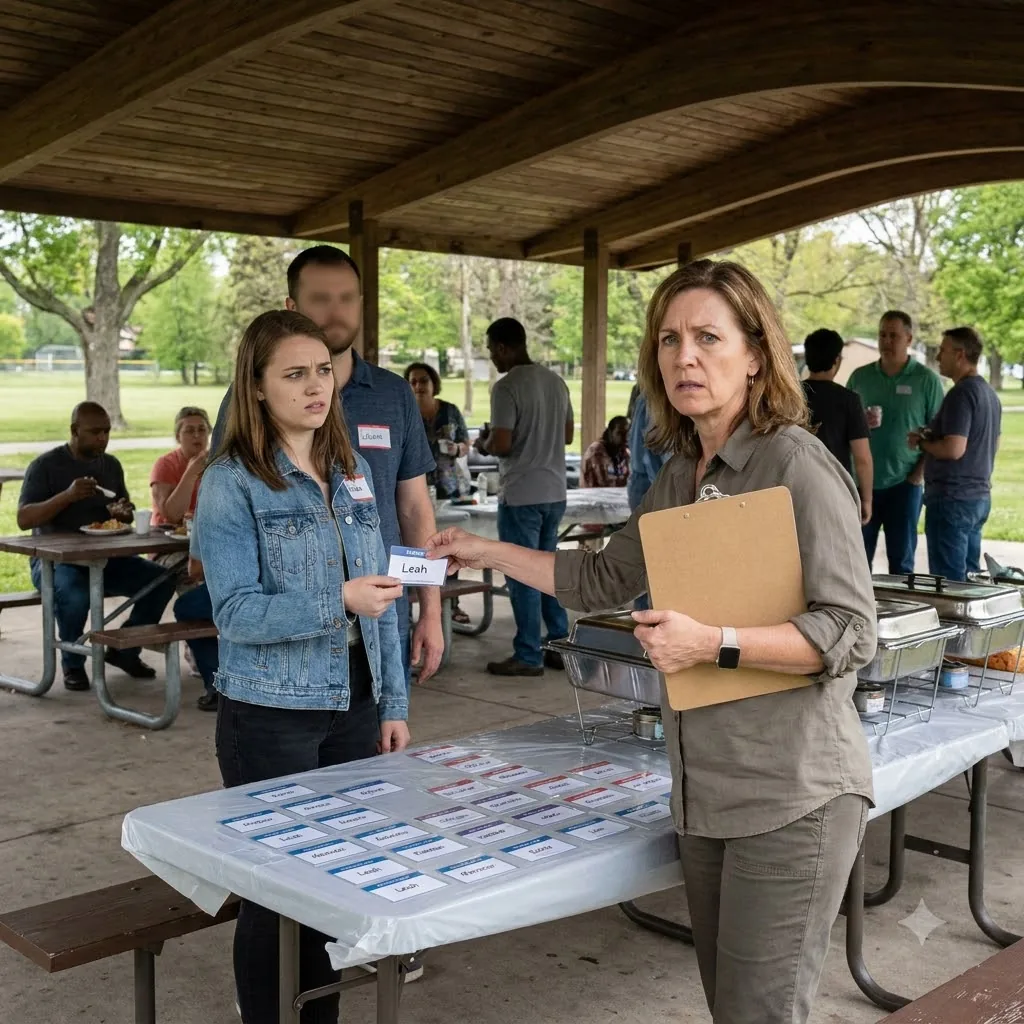
At the Riverside Park family reunion pavilion, Dana Mercer was running check-in, meal flow, and announcements with her usual brisk hands when Leah handed her a printed name tag that did not belong to the face standing in front of the welcome board. The wrong detail hit in public, in the middle of the ceremony-and-meal routine, and the first person to react was Tessa Holloway, who looked at the tag, looked at Dana, and said, clear enough for the front rows to hear, “I know that name.”
The registration table sat just inside the pavilion entrance, crowded with blank peel-and-stick tags, a black marker, the program stack, and a folding table that kept wobbling whenever someone leaned on it. Evan Mercer was moving coolers down the trash-can-and-cooler corridor behind the welcome board when he saw Leah stop short with a tag in her fingers. Dana reached for it before anyone else could get a clean look, but the printed strip had already turned outward long enough for two people in line to read the second name on it.
Dana did not raise her voice. She stepped in front of the welcome board, which had the family branches listed in thick marker, and tried to keep the line moving. “It is just a misprint,” she said. “We have extras. Give me a second.”
That explanation might have worked if Tessa had not stayed where she was. She was not part of the core check-in crowd, and she did not speak like somebody looking for a fight. She held the tag between two fingers, angled it toward the pavilion lights, and repeated the name on it once, as if making sure the letters were real. Then she gave Dana the other name, the one that did not match the reunion branch or the cousin table or anything on the welcome board.
Leah was still holding the rest of the tags when she looked from Dana to Tessa and back again. The change in her face was visible before she said a word. She lowered the stack of tags a few inches, then set them down without handing them out. A line of older relatives near the buffet awning noticed the pause and started watching the front table instead of the trays.
Dana reached for the microphone card on the platform side of the pavilion, then stopped herself and came back to the registration table. She took the tag from Tessa, flipped it face down, and said, “We are not doing this here.”
But the pavilion was already doing it there. A child with a paper plate stopped walking. A cousin near the soda cooler leaned in. Gloria Mercer, standing by the microphone stand with the program card in her hand, looked over the top of her glasses and saw the crowd pivoting toward the check-in table.
Evan was close enough to catch the process gap. Dana had extra tags, a marker, and a practiced answer ready the second the mistake was noticed. What she did not have was a clean reason for why a name on the printed strip matched a person Tessa Holloway said she knew from somewhere else. Dana tried one quick correction, then a second one, both aimed at keeping the ceremony smooth. Leah did not repeat them. She just kept her hands on the table and watched Dana like the story had already started to split.
Tessa did not raise her voice either. She pointed once toward the tag and once toward Dana. “You are using that name here?”
Dana’s answer came too fast to sound planned and too flat to sound calm. “No, you are mistaken.”
That was the moment the room changed. Not because anyone had proof yet, but because one person in the pavilion had recognized the second name on sight and Dana had answered too quickly for the denial to land cleanly. Gloria stepped closer to the microphone stand, not speaking, just waiting, while Leah moved the tag stack out of the crowd’s reach.
The contradiction stayed open on the table: if the tag was only a misprint, why did Tessa recognize it like a real name, and why did Dana treat the question like something she could shut down before anybody read it twice?
At the Riverside Park family reunion pavilion, Dana Mercer was running check-in, meal flow, and announcements with her usual brisk hands when Leah handed her a printed name tag that did not belong to the face standing in front of the welcome board. The wrong detail hit in public, in the middle of the ceremony-and-meal routine, and the first person to react was Tessa Holloway, who looked at the tag, looked at Dana, and said, clear enough for the front rows to hear, “I know that name.”
The registration table sat just inside the pavilion entrance, crowded with blank peel-and-stick tags, a black marker, the program stack, and a folding table that kept wobbling whenever someone leaned on it. Evan Mercer was moving coolers down the trash-can-and-cooler corridor behind the welcome board when he saw Leah stop short with a tag in her fingers. Dana reached for it before anyone else could get a clean look, but the printed strip had already turned outward long enough for two people in line to read the second name on it.
Dana did not raise her voice. She stepped in front of the welcome board, which had the family branches listed in thick marker, and tried to keep the line moving. “It is just a misprint,” she said. “We have extras. Give me a second.”
That explanation might have worked if Tessa had not stayed where she was. She was not part of the core check-in crowd, and she did not speak like somebody looking for a fight. She held the tag between two fingers, angled it toward the pavilion lights, and repeated the name on it once, as if making sure the letters were real. Then she gave Dana the other name, the one that did not match the reunion branch or the cousin table or anything on the welcome board.
Leah was still holding the rest of the tags when she looked from Dana to Tessa and back again. The change in her face was visible before she said a word. She lowered the stack of tags a few inches, then set them down without handing them out. A line of older relatives near the buffet awning noticed the pause and started watching the front table instead of the trays.
Dana reached for the microphone card on the platform side of the pavilion, then stopped herself and came back to the registration table. She took the tag from Tessa, flipped it face down, and said, “We are not doing this here.”
But the pavilion was already doing it there. A child with a paper plate stopped walking. A cousin near the soda cooler leaned in. Gloria Mercer, standing by the microphone stand with the program card in her hand, looked over the top of her glasses and saw the crowd pivoting toward the check-in table.
Evan was close enough to catch the process gap. Dana had extra tags, a marker, and a practiced answer ready the second the mistake was noticed. What she did not have was a clean reason for why a name on the printed strip matched a person Tessa Holloway said she knew from somewhere else. Dana tried one quick correction, then a second one, both aimed at keeping the ceremony smooth. Leah did not repeat them. She just kept her hands on the table and watched Dana like the story had already started to split.
Tessa did not raise her voice either. She pointed once toward the tag and once toward Dana. “You are using that name here?”
Dana’s answer came too fast to sound planned and too flat to sound calm. “No, you are mistaken.”
That was the moment the room changed. Not because anyone had proof yet, but because one person in the pavilion had recognized the second name on sight and Dana had answered too quickly for the denial to land cleanly. Gloria stepped closer to the microphone stand, not speaking, just waiting, while Leah moved the tag stack out of the crowd’s reach.
The contradiction stayed open on the table: if the tag was only a misprint, why did Tessa recognize it like a real name, and why did Dana treat the question like something she could shut down before anybody read it twice?