Story code: ST-000761
Part 1: She Said It Loud Enough For the Whole Party
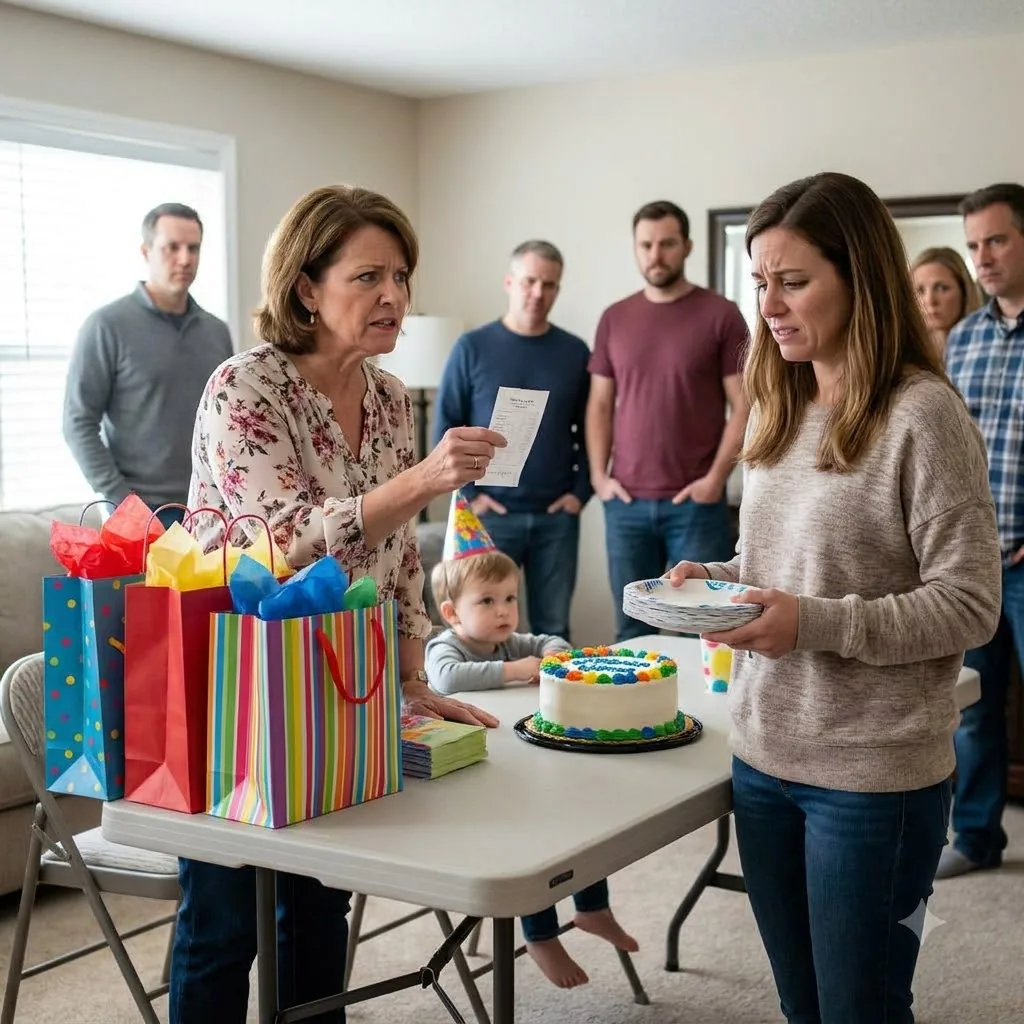
Linda Vale stopped me while I was setting paper plates by the cake and held up a gift receipt like she had caught me doing something crooked. In the middle of my son Eli’s birthday party, right beside the gift table and the bowl of melting ice cream cups, she said, “So this is what we’re doing now? Returning people’s gifts before he even opens them?” Half the adults closest to us looked over before I could answer, and the worst part was that the receipt in her hand had come out of a gift bag that was still sitting in plain sight.
That is how fast a normal task can get taken away from you in a crowded room.
One second I was counting forks, checking whether the pizza had all arrived, and trying to keep wrapping paper from sliding under the folding chairs. The next second, Linda had turned toward the room instead of toward me. She didn’t lower her voice. She didn’t ask a question like she wanted an answer. She spoke the way people do when they want witnesses.
“I knew this was tacky,” she said, pinching the slip between two fingers. “A child hasn’t even opened his presents and you’re already planning what to take back.”
A few heads turned from the backyard doorway. Trent Shaw, my next-door neighbor, was holding a soda can and looking from Linda’s hand to the gift pile. One of Eli’s classmates had stopped near the table with a slice of sheet cake on a napkin, waiting for some adult signal about whether to move or stay. My sister’s friend, who had been helping tape balloons to the fence, lowered her hand and just stood there.
The room did what crowded family parties do. It filled in the blanks before there were facts.
I said, “Linda, put that back in the bag.”
She gave a short laugh through her nose and lifted the receipt a little higher. “Why? Because everybody can see it?”
There are ways people say your name when they are trying to keep a scene small. She wasn’t doing that. She had already made sure the table was her stage. Eli was at the far end of the yard with three kids and a foam bat from the party games, but he had turned toward the patio door because voices had changed.
I walked over, dried my hand on a napkin, and kept mine open instead of reaching. “That came with the gift,” I said. “Hand it here.”
She did not hand it over.
“Mara, please,” she said, loud and patient in the way that sounds helpful to strangers. “If money is tight, nobody would judge you for being honest. But hiding the receipt in the bag and planning a return before your own son opens it? That’s different.”
That was the line that landed. Not because it made sense. Because it was offered first.
I saw it in the way two women near the drink tub went still without speaking. I saw it in Trent shifting one step back, like a person who doesn’t want to be involved but also doesn’t want to miss the rest of it. I saw it in the quick look one grandfather gave the bag, then me, then the receipt again, like he was trying to decide whether he had missed an earlier conversation.
Nobody asked Linda how she knew what I was planning.
Nobody asked why the receipt was still in the gift bag if I had supposedly tucked it there for myself.
They just watched me, which in a moment like that is its own kind of verdict.
Eli came closer to the door, foam bat hanging against his leg. “Mom?”
I raised a hand toward him without looking away from Linda. “Go stay with the games for one minute, okay?”
Linda glanced toward him and softened her voice just enough to make herself look measured. “He doesn’t need to hear adults talk about this.”
That almost did it.
Not because of the words. Because of the setup. She had interrupted the party, lifted the receipt where half the patio could see it, turned a gift into a moral lesson, and then acted like I was the one bringing tension into Eli’s day.
I said, “Read it again.”
She blinked once. “I already read it.”
“Then read it out loud.”
Her mouth tightened. She looked down at the paper, then back at me, then at the people standing around the table. A little breeze lifted one corner of a birthday napkin. Someone in the yard shouted during a game and then stopped when no one answered. The music from the speaker kept going too cheerfully for the shape the patio had taken.
Linda turned the slip slightly toward herself. “It says gift receipt,” she said.
“Yes,” I said. “Keep going.”
She didn’t.
That was the first thing that did not fit the story she had just told. If the receipt proved what she said it proved, reading one more line should have helped her. Instead she held it farther from me and repeated, “It was in the bag. Why else would it be there?”
A few people looked at the paper again. Trent leaned in just enough to see but not enough to step beside either of us. The bag itself was still on the gift table, tissue paper pushed aside, the tape on the tag bent back where someone had opened it too fast.
I looked at the receipt, then at the matching tag still tied to the handle, and one ordinary detail sat there in plain view, refusing to match Linda’s accusation.
She had the evidence in her hand. She also wasn’t reading the one line that would tell everyone why her version made no sense.
Linda Vale stopped me while I was setting paper plates by the cake and held up a gift receipt like she had caught me doing something crooked. In the middle of my son Eli’s birthday party, right beside the gift table and the bowl of melting ice cream cups, she said, “So this is what we’re doing now? Returning people’s gifts before he even opens them?” Half the adults closest to us looked over before I could answer, and the worst part was that the receipt in her hand had come out of a gift bag that was still sitting in plain sight.
That is how fast a normal task can get taken away from you in a crowded room.
One second I was counting forks, checking whether the pizza had all arrived, and trying to keep wrapping paper from sliding under the folding chairs. The next second, Linda had turned toward the room instead of toward me. She didn’t lower her voice. She didn’t ask a question like she wanted an answer. She spoke the way people do when they want witnesses.
“I knew this was tacky,” she said, pinching the slip between two fingers. “A child hasn’t even opened his presents and you’re already planning what to take back.”
A few heads turned from the backyard doorway. Trent Shaw, my next-door neighbor, was holding a soda can and looking from Linda’s hand to the gift pile. One of Eli’s classmates had stopped near the table with a slice of sheet cake on a napkin, waiting for some adult signal about whether to move or stay. My sister’s friend, who had been helping tape balloons to the fence, lowered her hand and just stood there.
The room did what crowded family parties do. It filled in the blanks before there were facts.
I said, “Linda, put that back in the bag.”
She gave a short laugh through her nose and lifted the receipt a little higher. “Why? Because everybody can see it?”
There are ways people say your name when they are trying to keep a scene small. She wasn’t doing that. She had already made sure the table was her stage. Eli was at the far end of the yard with three kids and a foam bat from the party games, but he had turned toward the patio door because voices had changed.
I walked over, dried my hand on a napkin, and kept mine open instead of reaching. “That came with the gift,” I said. “Hand it here.”
She did not hand it over.
“Mara, please,” she said, loud and patient in the way that sounds helpful to strangers. “If money is tight, nobody would judge you for being honest. But hiding the receipt in the bag and planning a return before your own son opens it? That’s different.”
That was the line that landed. Not because it made sense. Because it was offered first.
I saw it in the way two women near the drink tub went still without speaking. I saw it in Trent shifting one step back, like a person who doesn’t want to be involved but also doesn’t want to miss the rest of it. I saw it in the quick look one grandfather gave the bag, then me, then the receipt again, like he was trying to decide whether he had missed an earlier conversation.
Nobody asked Linda how she knew what I was planning.
Nobody asked why the receipt was still in the gift bag if I had supposedly tucked it there for myself.
They just watched me, which in a moment like that is its own kind of verdict.
Eli came closer to the door, foam bat hanging against his leg. “Mom?”
I raised a hand toward him without looking away from Linda. “Go stay with the games for one minute, okay?”
Linda glanced toward him and softened her voice just enough to make herself look measured. “He doesn’t need to hear adults talk about this.”
That almost did it.
Not because of the words. Because of the setup. She had interrupted the party, lifted the receipt where half the patio could see it, turned a gift into a moral lesson, and then acted like I was the one bringing tension into Eli’s day.
I said, “Read it again.”
She blinked once. “I already read it.”
“Then read it out loud.”
Her mouth tightened. She looked down at the paper, then back at me, then at the people standing around the table. A little breeze lifted one corner of a birthday napkin. Someone in the yard shouted during a game and then stopped when no one answered. The music from the speaker kept going too cheerfully for the shape the patio had taken.
Linda turned the slip slightly toward herself. “It says gift receipt,” she said.
“Yes,” I said. “Keep going.”
She didn’t.
That was the first thing that did not fit the story she had just told. If the receipt proved what she said it proved, reading one more line should have helped her. Instead she held it farther from me and repeated, “It was in the bag. Why else would it be there?”
A few people looked at the paper again. Trent leaned in just enough to see but not enough to step beside either of us. The bag itself was still on the gift table, tissue paper pushed aside, the tape on the tag bent back where someone had opened it too fast.
I looked at the receipt, then at the matching tag still tied to the handle, and one ordinary detail sat there in plain view, refusing to match Linda’s accusation.
She had the evidence in her hand. She also wasn’t reading the one line that would tell everyone why her version made no sense.