Story code: ST-000795
Part 1: She Wanted Rules Broken in Front of Everyone
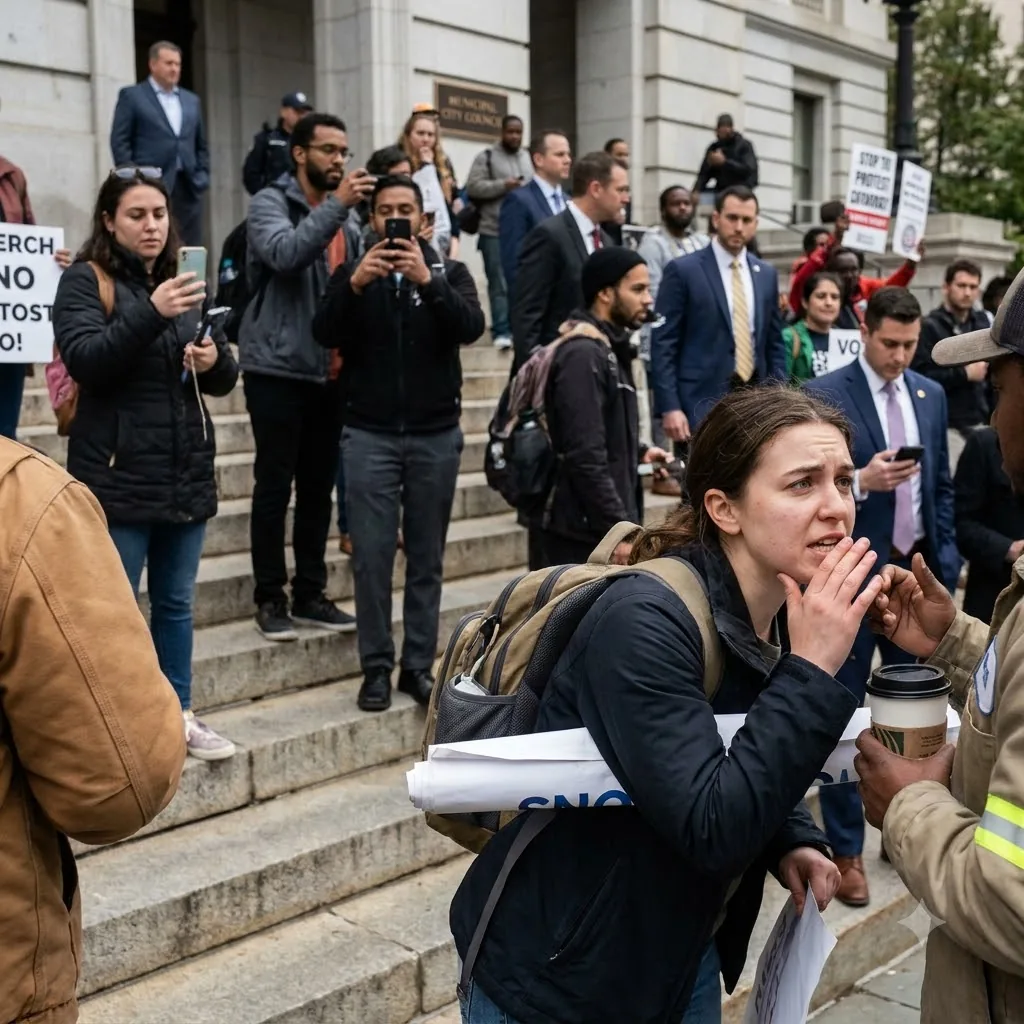
My niece hit the upper landing of the city council steps at a run, slammed a rolled climate banner against my arm, and shouted, “Aunt Mara, there is no time, move the line right now.” People waiting for the meeting looked up at once, phones half-raised, and the harm was immediate: not blood, not smoke, just a loud public deadline dropped on my head where every wrong move would happen in front of everybody. She was begging for help with one breath and using family in the next, and I still did not know why the same banner team behind her kept glancing at the side rail instead of at me.
I was working the front steps the way I always do on crowded meeting days, badge out, watching the public entry path and telling people which door was open. We had regular spillover traffic: older residents with folded agendas, two reporters with tripods they were pretending were not tripods, a contractor arguing into his phone, and a cluster of students holding hand-lettered signs about emissions targets. Nothing unusual until Lena came through the middle of it with her voice already above everyone else’s.
“Move them,” she said, pointing down the stairs. “Now. You need to clear this whole side.”
“For what?” I asked.
“A medical emergency,” she said, too fast. “Someone could go over. We don’t have time for your normal process.”
That got heads turning all the way down the steps. A woman near the rail snatched her kid closer. One of the reporters stepped backward and started recording. Lena’s friends were still holding the big banner stretched wide along the side rail, green paint on white canvas, the bottom edge brushing the stone. It was a long one, the kind that takes four people when it catches wind, and they had it set where foot traffic pinched between the rail and the center run of stairs.
“Who is hurt?” I asked.
Lena slapped the banner tube into my hands as if that answered the question. “They can’t breathe right, okay? Just clear the steps and open the side door.”
I did not open side doors on shouted claims from relatives, and she knew that. Everybody in my family knew I worked city buildings, and they all thought that meant I had a magic pocket full of keys and exceptions. I kept my voice flat.
“Point to the person.”
Instead, she leaned toward me and dropped her voice just enough to make it look private while staying loud enough for the nearest phones. “Do not do this to me right now. If somebody gets hurt because you wanted a rule, that’s on you.”
There it was. Family pressure in public. Not a request. A trap.
I stepped around the banner tube and looked past her. The team at the side rail tightened their grip when the fabric sagged. Nobody was down. Nobody was being held up under the arms. No one was calling for water or making space around a body. What I could see was a bad choke point and a lot of noise.
“Lena, show me where,” I said.
She swung her whole arm toward the rail without naming anyone. “There, there, just call somebody and move people.”
That much, I could do. I raised my hand toward Dana Pike, who was two landings down with a clipboard checking overflow names, then reached for the radio at my shoulder and called building safety to the front steps for an urgent check. If this was real, I wanted the right help there fast. If it was not, I was not about to start shoving residents off public stairs because my niece had decided volume counted as authority.
Lena heard the word “safety” and snapped her eyes back to me. “No, not like that,” she said. “Just get them out of the way first.”
“You said emergency,” I said.
“I said there isn’t time.”
“Then Officer Keller can make space when he gets here.”
The minute I said his name, she moved. She stepped in front of me so sharply the banner tube knocked my lanyard sideways. “Ben doesn’t need to come up here,” she said, louder now. “This is a simple access issue. We can handle it ourselves.”
A man in line said, “I thought somebody couldn’t breathe.”
Lena whipped toward him. “Please don’t make this worse.”
Dana had started up the steps by then, one hand on her clipboard, eyes moving from Lena to the banner to the narrowed traffic lane. I saw the same thing I had seen: the protest fabric tied off too low near the side rail, one corner dragging close to a bag and a coil of cord. Not a collapsed person. Not a visible rescue. A setup that forced everybody to stop and stare while Lena kept saying there was no time.
Then Officer Ben Keller came through the main doors with his radio clipped high and his usual even stride, and Lena threw both arms out across the rail side like she was blocking a stage entrance.
“No,” she said to the exact help she had just demanded I get. “Do not touch that banner.”
He had not even reached for it yet. He only said, “Show me who needs assistance,” and the whole landing went still enough for people at the bottom of the steps to hear her answer.
She did not point to a person. She pointed at the banner.
My niece hit the upper landing of the city council steps at a run, slammed a rolled climate banner against my arm, and shouted, “Aunt Mara, there is no time, move the line right now.” People waiting for the meeting looked up at once, phones half-raised, and the harm was immediate: not blood, not smoke, just a loud public deadline dropped on my head where every wrong move would happen in front of everybody. She was begging for help with one breath and using family in the next, and I still did not know why the same banner team behind her kept glancing at the side rail instead of at me.
I was working the front steps the way I always do on crowded meeting days, badge out, watching the public entry path and telling people which door was open. We had regular spillover traffic: older residents with folded agendas, two reporters with tripods they were pretending were not tripods, a contractor arguing into his phone, and a cluster of students holding hand-lettered signs about emissions targets. Nothing unusual until Lena came through the middle of it with her voice already above everyone else’s.
“Move them,” she said, pointing down the stairs. “Now. You need to clear this whole side.”
“For what?” I asked.
“A medical emergency,” she said, too fast. “Someone could go over. We don’t have time for your normal process.”
That got heads turning all the way down the steps. A woman near the rail snatched her kid closer. One of the reporters stepped backward and started recording. Lena’s friends were still holding the big banner stretched wide along the side rail, green paint on white canvas, the bottom edge brushing the stone. It was a long one, the kind that takes four people when it catches wind, and they had it set where foot traffic pinched between the rail and the center run of stairs.
“Who is hurt?” I asked.
Lena slapped the banner tube into my hands as if that answered the question. “They can’t breathe right, okay? Just clear the steps and open the side door.”
I did not open side doors on shouted claims from relatives, and she knew that. Everybody in my family knew I worked city buildings, and they all thought that meant I had a magic pocket full of keys and exceptions. I kept my voice flat.
“Point to the person.”
Instead, she leaned toward me and dropped her voice just enough to make it look private while staying loud enough for the nearest phones. “Do not do this to me right now. If somebody gets hurt because you wanted a rule, that’s on you.”
There it was. Family pressure in public. Not a request. A trap.
I stepped around the banner tube and looked past her. The team at the side rail tightened their grip when the fabric sagged. Nobody was down. Nobody was being held up under the arms. No one was calling for water or making space around a body. What I could see was a bad choke point and a lot of noise.
“Lena, show me where,” I said.
She swung her whole arm toward the rail without naming anyone. “There, there, just call somebody and move people.”
That much, I could do. I raised my hand toward Dana Pike, who was two landings down with a clipboard checking overflow names, then reached for the radio at my shoulder and called building safety to the front steps for an urgent check. If this was real, I wanted the right help there fast. If it was not, I was not about to start shoving residents off public stairs because my niece had decided volume counted as authority.
Lena heard the word “safety” and snapped her eyes back to me. “No, not like that,” she said. “Just get them out of the way first.”
“You said emergency,” I said.
“I said there isn’t time.”
“Then Officer Keller can make space when he gets here.”
The minute I said his name, she moved. She stepped in front of me so sharply the banner tube knocked my lanyard sideways. “Ben doesn’t need to come up here,” she said, louder now. “This is a simple access issue. We can handle it ourselves.”
A man in line said, “I thought somebody couldn’t breathe.”
Lena whipped toward him. “Please don’t make this worse.”
Dana had started up the steps by then, one hand on her clipboard, eyes moving from Lena to the banner to the narrowed traffic lane. I saw the same thing I had seen: the protest fabric tied off too low near the side rail, one corner dragging close to a bag and a coil of cord. Not a collapsed person. Not a visible rescue. A setup that forced everybody to stop and stare while Lena kept saying there was no time.
Then Officer Ben Keller came through the main doors with his radio clipped high and his usual even stride, and Lena threw both arms out across the rail side like she was blocking a stage entrance.
“No,” she said to the exact help she had just demanded I get. “Do not touch that banner.”
He had not even reached for it yet. He only said, “Show me who needs assistance,” and the whole landing went still enough for people at the bottom of the steps to hear her answer.
She did not point to a person. She pointed at the banner.