Story code: ST-000802
Part 1: My Nephew Was Already Inside
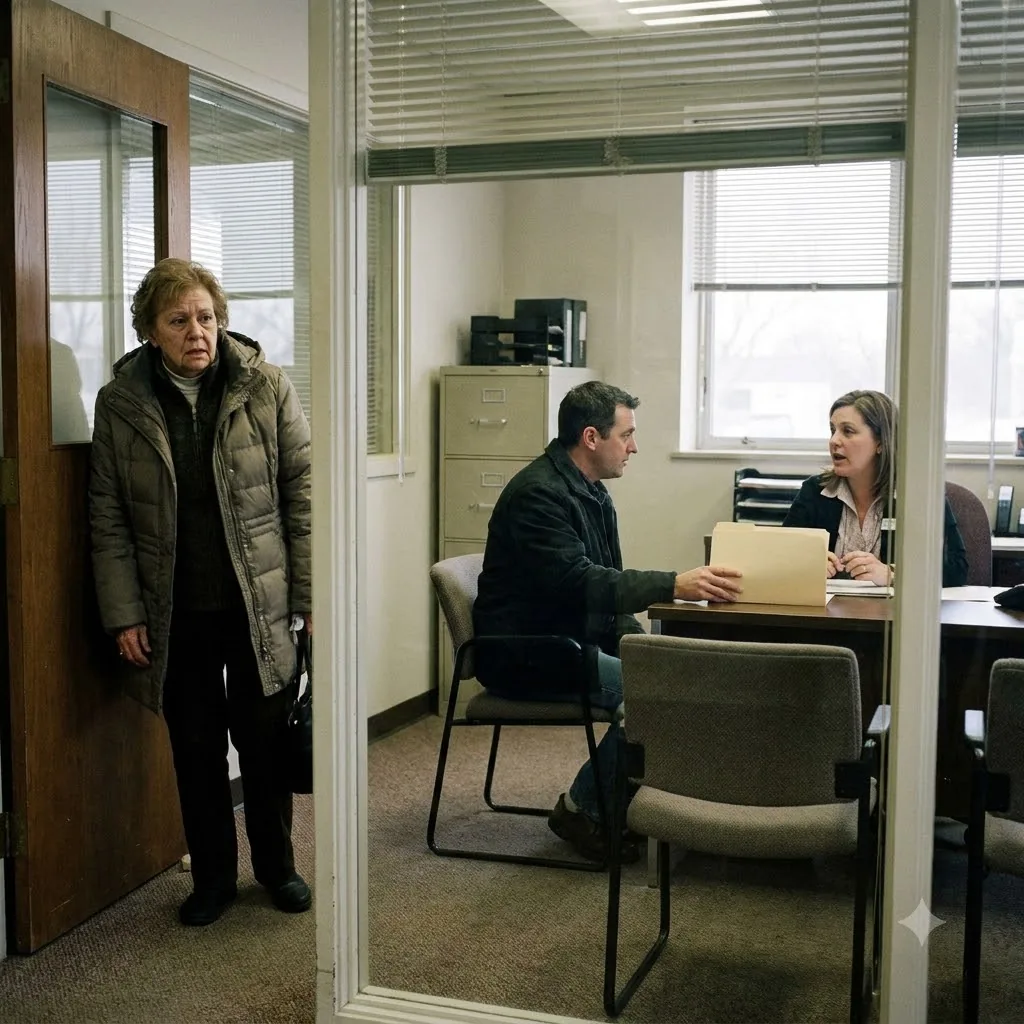
My nephew was sitting in the private office at my bank before I even reached the door, one hand on a folder with my name on it, while a banker across from him said, “Mrs. Mercer, we’re just getting started.” I had come in for a routine meeting about my accounts, and the first thing I saw through the glass was Dylan in my chair-side space like he belonged there, with a document on the desk that talked about “residential transition support” for my house. I had never agreed to any such thing, and nobody had asked my permission to discuss where I lived, who helped me, or whether I could still manage my own days.
For a second I thought I had opened the wrong door.
The room was one of those small branch offices with a glass wall facing the lobby, muted teller chatter outside, two guest chairs, and a desk too tidy to be accidental. Dylan stood up when I stepped in, smiling in that quick way people do when they want to get ahead of a question.
“Aunt Elaine,” he said, reaching for my elbow like he was guiding me in. “Good, you’re here. This won’t take long.”
I moved past his hand and sat down without answering him. My handbag stayed in my lap. The woman behind the desk, Marisol Vega according to the plaque near her keyboard, gave me a practiced bank smile that faded when she looked from me to Dylan and back again.
“Mrs. Mercer,” she said, “I understood your nephew would be joining us.”
“You understood wrong,” I said.
Dylan let out a short breath through his nose, the kind that sounds like patience being performed for an audience. “We talked about this,” he said.
“No, you talked at me about a lot of things. That isn’t the same.”
His jaw shifted, but he stayed standing until Marisol asked him to sit. He dropped into the chair beside me instead of across from me, close enough that I could feel the pressure of it. On the desk between us sat a stapled packet with my full name, home address, and the last four digits of one of my accounts printed at the top.
I looked at the title line first because it was the largest print on the page.
AUTHORIZATION FOR TRANSITIONAL PROPERTY MANAGEMENT AND SUPPORTIVE HOUSING REVIEW.
I said it out loud because I needed to hear how ridiculous it sounded. “Supportive housing review?”
Marisol folded her hands. “The purpose of today’s meeting was to discuss an account-linked disbursement plan related to future housing arrangements and bill payment support.”
“Future housing arrangements for whom?” I asked.
She glanced at the packet. “For you, Mrs. Mercer.”
Dylan leaned in before she could say anything else. “This is just planning,” he said. “In case you need more help soon. We don’t want to wait until there’s a crisis.”
I turned to him fully then. “We?”
He looked at Marisol, not at me. “She’s been forgetting things. I’ve been handling a lot behind the scenes.”
That sentence landed harder than the paperwork. Not because it was true, but because he said it in a room where policy, forms, and polite voices could turn a lie into a file note if I did not stop it fast enough.
I put my hand on the packet and pulled it toward me. Dylan’s fingers touched the corner for half a second, as if he meant to keep it centered between us, but he let go when I looked at him.
The paper was thick bank stock, clean and recently printed. There were boxes already checked. A section about temporary management of household expenses had my street address under it. Another section referred to “recommended transition from independent residence if safety concerns escalate.”
I read that line twice.
“Who wrote this?” I asked.
Dylan answered first. “It came from the process after the concerns were documented.”
“What concerns?”
He gave a small shrug. “Missed appointments. Confusion. Trouble keeping up with the house.”
“Name one.”
He opened his mouth, then closed it.
Marisol reached for the packet carefully, not snatching, just signaling procedure. “Mrs. Mercer, before we go further, I can walk through what is in our system and what this meeting was scheduled to address.”
“Please do,” I said. “And start with why my nephew was allowed into a private meeting before I arrived.”
That question changed the room. Marisol’s shoulders straightened. Dylan leaned back and crossed one ankle over the other, but his hand went flat on his thigh and stayed there.
“The appointment note listed him as a family contact involved in the matter,” Marisol said. “He checked in first and identified the meeting by name.”
“Family contact is not account authority,” I said.
“No,” she said.
It was the first clean word in the room.
I kept reading. The packet had my address, partial account information, and language about reviewing whether I should remain in my home. It did not read like a casual mistake. It read like somebody had been feeding details into a process built for people who were no longer expected to answer for themselves.
Then I saw a line halfway down the second page.
Primary support access point: existing weekly household entry and records assistance.
I looked up at Dylan. He had stopped pretending to smile.
I knew exactly who had a key to my house for “emergencies” and who sometimes carried in groceries while I sorted mail at the kitchen table. What I did not know was how that had turned into this folder, this office, and a document discussing my removal from my own home as if it were already moving forward.
I put one finger on that line and asked, very quietly, “What records have you been assisting with, Dylan?”
My nephew was sitting in the private office at my bank before I even reached the door, one hand on a folder with my name on it, while a banker across from him said, “Mrs. Mercer, we’re just getting started.” I had come in for a routine meeting about my accounts, and the first thing I saw through the glass was Dylan in my chair-side space like he belonged there, with a document on the desk that talked about “residential transition support” for my house. I had never agreed to any such thing, and nobody had asked my permission to discuss where I lived, who helped me, or whether I could still manage my own days.
For a second I thought I had opened the wrong door.
The room was one of those small branch offices with a glass wall facing the lobby, muted teller chatter outside, two guest chairs, and a desk too tidy to be accidental. Dylan stood up when I stepped in, smiling in that quick way people do when they want to get ahead of a question.
“Aunt Elaine,” he said, reaching for my elbow like he was guiding me in. “Good, you’re here. This won’t take long.”
I moved past his hand and sat down without answering him. My handbag stayed in my lap. The woman behind the desk, Marisol Vega according to the plaque near her keyboard, gave me a practiced bank smile that faded when she looked from me to Dylan and back again.
“Mrs. Mercer,” she said, “I understood your nephew would be joining us.”
“You understood wrong,” I said.
Dylan let out a short breath through his nose, the kind that sounds like patience being performed for an audience. “We talked about this,” he said.
“No, you talked at me about a lot of things. That isn’t the same.”
His jaw shifted, but he stayed standing until Marisol asked him to sit. He dropped into the chair beside me instead of across from me, close enough that I could feel the pressure of it. On the desk between us sat a stapled packet with my full name, home address, and the last four digits of one of my accounts printed at the top.
I looked at the title line first because it was the largest print on the page.
AUTHORIZATION FOR TRANSITIONAL PROPERTY MANAGEMENT AND SUPPORTIVE HOUSING REVIEW.
I said it out loud because I needed to hear how ridiculous it sounded. “Supportive housing review?”
Marisol folded her hands. “The purpose of today’s meeting was to discuss an account-linked disbursement plan related to future housing arrangements and bill payment support.”
“Future housing arrangements for whom?” I asked.
She glanced at the packet. “For you, Mrs. Mercer.”
Dylan leaned in before she could say anything else. “This is just planning,” he said. “In case you need more help soon. We don’t want to wait until there’s a crisis.”
I turned to him fully then. “We?”
He looked at Marisol, not at me. “She’s been forgetting things. I’ve been handling a lot behind the scenes.”
That sentence landed harder than the paperwork. Not because it was true, but because he said it in a room where policy, forms, and polite voices could turn a lie into a file note if I did not stop it fast enough.
I put my hand on the packet and pulled it toward me. Dylan’s fingers touched the corner for half a second, as if he meant to keep it centered between us, but he let go when I looked at him.
The paper was thick bank stock, clean and recently printed. There were boxes already checked. A section about temporary management of household expenses had my street address under it. Another section referred to “recommended transition from independent residence if safety concerns escalate.”
I read that line twice.
“Who wrote this?” I asked.
Dylan answered first. “It came from the process after the concerns were documented.”
“What concerns?”
He gave a small shrug. “Missed appointments. Confusion. Trouble keeping up with the house.”
“Name one.”
He opened his mouth, then closed it.
Marisol reached for the packet carefully, not snatching, just signaling procedure. “Mrs. Mercer, before we go further, I can walk through what is in our system and what this meeting was scheduled to address.”
“Please do,” I said. “And start with why my nephew was allowed into a private meeting before I arrived.”
That question changed the room. Marisol’s shoulders straightened. Dylan leaned back and crossed one ankle over the other, but his hand went flat on his thigh and stayed there.
“The appointment note listed him as a family contact involved in the matter,” Marisol said. “He checked in first and identified the meeting by name.”
“Family contact is not account authority,” I said.
“No,” she said.
It was the first clean word in the room.
I kept reading. The packet had my address, partial account information, and language about reviewing whether I should remain in my home. It did not read like a casual mistake. It read like somebody had been feeding details into a process built for people who were no longer expected to answer for themselves.
Then I saw a line halfway down the second page.
Primary support access point: existing weekly household entry and records assistance.
I looked up at Dylan. He had stopped pretending to smile.
I knew exactly who had a key to my house for “emergencies” and who sometimes carried in groceries while I sorted mail at the kitchen table. What I did not know was how that had turned into this folder, this office, and a document discussing my removal from my own home as if it were already moving forward.
I put one finger on that line and asked, very quietly, “What records have you been assisting with, Dylan?”