Story code: ST-000817
Part 1: My Brother Said I Wasn’t Allowed to Ask
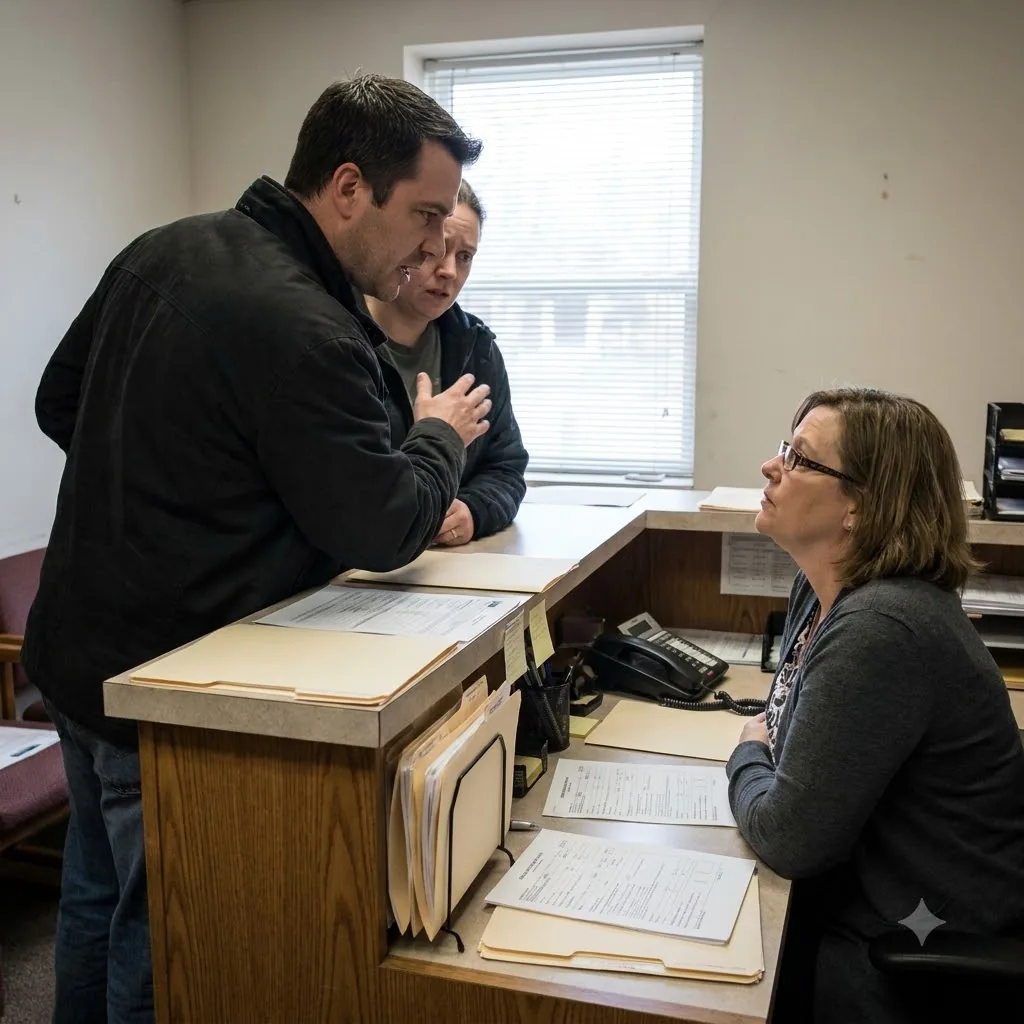
The first thing Derek did was step in front of me at the intake counter and tell the credit counselor I was not allowed to ask one question about our dead mother’s collection notice unless I agreed to take the debt. He said it like he was reading from a rule book, right there in a neighborhood credit counselor office while a printer clicked behind the desk and people filled out forms on a sign-in clipboard. What made it worse was the woman behind the counter repeated him before anyone showed me where that rule existed.
I’m Mara, and I’m laying this out the way it happened in front of other people, because what broke this open later was not some secret recording or dramatic confession. It was the gap between what they kept saying out loud and what the office process could actually support.
Alyssa Moreno came in with a manila folder pressed to her side and a paper collection notice on top. The notice was about Elaine Moreno, her mother, who had died a few months earlier. Alyssa’s goal sounded plain enough. She wanted to know what the notice meant, whether she personally owed anything, and what options existed before the account rolled into something bigger.
She barely got the notice onto the counter before Derek Moreno, her older brother, leaned in and spoke first.
“No,” he said to the front desk counselor. “She can’t discuss this unless she accepts responsibility. That’s your policy on deceased accounts.”
The counselor, Marina Holt, looked from the notice to her screen and back again. She had the polished office tone people use when they want a sentence to sound settled.
“That is correct,” Marina said. “If the family member is not the responsible party, we can’t go over account options with them.”
Alyssa kept one hand on the folder and asked the question that should have slowed everything down.
“Where is that written?”
Marina did not answer it directly. She tapped at her keyboard, paused, then said, “It’s part of what we can and can’t do on these cases.”
Derek added, “I already handled this with your office. She was told before. She can either take it on or stay out of it.”
That was the first visible harm. Alyssa had walked in carrying the collection notice, asking for guidance, and within a minute the office had turned that into a yes-or-no demand about responsibility. Not because anyone pointed to the notice. Not because anyone read a policy. Because Derek announced a rule and Marina gave it office weight.
Alyssa did not raise her voice. She asked direct follow-ups, one at a time.
“So I can’t ask what the notice is for?”
Marina said, “Not in detail.”
“I can’t ask what help exists?”
“Not unless you’re the responsible party.”
“I can’t even ask what the process is?”
Marina hesitated there. Derek answered before she did.
“It’s the same thing. You’re not on it.”
That was the moment the rule started changing shape. First it blocked discussion of the debt. Then it blocked options. Then it blurred into blocking the process itself.
Alyssa slid the collection notice a few inches closer across the counter. “The paper says to contact this office for counseling and next steps. I’m contacting the office. I’m not agreeing I owe it. I’m asking what this means.”
Marina glanced at the notice, but she still did not read any line out loud. She gave another polished answer instead.
“We can’t give access where there’s no authorization.”
Alyssa asked, “Access to what?”
Again, Derek moved first. “To anything connected to the account.”
People in reception had started doing that quiet office thing where they pretend to stay on their own paperwork while listening to every word. A man near the brochure rack stopped turning a page. Someone’s phone alarm buzzed and got silenced. Marina’s screen reflected in her glasses, but she still did not point to a policy note, a printed handout, or even a sentence on the notice.
Alyssa changed the angle.
“Fine,” she said. “If I can’t discuss the account, can I at least sign in for general counseling about what heirs are and are not supposed to do with a collection notice?”
Marina opened her mouth, then looked to Derek.
He said, “No, because this notice is attached to an active family debt issue. It all falls under the same restriction.”
That should have made no sense to anyone working intake. General counseling and account-specific access were not the same function. But Marina nodded like they were.
“That would still be connected,” she said.
Alyssa asked the cleanest question in the room.
“How can the same rule block me from discussing this account and also block me from asking about the rule itself?”
Marina’s fingers stopped over the keyboard. She looked at Derek. Then back at Alyssa. Then at the collection notice again.
She said, “That’s just how we have to handle these situations.”
Not why. Not where it was written. Not what field on the screen required it. Just that they had to.
And that was where Part 1 stopped being a family argument and turned into a process problem, because the gatekeeper who had denied Alyssa at the counter could not explain why the same invisible rule was suddenly reaching into every other part of the office.
The first thing Derek did was step in front of me at the intake counter and tell the credit counselor I was not allowed to ask one question about our dead mother’s collection notice unless I agreed to take the debt. He said it like he was reading from a rule book, right there in a neighborhood credit counselor office while a printer clicked behind the desk and people filled out forms on a sign-in clipboard. What made it worse was the woman behind the counter repeated him before anyone showed me where that rule existed.
I’m Mara, and I’m laying this out the way it happened in front of other people, because what broke this open later was not some secret recording or dramatic confession. It was the gap between what they kept saying out loud and what the office process could actually support.
Alyssa Moreno came in with a manila folder pressed to her side and a paper collection notice on top. The notice was about Elaine Moreno, her mother, who had died a few months earlier. Alyssa’s goal sounded plain enough. She wanted to know what the notice meant, whether she personally owed anything, and what options existed before the account rolled into something bigger.
She barely got the notice onto the counter before Derek Moreno, her older brother, leaned in and spoke first.
“No,” he said to the front desk counselor. “She can’t discuss this unless she accepts responsibility. That’s your policy on deceased accounts.”
The counselor, Marina Holt, looked from the notice to her screen and back again. She had the polished office tone people use when they want a sentence to sound settled.
“That is correct,” Marina said. “If the family member is not the responsible party, we can’t go over account options with them.”
Alyssa kept one hand on the folder and asked the question that should have slowed everything down.
“Where is that written?”
Marina did not answer it directly. She tapped at her keyboard, paused, then said, “It’s part of what we can and can’t do on these cases.”
Derek added, “I already handled this with your office. She was told before. She can either take it on or stay out of it.”
That was the first visible harm. Alyssa had walked in carrying the collection notice, asking for guidance, and within a minute the office had turned that into a yes-or-no demand about responsibility. Not because anyone pointed to the notice. Not because anyone read a policy. Because Derek announced a rule and Marina gave it office weight.
Alyssa did not raise her voice. She asked direct follow-ups, one at a time.
“So I can’t ask what the notice is for?”
Marina said, “Not in detail.”
“I can’t ask what help exists?”
“Not unless you’re the responsible party.”
“I can’t even ask what the process is?”
Marina hesitated there. Derek answered before she did.
“It’s the same thing. You’re not on it.”
That was the moment the rule started changing shape. First it blocked discussion of the debt. Then it blocked options. Then it blurred into blocking the process itself.
Alyssa slid the collection notice a few inches closer across the counter. “The paper says to contact this office for counseling and next steps. I’m contacting the office. I’m not agreeing I owe it. I’m asking what this means.”
Marina glanced at the notice, but she still did not read any line out loud. She gave another polished answer instead.
“We can’t give access where there’s no authorization.”
Alyssa asked, “Access to what?”
Again, Derek moved first. “To anything connected to the account.”
People in reception had started doing that quiet office thing where they pretend to stay on their own paperwork while listening to every word. A man near the brochure rack stopped turning a page. Someone’s phone alarm buzzed and got silenced. Marina’s screen reflected in her glasses, but she still did not point to a policy note, a printed handout, or even a sentence on the notice.
Alyssa changed the angle.
“Fine,” she said. “If I can’t discuss the account, can I at least sign in for general counseling about what heirs are and are not supposed to do with a collection notice?”
Marina opened her mouth, then looked to Derek.
He said, “No, because this notice is attached to an active family debt issue. It all falls under the same restriction.”
That should have made no sense to anyone working intake. General counseling and account-specific access were not the same function. But Marina nodded like they were.
“That would still be connected,” she said.
Alyssa asked the cleanest question in the room.
“How can the same rule block me from discussing this account and also block me from asking about the rule itself?”
Marina’s fingers stopped over the keyboard. She looked at Derek. Then back at Alyssa. Then at the collection notice again.
She said, “That’s just how we have to handle these situations.”
Not why. Not where it was written. Not what field on the screen required it. Just that they had to.
And that was where Part 1 stopped being a family argument and turned into a process problem, because the gatekeeper who had denied Alyssa at the counter could not explain why the same invisible rule was suddenly reaching into every other part of the office.