Story code: ST-000855
Part 1: She Wanted an Emergency Until I Reached the Button
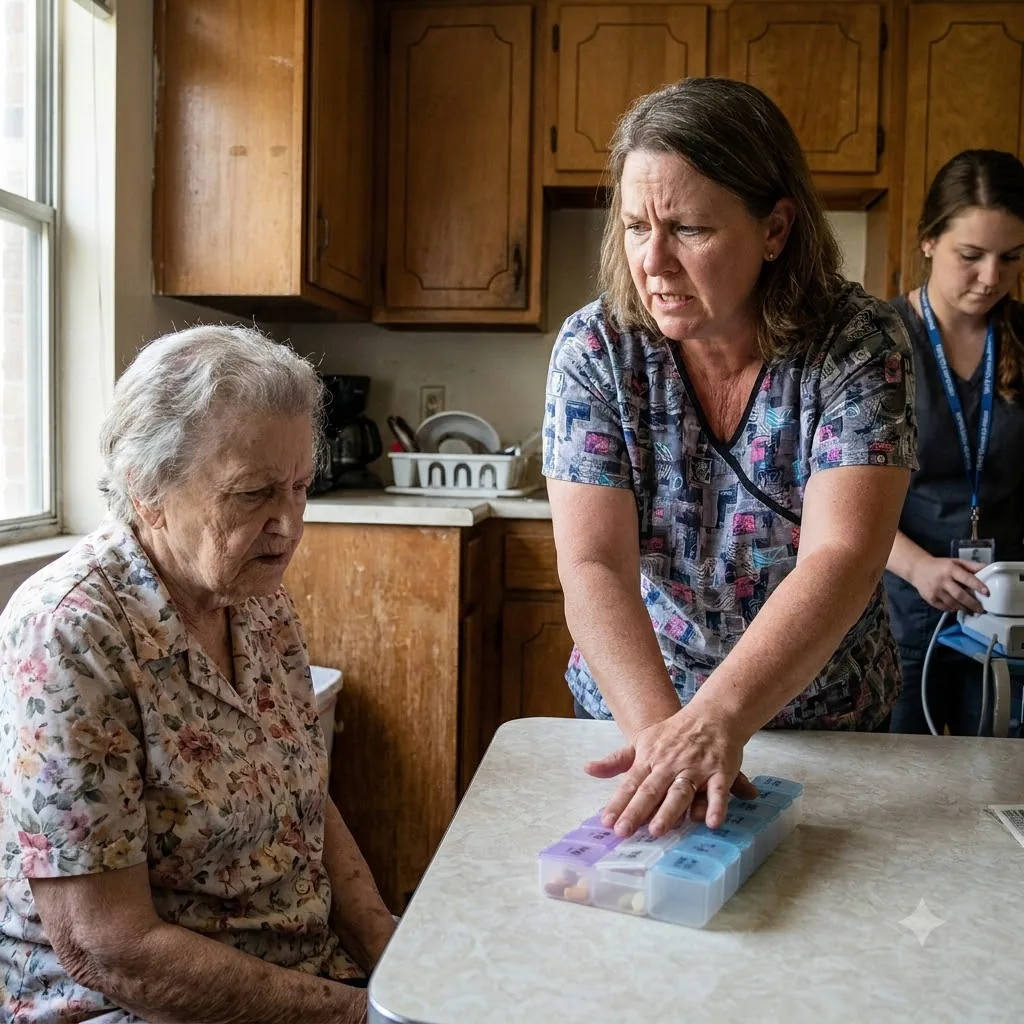
Dana Bell slapped her hand over Evelyn Parker’s weekly pill organizer and said, “No, no, no, this is wrong,” like the plastic box itself had turned dangerous on the kitchenette table. I was standing three feet away with a clean dish towel in my hand during an ordinary visit, and before Evelyn could even reach for her water glass, Dana started barking that we had minutes, that routine didn’t matter, that Evelyn had to do exactly what she said right then. When I moved toward the nurse-call button by the recliner, the same aide who kept saying this was an emergency cut in front of me and told me not to touch it.
Evelyn was still seated at the table in her pale blue house sweater. The organizer was open between two loose prescription bottles and a half-full water glass. I had been wiping the counter and putting away the last breakfast plate. Nothing about the room had looked unusual until Dana came in fast from the living room side and leaned over the table hard enough to rattle the bottles.
“Why is Thursday empty?” she snapped.
Evelyn looked down at the organizer, then up at Dana, then back down again. “Because it’s Thursday.”
Dana ignored that. She pointed at the box without touching the open slots. “No, you took the wrong day. She could double-dose. She could crash. We need to fix this now.”
Her voice filled the whole apartment. It carried through the small living room and toward the front door. Evelyn pushed her chair back an inch with her knees but didn’t stand. Her hand hovered over the water glass and stopped there.
I said, as evenly as I could, “Do you want me to get the nurse line on speaker?”
“No,” Dana said, too fast. Then she corrected herself. “I mean, not yet. First we need to get the bottles and figure out what she swallowed. Evelyn, tell me exactly what you took.”
Evelyn pressed her lips together. “What I always take.”
Dana turned to me like I was the problem now. “Don’t let her take anything else. Don’t let her drink that.”
That was the first moment the room changed. Evelyn’s fingers left the glass. She looked from Dana to me and stayed still, like the loudest voice had become the rule.
Dana started gathering the loose prescription bottles into a tight row. She kept talking while she moved, quick and sharp, saying words like interaction and blood pressure and timing. She did not read the labels out loud. She did not ask Evelyn what day the organizer had been filled. She just kept driving the pace forward.
“We may need EMS,” she said. “If she mixed doses, this is serious.”
I took my phone from my apron pocket. “Then I’m calling.”
Dana’s head snapped toward me. “No. Call the nurse desk first. Actually, wait. Let me handle it.” She put one arm partly across the organizer, like she was shielding it from both of us. “You don’t know what to tell them.”
Evelyn finally spoke louder. “Dana, I took the morning pills after toast. Same as always.”
Dana bent closer to her. “Did you take from today’s slot or yesterday’s? This matters.”
“Today’s,” Evelyn said.
Dana gave a short, impatient sound. “You’re not understanding me.”
I had been inside enough apartments to know what real confusion looked like in a room. This was different. Dana was the only one moving fast. Dana was the only one changing the rules every few seconds. First it was don’t call, then call, then wait, then let her handle it. Meanwhile Evelyn had gone from finishing breakfast in her own kitchen to sitting with both hands in her lap because someone had told her her water might be dangerous.
I stepped toward the recliner area where Evelyn kept her emergency call button clipped to a side pocket. “I’m getting another set of eyes in here.”
Dana moved before I reached it. She came around the end of the table and planted herself between me and the chair. “That button calls building response, not medication support. Don’t create more confusion.”
She had been the one saying emergency less than a minute earlier.
From the hall, a cart wheel squeaked past the front door. The apartment felt small all at once: tidy throw blanket on the recliner, pill box open on the table, Dana standing with her shoulders squared like she could block the whole room.
I said, “You just said we might need EMS.”
“I said might,” she shot back. “Not if people start overreacting.”
Evelyn looked at the organizer again. One of the Thursday compartments was open. The others were snapped shut in neat little rows. Dana followed her gaze and closed the lid with one flat push of her palm.
“Nobody touches this until we sort it out,” she said.
She reached for the bottles again, then stopped when I stayed where I was instead of moving away. For a second nobody spoke. The only sound was the refrigerator hum and the muted TV from another apartment through the wall.
Then Dana raised her voice toward the front door and said, “Luis? If you’re out there, I may need help in here,” but when I took one more step toward the nurse-call button, she put her hand out at my chest level and said, low and hard, “Do not press that.”
If this was the emergency she claimed it was, why was she stopping the exact help she had just called for?
Dana Bell slapped her hand over Evelyn Parker’s weekly pill organizer and said, “No, no, no, this is wrong,” like the plastic box itself had turned dangerous on the kitchenette table. I was standing three feet away with a clean dish towel in my hand during an ordinary visit, and before Evelyn could even reach for her water glass, Dana started barking that we had minutes, that routine didn’t matter, that Evelyn had to do exactly what she said right then. When I moved toward the nurse-call button by the recliner, the same aide who kept saying this was an emergency cut in front of me and told me not to touch it.
Evelyn was still seated at the table in her pale blue house sweater. The organizer was open between two loose prescription bottles and a half-full water glass. I had been wiping the counter and putting away the last breakfast plate. Nothing about the room had looked unusual until Dana came in fast from the living room side and leaned over the table hard enough to rattle the bottles.
“Why is Thursday empty?” she snapped.
Evelyn looked down at the organizer, then up at Dana, then back down again. “Because it’s Thursday.”
Dana ignored that. She pointed at the box without touching the open slots. “No, you took the wrong day. She could double-dose. She could crash. We need to fix this now.”
Her voice filled the whole apartment. It carried through the small living room and toward the front door. Evelyn pushed her chair back an inch with her knees but didn’t stand. Her hand hovered over the water glass and stopped there.
I said, as evenly as I could, “Do you want me to get the nurse line on speaker?”
“No,” Dana said, too fast. Then she corrected herself. “I mean, not yet. First we need to get the bottles and figure out what she swallowed. Evelyn, tell me exactly what you took.”
Evelyn pressed her lips together. “What I always take.”
Dana turned to me like I was the problem now. “Don’t let her take anything else. Don’t let her drink that.”
That was the first moment the room changed. Evelyn’s fingers left the glass. She looked from Dana to me and stayed still, like the loudest voice had become the rule.
Dana started gathering the loose prescription bottles into a tight row. She kept talking while she moved, quick and sharp, saying words like interaction and blood pressure and timing. She did not read the labels out loud. She did not ask Evelyn what day the organizer had been filled. She just kept driving the pace forward.
“We may need EMS,” she said. “If she mixed doses, this is serious.”
I took my phone from my apron pocket. “Then I’m calling.”
Dana’s head snapped toward me. “No. Call the nurse desk first. Actually, wait. Let me handle it.” She put one arm partly across the organizer, like she was shielding it from both of us. “You don’t know what to tell them.”
Evelyn finally spoke louder. “Dana, I took the morning pills after toast. Same as always.”
Dana bent closer to her. “Did you take from today’s slot or yesterday’s? This matters.”
“Today’s,” Evelyn said.
Dana gave a short, impatient sound. “You’re not understanding me.”
I had been inside enough apartments to know what real confusion looked like in a room. This was different. Dana was the only one moving fast. Dana was the only one changing the rules every few seconds. First it was don’t call, then call, then wait, then let her handle it. Meanwhile Evelyn had gone from finishing breakfast in her own kitchen to sitting with both hands in her lap because someone had told her her water might be dangerous.
I stepped toward the recliner area where Evelyn kept her emergency call button clipped to a side pocket. “I’m getting another set of eyes in here.”
Dana moved before I reached it. She came around the end of the table and planted herself between me and the chair. “That button calls building response, not medication support. Don’t create more confusion.”
She had been the one saying emergency less than a minute earlier.
From the hall, a cart wheel squeaked past the front door. The apartment felt small all at once: tidy throw blanket on the recliner, pill box open on the table, Dana standing with her shoulders squared like she could block the whole room.
I said, “You just said we might need EMS.”
“I said might,” she shot back. “Not if people start overreacting.”
Evelyn looked at the organizer again. One of the Thursday compartments was open. The others were snapped shut in neat little rows. Dana followed her gaze and closed the lid with one flat push of her palm.
“Nobody touches this until we sort it out,” she said.
She reached for the bottles again, then stopped when I stayed where I was instead of moving away. For a second nobody spoke. The only sound was the refrigerator hum and the muted TV from another apartment through the wall.
Then Dana raised her voice toward the front door and said, “Luis? If you’re out there, I may need help in here,” but when I took one more step toward the nurse-call button, she put her hand out at my chest level and said, low and hard, “Do not press that.”
If this was the emergency she claimed it was, why was she stopping the exact help she had just called for?