Story code: ST-000907
Part 3: The Record Turned Back on Them
The stapled note sat half out of the binder sleeve, and Gavin Pike moved for it too late.
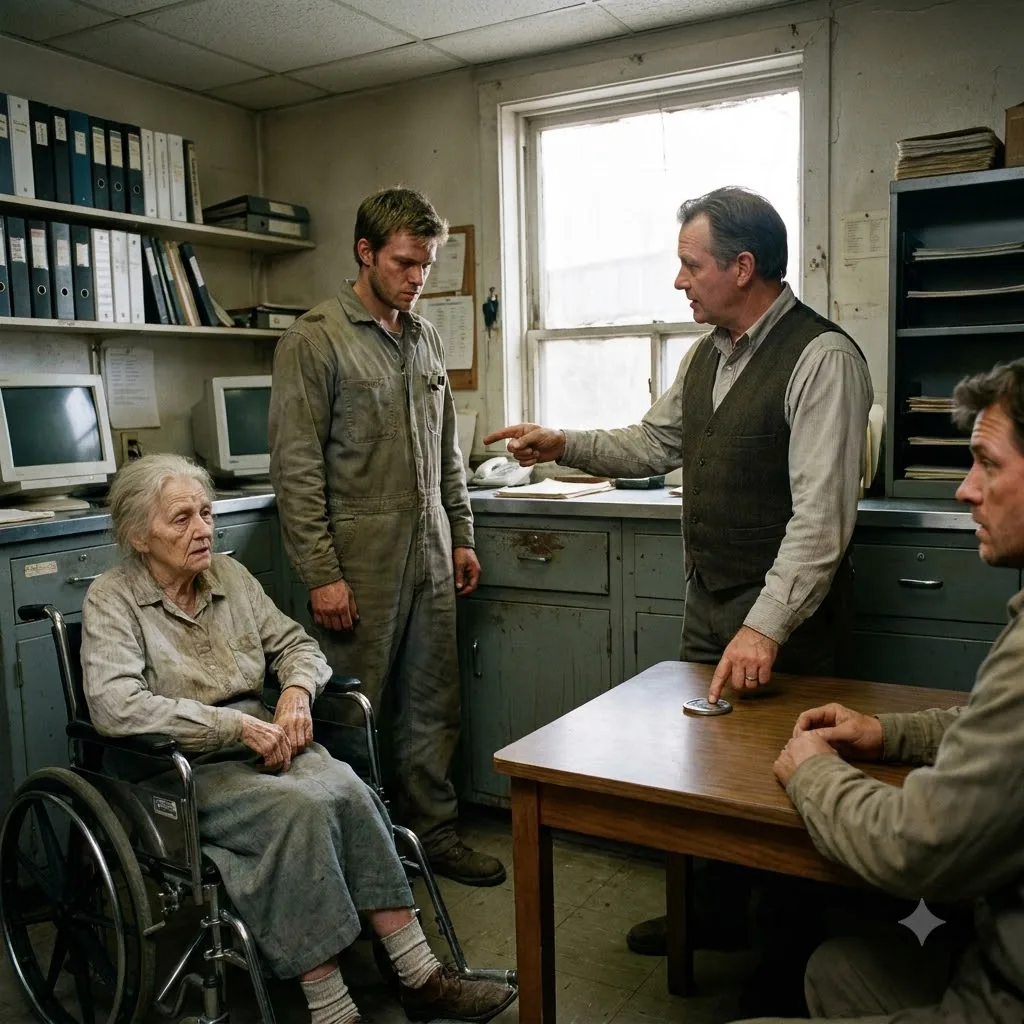
I put two fingers on the paper first and pulled it flat onto the inspection pad beside the Mercer token. His broker code was printed at the top. Dana Mercer Holt’s name sat in the recommendation field. Under transfer basis, he had typed family correction and caregiver interference.
He had time-stamped it forty-two minutes before Eli and Marlene checked in at my desk.
Nobody in the room needed me to explain what that meant.
Dana looked at the note, then at Gavin. “You said we had to show them in person first.”
Gavin answered without looking at her. “A draft isn’t an approval. It streamlines the process.”
“Before she answered one question?” I said.
He gave me that polished office smile again, but it had gone tight around the mouth. “Before this became a floor performance, yes. Responsible brokers prepare options.”
Eli still had one hand on the back of Marlene’s chair. The other hung open at his side. “You wrote caregiver interference before she could tell you the shuttle dock.”
Dana snapped, “Because you interfere. That’s still true.”
“Then say tonight’s oxygen filter size,” I said.
She looked at me hard, then at the current-week page I had turned toward her. The room waited. The printer kicked once behind me and stopped. Somebody near the waiting benches cleared his throat and did not say anything after.
Dana said, “People can learn a filter size.”
“In how many hours?” Eli asked.
“Don’t talk to me like I’m stupid.”
“Then answer.”
Marlene lifted the token from her lap with both hands and set it down on the binder pages with a soft metal tap. “White ring,” she said. “Not the gray. Gray whistles.”
I nodded once. I had seen the replacement tags clipped to the back sleeve often enough to know she was right.
Gavin reached for the broader argument again. “No one denies the son has built a routine. The issue is whether the routine has become leverage over a production asset.”
I turned the care log to the back pages Marlene had mentioned in part two. The handwriting there slanted harder, like it had been written standing up. Shuttle line notes. Extra supply runs. Missed sleep. A notation from three weeks back caught my eye because it was tied to our office stamp. Token pledged for emergency pressure meds, redeemed same day after support advance posted.
I remembered that one too. Eli had stood at the front desk with dust on his sleeves and asked whether a partial claim draw would clear before pharmacy cut-off. He had not asked for a transfer. He had asked how fast he could turn the token into medicine and then get it back under Marlene’s standing.
I slid that page toward the room. “This token was used for Marlene’s medication bridge, not for a private transfer. Office stamp. Pharmacy release time attached.”
Dana’s face changed first. Not softer. Just less certain. “He never told me that.”
Eli looked at her. “You never answered when I sent the support alerts.”
Gavin put a hand over the note, trying to pull focus back. “Emergency use doesn’t erase an unhealthy gatekeeping pattern.”
“It does erase your draft basis,” I said. “You wrote that he was choking access to the claim while the record shows he used the token to keep her med window from failing.”
A man by the claim review window said, loud enough for the room, “So the broker came in loaded.”
That changed the air more than anything. Gavin heard it too. He straightened his jacket cuffs and spoke toward the benches now, not just toward me. “No recommendation goes forward unless the room believes transition protects the claimant. If Eli Mercer wants to prove this is about care rather than possession, there’s a simple answer. Release the token to office hold and let neutral transport take Ms. Mercer into supervised support tonight.”
That was the first time Eli moved fast. He stepped between Gavin and Marlene’s chair, not dramatic, just clean and immediate. “No.” His voice stayed low. “Neutral transport doesn’t know her oxygen timing, and office hold won’t push a chair through orbital rehab at thirteen-forty tomorrow.”
“Then you’re admitting the system depends on you,” Gavin said.
“The system depends on somebody doing the work,” I said. “So far, that’s what the log shows.”
Marlene’s fingers had drifted to the edge of the binder. She tapped the page with the emergency med note, then pointed at Dana without lifting her voice. “You can visit me,” she said. “You are not taking me today.”
Dana opened her mouth, shut it, and looked at the transfer note again.
That should have ended it. Instead Gavin made the choice that broke his own case.
He tapped the draft recommendation with one fingernail and said, “Then put it in writing, clerk. If he keeps control, he keeps full care liability, transport liability, and housing separation from the Mercer family unit effective this cycle. No shared-claim residence while he monopolizes standing.”
The room went still because everybody there knew what that meant. Marlene could stay protected. Eli could keep the token where the care record said it belonged.
But he would lose the family housing berth attached to that same claim before next shift change.
Eli did not look at Gavin. He looked at Marlene, then at the chair handles, then back at me. “If that’s the trade,” he said, “write me as sole active caregiver and lock the token to her care only. Not transfer, not sale, not Dana’s broker access. Care only.”
My hand was already on the terminal, and Dana had just realized what his answer was going to cost him.