Story code: ST-000935
Part 4: The Exact Help She Asked For Was the Thing She Could Not Stand
Once the report went into the clear sleeve, nobody in that consult doorway had much room left for performance.
Dr. Chen finished the speaker call, documented the lab’s answers, and then moved straight to the next step without a pause dramatic enough to feel personal. That was the cold part. Not cruelty. Sequence.
“Eli is clinically stable at intake vitals,” she said, looking at the screen as she entered it. “This result will go through standard genetics review, counseling, and verified follow-up. No accelerated gene-editing pathway is authorized from this document alone.”
Dana opened both hands. “I never said authorize from the document alone. I said move.”
I was standing close enough to hear my own earlier note in that sentence. Move him now. No time for consent language. No time for review. It all sat in the chart already, timestamped.
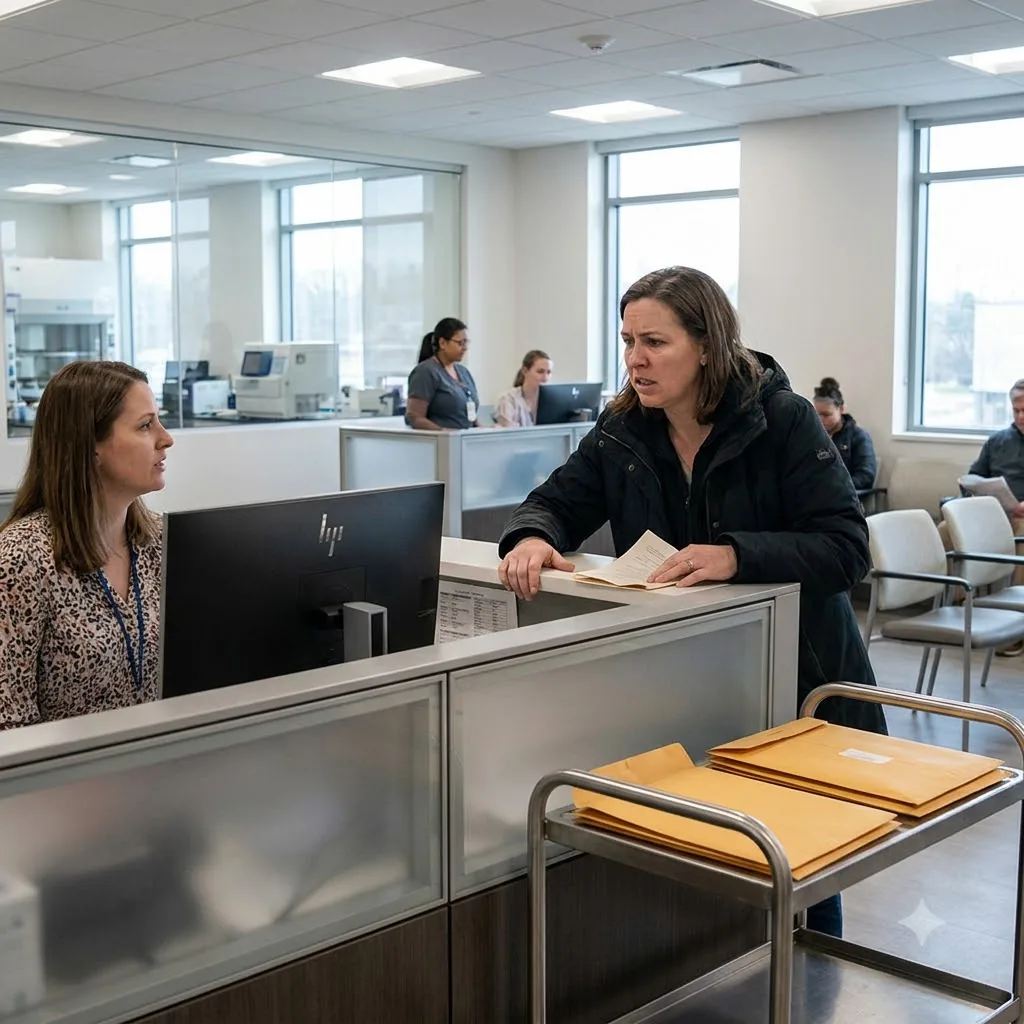
Dr. Chen clicked into the incident note and spoke as she entered the order set. “Additional boundary: future communication about this case will be directed to the patient through the chart and scheduled clinical contact. We will not accept urgent pathway demands from relatives at the intake counter, by hallway confrontation, or by unscheduled in-person pressure tied to unverified interpretation.”
Dana stared at her. “You can’t cut family out.”
“I can restrict who drives care decisions in this clinic,” Dr. Chen said. “If Eli wants you present for a scheduled visit, he may say so then. Today, you do not control this event.”
That landed harder than yelling would have. Dana’s shoulders jerked once like she had been checked by a locked door.
Dr. Chen turned the monitor slightly so Eli could see. “I need your answer directly. Do you want a note entered that staff should speak to you first and not accept your cousin’s instructions as your consent or your symptom report?”
Eli did not look at Dana this time. He looked at the screen. Then at Dr. Chen. “Yes. Put that in.”
I entered the preference while Dr. Chen dictated the language slowly enough for both of us to hear it back: patient requests direct communication; no third-party substitution for consent or symptom description; relative may attend only by patient invitation during scheduled care.
Dana made a short sound in her throat and stepped forward again. “This is punitive.”
“It’s a care boundary,” Dr. Chen said.
Then she set the live test all the way down on the table. “One more point for the record. You requested emergency-level handling in intake. When emergency escalation was initiated, you objected to outside response and asked us to keep it quiet. Is that accurate?”
Dana’s mouth stayed open for a second before any sound came out. “I was trying to avoid unnecessary spectacle.”
“So that is yes,” Dr. Chen said, and typed.
There it was. The failure in real time. Same room. Same witnesses. She could not keep both versions standing at once. If it was the emergency she announced to the whole clinic, then proper outside help had to be allowed. If proper outside help had to be stopped, then the emergency claim collapsed under its own wording.
Dr. Chen printed two things from the workstation: Eli’s visit summary and the care-boundary notice attached to the chart. She handed the summary to Eli and kept the boundary page on the counter long enough for me to scan it into the record. Printed. Dated. Linked to the incident note and the sealed report.
“Marisol,” she said, “place a flag for front-desk staff: clinician review before any same-day urgent request from this relative on this case.”
“Done,” I said.
Dana looked at me then, maybe because I was the first face she had come at and the last one still entering facts. “So that’s it? You write me up because I pushed?”
I kept my voice even. “You brought in a report and tried to force care decisions with it. The report stayed. So did the sequence.”
Nobody argued with that. Not even Dana.
Eli stood with his visit summary in one hand. He was not dramatic about it. He just took one full step away from her side and toward the hall where the counselor was waiting to walk him to a scheduled review room. That was the cleanest thing I saw all day.
Dana did not follow right away. She looked at the sealed sleeve on the counter, at the printed boundary notice, at the open chart on the screen, and then at the intake hallway she had stormed through like noise could outrun procedure.
Dr. Chen held the door with two fingers and said, “You may leave the clinical area now. Future concerns go through scheduled channels.”
No speech. No scene. Dana turned and walked back past the exam-room hall toward reception with nothing in her hands.
After they were gone, I carried the sealed report to the locked chart bin and logged the transfer time. The clinic noise came back in pieces after that: printer hum, shoes on tile, somebody laughing softly at the far desk, a blood draw label spitting from the machine. My pulse took a minute to catch up.
What stayed with me was not victory. It was that flat little click of process closing around something that had come in hot and loud. Once control was back where it belonged, the whole place could breathe again.