Story code: ST-000095
Part 1: The Form He Wouldn’t Let Go
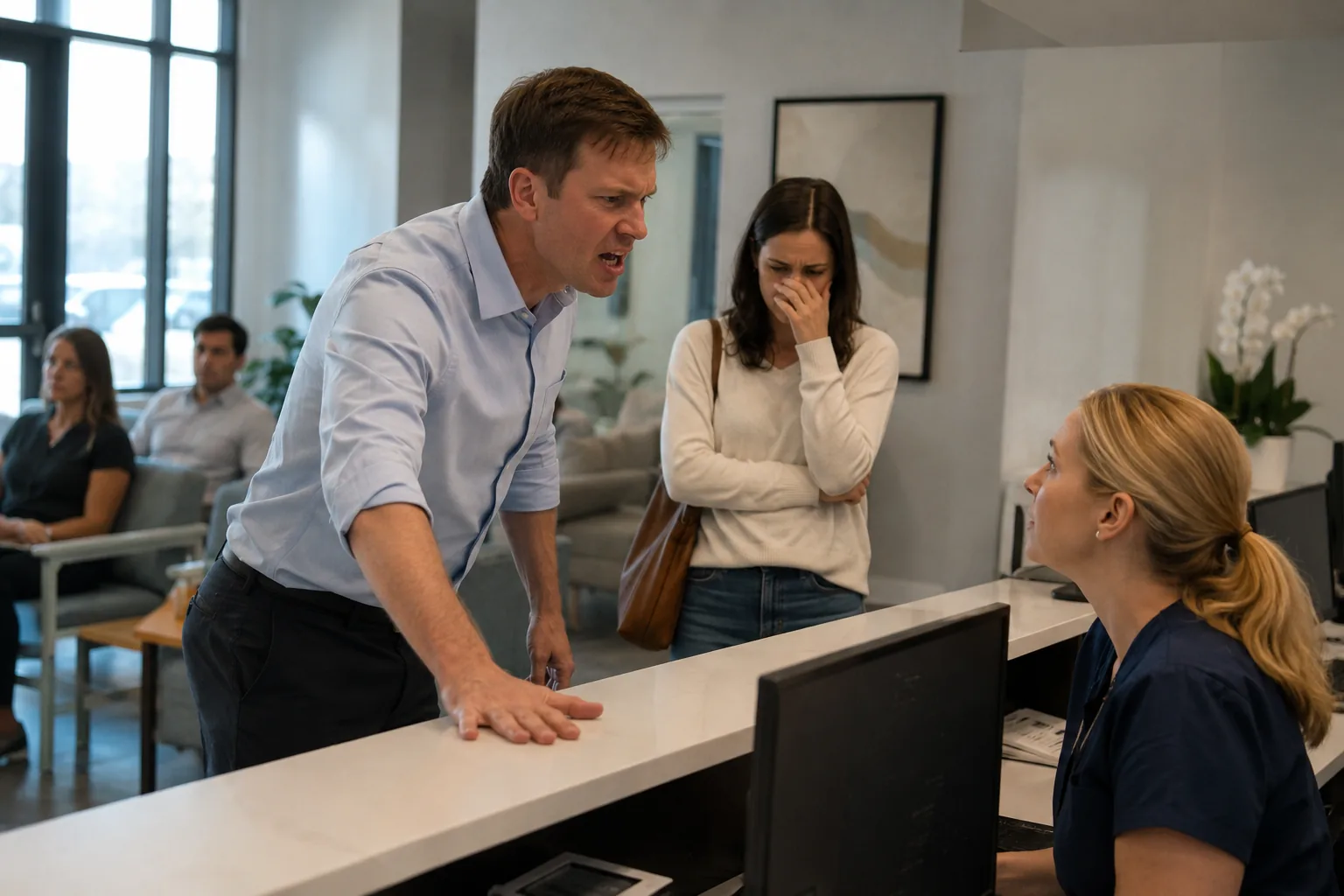
Evan hit the check-in desk with his palm and said, too loud for the waiting room, that we had to move now because there was an emergency and the consent form needed to be signed immediately. He was standing between Mara and the embryo consent form on my desk, one hand flattened over the top page like he could hold the whole treatment day in place by force. The clinic was already in motion around us, phones ringing, printers cycling, carts rolling past the hallway outside, and he kept talking over every sentence I tried to finish.
I was at the side counter in the procedure hallway, where the form stack, a pen cup, and the tablet station sit under the bright fluorescent strip. Mara stood just inside the doorway, shoulders tight, eyes dropping to the form and then to Evan and then back to the form again. She lifted one finger like she was about to ask for a minute. Evan cut across it.
“No time,” he said. “We need this done before it gets worse.”
He did not say what was getting worse. He did not say where anyone was hurt. He just kept leaning into the word emergency until it started sounding like a rule. Two patients in paper gowns looked up from the chairs near the wall. One nurse passed with a tray and slowed for half a second at the doorway. Nurse Patel came in from the medication alcove, looked at Evan’s hand on the paper, and said, “Step back from the desk.”
He did not step back right away. He slid the top sheet an inch toward Mara instead, like he was offering help, and asked me to hand her the pen. I asked him to let the form stay where it was until the chart was checked. He spoke over that too.
“She already knows what she wants,” he said, pointing at Mara without looking at her. “We just need to get this on record now.”
Mara put her fingers on the edge of the form, but she did not pull it closer. She kept her voice low and said she wanted the nurse to read the timing again. Evan laughed once, short and sharp, and said timing was exactly why we had to hurry. The pen he had been holding tapped the paper twice, hard enough to leave a dent.
Nurse Patel asked him what emergency he was referring to. He answered too fast, saying there had been a call, there had been confusion, there was no need to make this bigger, there was no need to bring more people into it. That was when the clinic tone changed. Not louder, just flatter. Nurse Patel asked him to repeat the name of the person who called. He gave one, then changed it, then said he did not have to stand there and be questioned while Mara was under this pressure.
Dr. Reyes came in from the lab side with a clipboard tucked under one arm and stopped at the threshold long enough to look at the form, then at Evan’s hand, then at the time stamp on the wall monitor. He asked for the chart. He asked who had requested the emergency rush. Evan answered with another sentence about how everyone was wasting valuable minutes.
I watched Dr. Reyes take the form from under Evan’s palm without raising his voice. He placed it back flat on the desk, turned the page toward the light, and pointed to the signature line and the date line without touching either. Then he asked for the exact reason the form could not wait until the scheduled verification window.
Evan started talking again, but he kept skipping over the reason and landing on the timing, the pressure, the delay, the need to act now. Dr. Reyes did not interrupt. He just kept his hand on the chart, eyes moving once to Nurse Patel and once to the monitor.
Mara still had not signed. The pen sat between her fingers, lifted but not touching paper. And when Dr. Reyes asked Evan, one more time, who had called in the emergency, Evan looked past him toward the hallway and said, “If you bring outside help into this, you’ll make it real.”
Evan hit the check-in desk with his palm and said, too loud for the waiting room, that we had to move now because there was an emergency and the consent form needed to be signed immediately. He was standing between Mara and the embryo consent form on my desk, one hand flattened over the top page like he could hold the whole treatment day in place by force. The clinic was already in motion around us, phones ringing, printers cycling, carts rolling past the hallway outside, and he kept talking over every sentence I tried to finish.
I was at the side counter in the procedure hallway, where the form stack, a pen cup, and the tablet station sit under the bright fluorescent strip. Mara stood just inside the doorway, shoulders tight, eyes dropping to the form and then to Evan and then back to the form again. She lifted one finger like she was about to ask for a minute. Evan cut across it.
“No time,” he said. “We need this done before it gets worse.”
He did not say what was getting worse. He did not say where anyone was hurt. He just kept leaning into the word emergency until it started sounding like a rule. Two patients in paper gowns looked up from the chairs near the wall. One nurse passed with a tray and slowed for half a second at the doorway. Nurse Patel came in from the medication alcove, looked at Evan’s hand on the paper, and said, “Step back from the desk.”
He did not step back right away. He slid the top sheet an inch toward Mara instead, like he was offering help, and asked me to hand her the pen. I asked him to let the form stay where it was until the chart was checked. He spoke over that too.
“She already knows what she wants,” he said, pointing at Mara without looking at her. “We just need to get this on record now.”
Mara put her fingers on the edge of the form, but she did not pull it closer. She kept her voice low and said she wanted the nurse to read the timing again. Evan laughed once, short and sharp, and said timing was exactly why we had to hurry. The pen he had been holding tapped the paper twice, hard enough to leave a dent.
Nurse Patel asked him what emergency he was referring to. He answered too fast, saying there had been a call, there had been confusion, there was no need to make this bigger, there was no need to bring more people into it. That was when the clinic tone changed. Not louder, just flatter. Nurse Patel asked him to repeat the name of the person who called. He gave one, then changed it, then said he did not have to stand there and be questioned while Mara was under this pressure.
Dr. Reyes came in from the lab side with a clipboard tucked under one arm and stopped at the threshold long enough to look at the form, then at Evan’s hand, then at the time stamp on the wall monitor. He asked for the chart. He asked who had requested the emergency rush. Evan answered with another sentence about how everyone was wasting valuable minutes.
I watched Dr. Reyes take the form from under Evan’s palm without raising his voice. He placed it back flat on the desk, turned the page toward the light, and pointed to the signature line and the date line without touching either. Then he asked for the exact reason the form could not wait until the scheduled verification window.
Evan started talking again, but he kept skipping over the reason and landing on the timing, the pressure, the delay, the need to act now. Dr. Reyes did not interrupt. He just kept his hand on the chart, eyes moving once to Nurse Patel and once to the monitor.
Mara still had not signed. The pen sat between her fingers, lifted but not touching paper. And when Dr. Reyes asked Evan, one more time, who had called in the emergency, Evan looked past him toward the hallway and said, “If you bring outside help into this, you’ll make it real.”