Story code: ST-000939
Part 1: She Said the Kid Had to Lose His Glasses
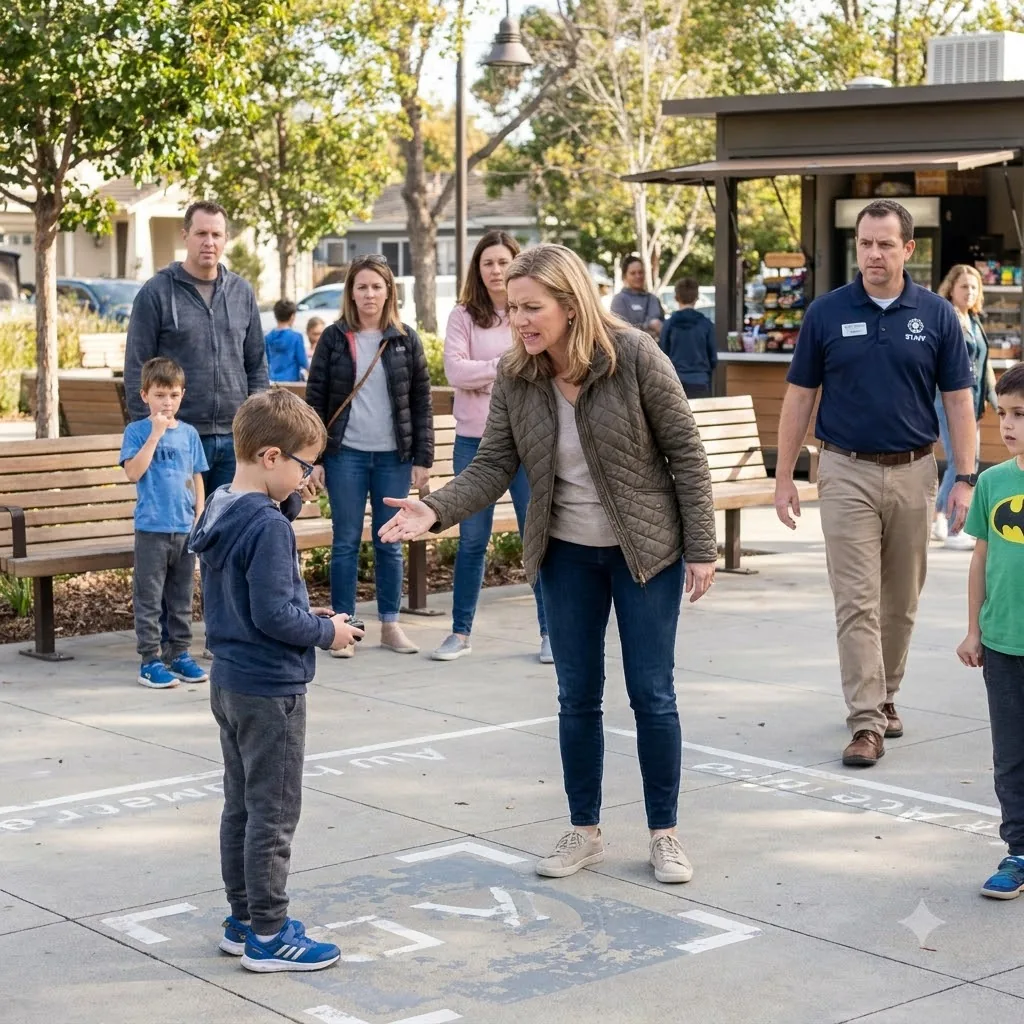
Renee Mercer stopped a boy in the middle of the AR game plaza and said he should be banned from wearing his glasses there, loud enough for the recharge benches, the snack counter edge, and half the game lanes to hear. Eli Alvarez had one hand on the side of his scuffed frames and had already gone still by the time Renee lifted her own branded demo frames and announced that kids who used overlays to bother other players did not get second chances. What made people turn all at once was not just the accusation. It was the way she said his family needed to be made an example before staff even reached them. Maya Chen was standing near the snack counter with a bottle of water and a portable charger cable looped around two fingers when the voices pulled everyone toward lane three. The shared display wall still carried bright score rings and cartoon targets from the last round. Kids were moving through the plaza in glowing crowns and creature skins from the active filters, but the circle around Eli tightened fast enough that the ordinary game noise started sounding thin. Tessa Alvarez had a drink carrier in one hand and a folded lens cloth in the other. She stepped in front of Eli without touching Renee. “Tell me exactly what he did,” she said. Renee did not lower her voice. “He flashed a distortion over another player’s field during live play. You do not interfere with someone else’s vision. If a child does that, the glasses come off and they do not put them back on in this plaza. That is basic safety. That is basic decency.” A few adults nearby nodded before anyone asked whether the plaza logs showed anything. Eli looked up at his mother, then at the floor lights marking the game boundary. He touched the edge of his glasses again and then let his hand drop. Tessa asked, “Who said he did that?” “I saw the other child jerk backward,” Renee said. “I saw your son’s frames active. I design these systems. I know what misuse looks like.” That landed the way she seemed to expect. Maya watched two parents angle their own glasses for a better look, their mirrored overlays catching the plaza lights. A boy in a red hoodie muttered something to his father and got pulled two steps farther away from the Alvarezes. The harm did not need a formal order. It was already happening in how people repositioned themselves. Noah Pike, the floor manager, came over from the center aisle with a staff tablet tucked against his chest. “Let’s clear the lane,” he said, using the careful tone staff used when they wanted movement without grabbing anyone. “I need to know what happened and whether there’s footage.” Renee turned slightly so he was speaking into the side of her authority instead of against it. “There should not have to be a debate over this. If a kid uses AR glasses to obstruct another player, those glasses are off for the day at minimum. If parents defend it, staff should revoke plaza access. You cannot play with other people’s vision. No exceptions.” She said no exceptions slowly, like she was placing it on the floor where everyone could see it. Darren Alvarez arrived at a half jog from one of the kiosks with a receipt sticking out of his pocket. “What exactly are we talking about?” he asked, and looked first at Eli, then Tessa, then Noah’s tablet. “We’re talking about your son interfering with another child’s view,” Renee said. “And your wife arguing instead of correcting it.” Tessa’s grip tightened on the drink carrier just enough for the lids to click. “I asked for specifics. That is not arguing.” Darren kept his voice low. “Is there a clip? A timestamp? Which lane?” Renee gave a short smile that did not reach past her words. “There is always a trail with these systems. That is why people need to take them seriously.” But when Noah asked for the reporting user and exact minute, she answered with broad phrases instead of numbers. She pointed toward the lane, toward Eli’s frames, toward the idea of what should happen to a child who crossed a line. Every time Tessa brought it back to what could actually be shown, Renee returned to the rule. “The glasses come off,” she said again. “If parents cannot teach that, the plaza should.” Maya saw the crowd settle around that sentence. It worked on people. Some did not need proof once someone in demo frames spoke like policy with a human face. Eli stayed tucked against his mother’s side. Tessa shifted with him every time another person tried to peer around her. Darren asked Noah whether mirrored feeds were saved by lane or account. Noah started tapping through menus on the tablet. A woman near Maya said, “If he really did it, that’s it,” and then looked embarrassed when Tessa turned at the sound. Renee held out her hand toward Eli’s glasses. “He needs to hand them over now.” Tessa moved first. “No. Not until you show what you’re talking about.” For the first time, the argument caught on something harder than Renee’s tone. Noah looked from Eli’s scuffed frames to Renee’s branded ones. “We’ll review capture before anybody surrenders equipment,” he said. That should have cooled it. Instead Renee lifted her chin and said, even clearer, “Then pull the archive. If a clip exists, it will show what I’m saying. And if it shows a child throwing a visual distortion into another player’s view, I expect the same consequence every single time.” Maya saw a flicker of motion at the recharge benches. A teen employee who had been listening from behind a charging tower leaned toward another staffer and said, too low for most of the crowd but not too low for the people nearest him, “Wasn’t there an old demo where Renee did that exact thing.
Renee Mercer stopped a boy in the middle of the AR game plaza and said he should be banned from wearing his glasses there, loud enough for the recharge benches, the snack counter edge, and half the game lanes to hear. Eli Alvarez had one hand on the side of his scuffed frames and had already gone still by the time Renee lifted her own branded demo frames and announced that kids who used overlays to bother other players did not get second chances. What made people turn all at once was not just the accusation. It was the way she said his family needed to be made an example before staff even reached them. Maya Chen was standing near the snack counter with a bottle of water and a portable charger cable looped around two fingers when the voices pulled everyone toward lane three. The shared display wall still carried bright score rings and cartoon targets from the last round. Kids were moving through the plaza in glowing crowns and creature skins from the active filters, but the circle around Eli tightened fast enough that the ordinary game noise started sounding thin. Tessa Alvarez had a drink carrier in one hand and a folded lens cloth in the other. She stepped in front of Eli without touching Renee. “Tell me exactly what he did,” she said. Renee did not lower her voice. “He flashed a distortion over another player’s field during live play. You do not interfere with someone else’s vision. If a child does that, the glasses come off and they do not put them back on in this plaza. That is basic safety. That is basic decency.” A few adults nearby nodded before anyone asked whether the plaza logs showed anything. Eli looked up at his mother, then at the floor lights marking the game boundary. He touched the edge of his glasses again and then let his hand drop. Tessa asked, “Who said he did that?” “I saw the other child jerk backward,” Renee said. “I saw your son’s frames active. I design these systems. I know what misuse looks like.” That landed the way she seemed to expect. Maya watched two parents angle their own glasses for a better look, their mirrored overlays catching the plaza lights. A boy in a red hoodie muttered something to his father and got pulled two steps farther away from the Alvarezes. The harm did not need a formal order. It was already happening in how people repositioned themselves. Noah Pike, the floor manager, came over from the center aisle with a staff tablet tucked against his chest. “Let’s clear the lane,” he said, using the careful tone staff used when they wanted movement without grabbing anyone. “I need to know what happened and whether there’s footage.” Renee turned slightly so he was speaking into the side of her authority instead of against it. “There should not have to be a debate over this. If a kid uses AR glasses to obstruct another player, those glasses are off for the day at minimum. If parents defend it, staff should revoke plaza access. You cannot play with other people’s vision. No exceptions.” She said no exceptions slowly, like she was placing it on the floor where everyone could see it. Darren Alvarez arrived at a half jog from one of the kiosks with a receipt sticking out of his pocket. “What exactly are we talking about?” he asked, and looked first at Eli, then Tessa, then Noah’s tablet. “We’re talking about your son interfering with another child’s view,” Renee said. “And your wife arguing instead of correcting it.” Tessa’s grip tightened on the drink carrier just enough for the lids to click. “I asked for specifics. That is not arguing.” Darren kept his voice low. “Is there a clip? A timestamp? Which lane?” Renee gave a short smile that did not reach past her words. “There is always a trail with these systems. That is why people need to take them seriously.” But when Noah asked for the reporting user and exact minute, she answered with broad phrases instead of numbers. She pointed toward the lane, toward Eli’s frames, toward the idea of what should happen to a child who crossed a line. Every time Tessa brought it back to what could actually be shown, Renee returned to the rule. “The glasses come off,” she said again. “If parents cannot teach that, the plaza should.” Maya saw the crowd settle around that sentence. It worked on people. Some did not need proof once someone in demo frames spoke like policy with a human face. Eli stayed tucked against his mother’s side. Tessa shifted with him every time another person tried to peer around her. Darren asked Noah whether mirrored feeds were saved by lane or account. Noah started tapping through menus on the tablet. A woman near Maya said, “If he really did it, that’s it,” and then looked embarrassed when Tessa turned at the sound. Renee held out her hand toward Eli’s glasses. “He needs to hand them over now.” Tessa moved first. “No. Not until you show what you’re talking about.” For the first time, the argument caught on something harder than Renee’s tone. Noah looked from Eli’s scuffed frames to Renee’s branded ones. “We’ll review capture before anybody surrenders equipment,” he said. That should have cooled it. Instead Renee lifted her chin and said, even clearer, “Then pull the archive. If a clip exists, it will show what I’m saying. And if it shows a child throwing a visual distortion into another player’s view, I expect the same consequence every single time.” Maya saw a flicker of motion at the recharge benches. A teen employee who had been listening from behind a charging tower leaned toward another staffer and said, too low for most of the crowd but not too low for the people nearest him, “Wasn’t there an old demo where Renee did that exact thing.