Story code: ST-000952
Part 1: She Needed My Smile
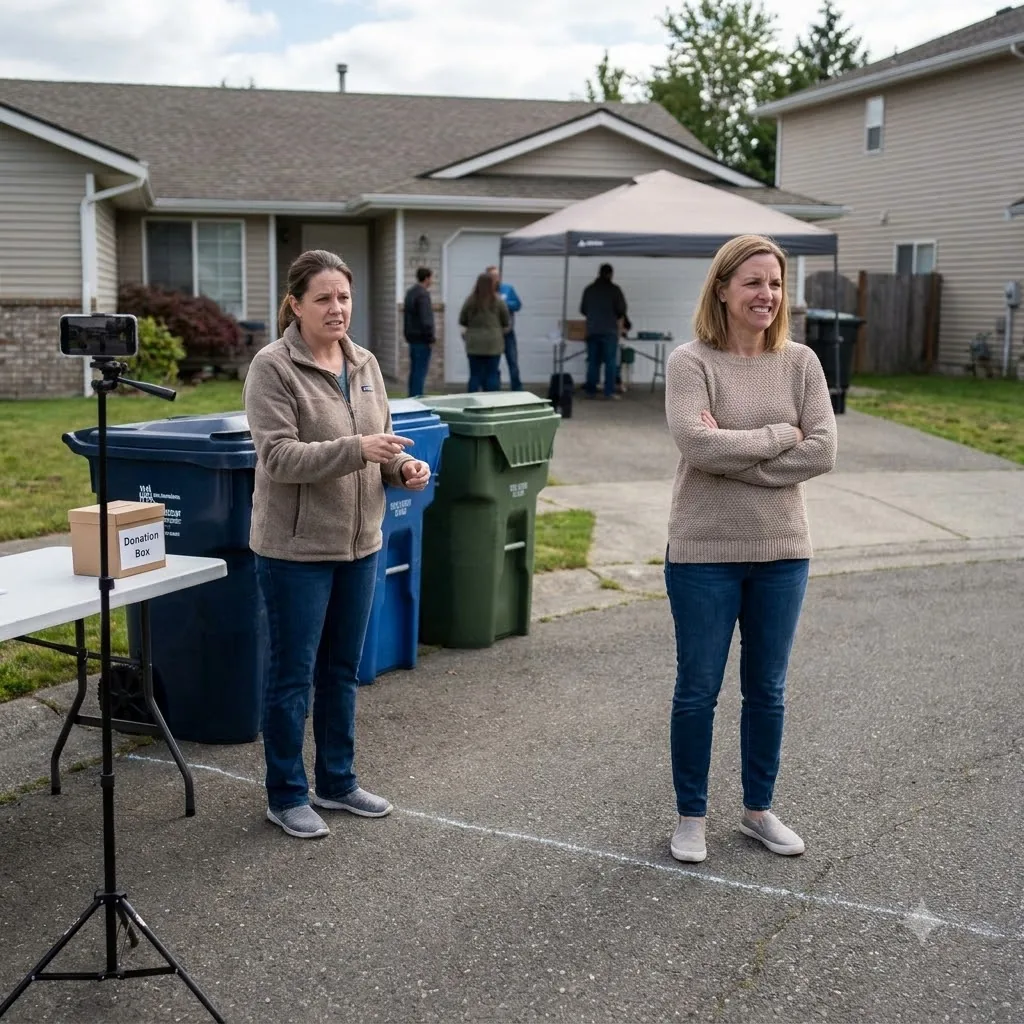
My next-door neighbor set up a charity fundraiser in our shared driveway, rolled my trash bins into camera view, and told me I had one job: smile and back up her story about why they sat on my side of the line. The story was false, and she said it while volunteers were unfolding tables ten feet from my garage and a phone tripod was already pointed at the street-facing apron. By the time I realized she meant to use me as part of the show, half the block could see us. I share a narrow driveway with Dana Holloway. The houses are close enough that if one of us drags out a bin late, the other one hears it. There is a garage-side strip where the bins usually sit, and after years of living next to each other, the routine is simple because it has to be. My two bins stay tight to my garage edge. Hers stay closer to her fence side. If either one of us shifts that pattern, everybody’s car doors start clipping each other and nobody can get around without turning sideways. Dana knows that as well as I do. That Saturday morning I came outside in work gloves because I had planned to rinse one of my bins before the week got hot. Instead, I found a folding table with a bright donation sign, a ring light clipped to a phone tripod, and two volunteers carrying boxes toward the apron where our driveway meets the street. Dana had on a matching event T-shirt and white sneakers that looked too clean for any real setup work. She was smiling at everyone and talking in that warm, carrying voice she uses when there is an audience. “Mara, perfect,” she said, like I had arrived on cue. “Can you just leave the bins exactly where they are for the stream? People have been so touched by the story.” I looked over. Both of my bins had been pulled forward and angled so their scuffed sides faced the street. One of hers was tucked partly behind the folding table, almost out of frame. I said, “Why are my bins out here?” She lowered her voice just enough to make it private without looking private. “Because I already told donors how we worked out the whole property-line issue after the bin confusion, and it shows community spirit if you don’t make it a thing. If anybody asks, just say we’ve always shared the space this way.” Always. That was the word she used. We had never shared it that way. The problem the year before had been Dana shoving her overflow cans across the strip so I couldn’t open my passenger door. She had moved them back after Eli said something, and since then I had been careful not to turn any driveway irritation into neighborhood gossip. I don’t post about people. I don’t do the little sidewalk tribunals some blocks seem to enjoy. Dana knew that too. A volunteer with a name tag that said TESS waved at me and asked where Dana wanted extra bottled water. Dana answered before I could speak. “Right by the bins is fine,” she said brightly. Then she turned back to me, still smiling. “This is for the youth equipment drive, Mara. I know you wouldn’t want to undercut that over a misunderstanding.” That is the kind of sentence designed to make the other person look ugly before they have even opened their mouth. So I said nothing. I hated that I said nothing, but there were already neighbors slowing down near the curb, and the whole setup made any objection look like I was trying to derail a charity event over garbage cans. Dana took my silence and climbed right into it. When she went live twenty minutes later, she stood beside the bins with one hand on the donation jar and the other gesturing toward both houses like she was blessing a map. She thanked local families, thanked the councilman’s office for stopping by later, thanked the volunteers, and then gave a soft little laugh about “how shared spaces teach us grace.” Then she looked straight at me. I was standing near my side gate with my gloves still on because I had nowhere else to be that didn’t make me look like I was hiding. Dana said, “And Mara has been wonderful about the bin arrangement once we figured out what belonged where, haven’t you?” There were three neighbors, two volunteers, and a phone aimed at my face. I kept my reply short. “We’re neighbors.” Dana laughed like I had confirmed exactly what she wanted. Tess smiled uncertainly and looked from me to the bins. Another volunteer started clapping because she thought it was one of those sweet local moments people like to clip and share. I stood there feeling like one of the props on Dana’s folding table. The first harm was small enough that nobody else would call it harm at all. No money taken from me. No screaming fight. Just my own driveway turned into a backdrop, and me turned into proof for a lie I hadn’t agreed to tell. I went back inside long enough to put down the hose nozzle I was still carrying, then came back out through the side gate because I wanted my eyes on the bins. Eli was out running an errand, and I didn’t want Dana moving things again and later acting like I had remembered it wrong. From the gate, hidden by the hedge line, I could hear her without being seen right away. Her camera voice was gone. She was talking low and fast to Tess near the garage-side strip. “No, not hers in back,” Dana said. “Mine behind the table, hers forward. If Rob Pike asks, say we staged it this way because Mara finally agreed to keep both trash bins off the line. And do not move them until after remarks.” Tess said, “I thought.
My next-door neighbor set up a charity fundraiser in our shared driveway, rolled my trash bins into camera view, and told me I had one job: smile and back up her story about why they sat on my side of the line. The story was false, and she said it while volunteers were unfolding tables ten feet from my garage and a phone tripod was already pointed at the street-facing apron. By the time I realized she meant to use me as part of the show, half the block could see us. I share a narrow driveway with Dana Holloway. The houses are close enough that if one of us drags out a bin late, the other one hears it. There is a garage-side strip where the bins usually sit, and after years of living next to each other, the routine is simple because it has to be. My two bins stay tight to my garage edge. Hers stay closer to her fence side. If either one of us shifts that pattern, everybody’s car doors start clipping each other and nobody can get around without turning sideways. Dana knows that as well as I do. That Saturday morning I came outside in work gloves because I had planned to rinse one of my bins before the week got hot. Instead, I found a folding table with a bright donation sign, a ring light clipped to a phone tripod, and two volunteers carrying boxes toward the apron where our driveway meets the street. Dana had on a matching event T-shirt and white sneakers that looked too clean for any real setup work. She was smiling at everyone and talking in that warm, carrying voice she uses when there is an audience. “Mara, perfect,” she said, like I had arrived on cue. “Can you just leave the bins exactly where they are for the stream? People have been so touched by the story.” I looked over. Both of my bins had been pulled forward and angled so their scuffed sides faced the street. One of hers was tucked partly behind the folding table, almost out of frame. I said, “Why are my bins out here?” She lowered her voice just enough to make it private without looking private. “Because I already told donors how we worked out the whole property-line issue after the bin confusion, and it shows community spirit if you don’t make it a thing. If anybody asks, just say we’ve always shared the space this way.” Always. That was the word she used. We had never shared it that way. The problem the year before had been Dana shoving her overflow cans across the strip so I couldn’t open my passenger door. She had moved them back after Eli said something, and since then I had been careful not to turn any driveway irritation into neighborhood gossip. I don’t post about people. I don’t do the little sidewalk tribunals some blocks seem to enjoy. Dana knew that too. A volunteer with a name tag that said TESS waved at me and asked where Dana wanted extra bottled water. Dana answered before I could speak. “Right by the bins is fine,” she said brightly. Then she turned back to me, still smiling. “This is for the youth equipment drive, Mara. I know you wouldn’t want to undercut that over a misunderstanding.” That is the kind of sentence designed to make the other person look ugly before they have even opened their mouth. So I said nothing. I hated that I said nothing, but there were already neighbors slowing down near the curb, and the whole setup made any objection look like I was trying to derail a charity event over garbage cans. Dana took my silence and climbed right into it. When she went live twenty minutes later, she stood beside the bins with one hand on the donation jar and the other gesturing toward both houses like she was blessing a map. She thanked local families, thanked the councilman’s office for stopping by later, thanked the volunteers, and then gave a soft little laugh about “how shared spaces teach us grace.” Then she looked straight at me. I was standing near my side gate with my gloves still on because I had nowhere else to be that didn’t make me look like I was hiding. Dana said, “And Mara has been wonderful about the bin arrangement once we figured out what belonged where, haven’t you?” There were three neighbors, two volunteers, and a phone aimed at my face. I kept my reply short. “We’re neighbors.” Dana laughed like I had confirmed exactly what she wanted. Tess smiled uncertainly and looked from me to the bins. Another volunteer started clapping because she thought it was one of those sweet local moments people like to clip and share. I stood there feeling like one of the props on Dana’s folding table. The first harm was small enough that nobody else would call it harm at all. No money taken from me. No screaming fight. Just my own driveway turned into a backdrop, and me turned into proof for a lie I hadn’t agreed to tell. I went back inside long enough to put down the hose nozzle I was still carrying, then came back out through the side gate because I wanted my eyes on the bins. Eli was out running an errand, and I didn’t want Dana moving things again and later acting like I had remembered it wrong. From the gate, hidden by the hedge line, I could hear her without being seen right away. Her camera voice was gone. She was talking low and fast to Tess near the garage-side strip. “No, not hers in back,” Dana said. “Mine behind the table, hers forward. If Rob Pike asks, say we staged it this way because Mara finally agreed to keep both trash bins off the line. And do not move them until after remarks.” Tess said, “I thought.