Story code: ST-000098
Part 1: The Word He Used Like a Weapon
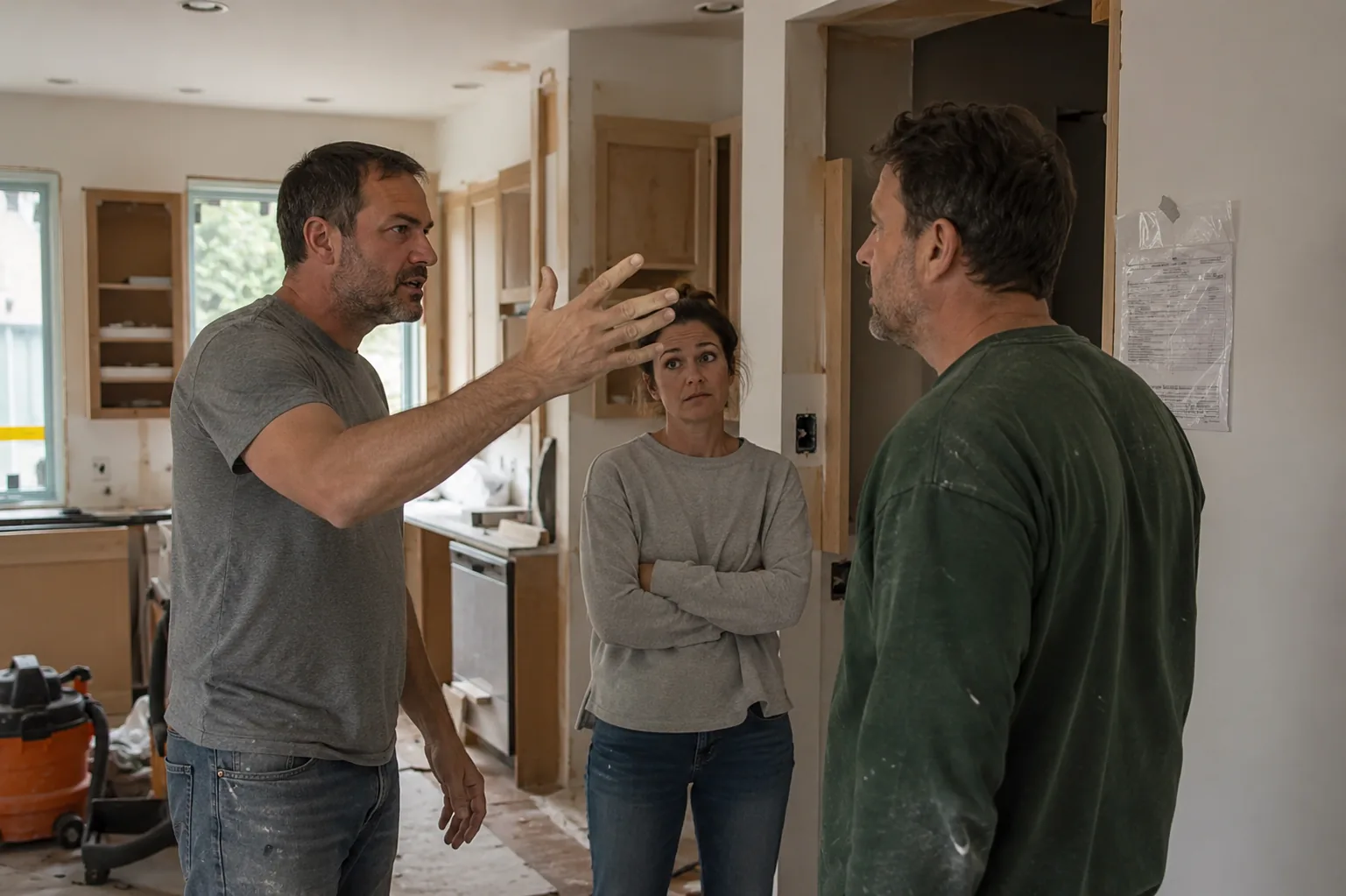
My brother tried to shut me up in the middle of an unfinished kitchen by throwing out a term that wasn’t on the permit tag hanging by the doorway. He had loose wires showing, cabinet boxes still open, a coil of tubing under one boot, and he said it loud enough for Mrs. Calder to hear: “Don’t start with homeowner panic just because you don’t understand a stagger-vent bridge.” He said it like I was the problem, not the work sitting open in front of us.
The kitchen was down to studs on one wall and patched drywall on the other. A plastic sheet moved a little over the hall opening every time somebody passed. The sink base had no doors yet. A drill, a level, and a torn cardboard box of tile spacers were scattered near the island frame. The permit tag was clipped crooked to a strip of blue tape beside the entry, curled at one corner from people brushing past it.
Evan kept one hand on the unfinished counter run while he talked, tapping knuckles against plywood like the noise itself proved something. “This is why I told you not to get halfway information out of context,” he said. “The rough-in is staged. The vent path is being bridged before final lock. Standard sequence.”
I looked from him to the permit tag and back to the wall behind the sink. “Show me where that’s on the tag.”
He gave a short laugh through his nose and looked at Mrs. Calder instead of me. “That’s not how permit language works.”
Mrs. Calder had both hands around a mug gone cold. She stood near the breakfast nook, watching the three of us in that careful way people do when they want the room to stay civil. Her eyes moved once to the permit tag, then to the open wall.
I stepped around a bucket of joint compound and went closer to the tag. It listed the approved scope in thick black print. Plumbing. Electrical. Wall removal. Inspection stages. I ran a finger down the lines without touching the paper. “It says rough plumbing before cover. It says inspection required before concealment.”
Evan answered fast, almost on top of my last word. “Right, and that’s exactly what’s happening. You’re reading nouns and missing process. A stagger-vent bridge is part of sequencing. You don’t freeze a kitchen every time you see an intermediate state.”
He said intermediate like it was a diagnosis.
I looked at the exposed pipe stub-out and the opening where the vent line should have been easy to trace. The room was messy, but not so messy I couldn’t see what was there. “Then point to it.”
“To what?”
“To the bridge.”
He spread his hands at the wall, the floor, the tools. “To the whole assembly. That’s the point. It’s not one little thing you can point at like a picture in a manual.”
That got the effect he wanted. It made the room seem more complicated than it was. It made my question sound small and childish. He started talking again before I could answer, stacking words faster.
“Drain orientation, temporary offsets, vent continuity, cabinet clearance, finish elevation. This is why trade work goes bad when every relative with a free afternoon wants to play inspector.”
There it was. Not just wrong. Public. He didn’t lower his voice. He made sure Mrs. Calder heard me put in my place.
I kept my eyes on the wall. “I’m not playing anything. I’m asking what that term means.”
He bent, grabbed a short length of scrap pipe from the floor, and used it like a pointer. “It means exactly what I said. The vent function is preserved across the span until final set. Temporary bridge, then lock. It’s clean. It passes.”
The permit tag moved a little from the air kicking through the house. I looked at it again because it was the one thing in the room not performing. It just sat there with the printed stages and the inspector line blank under the rough plumbing section.
“Has rough plumbing been signed yet?” I asked.
He straightened slowly and set the scrap pipe down harder than he picked it up. “You are mixing phases.”
“I asked if it’s been signed.”
“That tag doesn’t tell you field sequence.”
“It tells me what has to happen before you close a wall.”
Mrs. Calder finally spoke, quiet enough that Evan had to stop talking to hear her. “Evan, can you just explain it one more time without the shorthand?”
He nodded too quickly, like he’d been waiting for a more suitable audience. Then he turned toward the sink wall and started again, even more confident than before.
“Sure. The stagger-vent bridge carries compliance across the rough stage so the inspector reads the completed vent path as continuous once the finish closure is ready. It’s basic.”
He said basic last, and let it hang there.
I looked at the tag, then at the blank inspection line, then at the wall he wanted covered later. If what he said was real, it should have lined up with something in front of us. But the more he explained it, the less there was in the room I could actually point to and call a stagger-vent bridge.
My brother tried to shut me up in the middle of an unfinished kitchen by throwing out a term that wasn’t on the permit tag hanging by the doorway. He had loose wires showing, cabinet boxes still open, a coil of tubing under one boot, and he said it loud enough for Mrs. Calder to hear: “Don’t start with homeowner panic just because you don’t understand a stagger-vent bridge.” He said it like I was the problem, not the work sitting open in front of us.
The kitchen was down to studs on one wall and patched drywall on the other. A plastic sheet moved a little over the hall opening every time somebody passed. The sink base had no doors yet. A drill, a level, and a torn cardboard box of tile spacers were scattered near the island frame. The permit tag was clipped crooked to a strip of blue tape beside the entry, curled at one corner from people brushing past it.
Evan kept one hand on the unfinished counter run while he talked, tapping knuckles against plywood like the noise itself proved something. “This is why I told you not to get halfway information out of context,” he said. “The rough-in is staged. The vent path is being bridged before final lock. Standard sequence.”
I looked from him to the permit tag and back to the wall behind the sink. “Show me where that’s on the tag.”
He gave a short laugh through his nose and looked at Mrs. Calder instead of me. “That’s not how permit language works.”
Mrs. Calder had both hands around a mug gone cold. She stood near the breakfast nook, watching the three of us in that careful way people do when they want the room to stay civil. Her eyes moved once to the permit tag, then to the open wall.
I stepped around a bucket of joint compound and went closer to the tag. It listed the approved scope in thick black print. Plumbing. Electrical. Wall removal. Inspection stages. I ran a finger down the lines without touching the paper. “It says rough plumbing before cover. It says inspection required before concealment.”
Evan answered fast, almost on top of my last word. “Right, and that’s exactly what’s happening. You’re reading nouns and missing process. A stagger-vent bridge is part of sequencing. You don’t freeze a kitchen every time you see an intermediate state.”
He said intermediate like it was a diagnosis.
I looked at the exposed pipe stub-out and the opening where the vent line should have been easy to trace. The room was messy, but not so messy I couldn’t see what was there. “Then point to it.”
“To what?”
“To the bridge.”
He spread his hands at the wall, the floor, the tools. “To the whole assembly. That’s the point. It’s not one little thing you can point at like a picture in a manual.”
That got the effect he wanted. It made the room seem more complicated than it was. It made my question sound small and childish. He started talking again before I could answer, stacking words faster.
“Drain orientation, temporary offsets, vent continuity, cabinet clearance, finish elevation. This is why trade work goes bad when every relative with a free afternoon wants to play inspector.”
There it was. Not just wrong. Public. He didn’t lower his voice. He made sure Mrs. Calder heard me put in my place.
I kept my eyes on the wall. “I’m not playing anything. I’m asking what that term means.”
He bent, grabbed a short length of scrap pipe from the floor, and used it like a pointer. “It means exactly what I said. The vent function is preserved across the span until final set. Temporary bridge, then lock. It’s clean. It passes.”
The permit tag moved a little from the air kicking through the house. I looked at it again because it was the one thing in the room not performing. It just sat there with the printed stages and the inspector line blank under the rough plumbing section.
“Has rough plumbing been signed yet?” I asked.
He straightened slowly and set the scrap pipe down harder than he picked it up. “You are mixing phases.”
“I asked if it’s been signed.”
“That tag doesn’t tell you field sequence.”
“It tells me what has to happen before you close a wall.”
Mrs. Calder finally spoke, quiet enough that Evan had to stop talking to hear her. “Evan, can you just explain it one more time without the shorthand?”
He nodded too quickly, like he’d been waiting for a more suitable audience. Then he turned toward the sink wall and started again, even more confident than before.
“Sure. The stagger-vent bridge carries compliance across the rough stage so the inspector reads the completed vent path as continuous once the finish closure is ready. It’s basic.”
He said basic last, and let it hang there.
I looked at the tag, then at the blank inspection line, then at the wall he wanted covered later. If what he said was real, it should have lined up with something in front of us. But the more he explained it, the less there was in the room I could actually point to and call a stagger-vent bridge.