Story code: ST-001006
Part 1: She Froze Our Register Over One Jacket
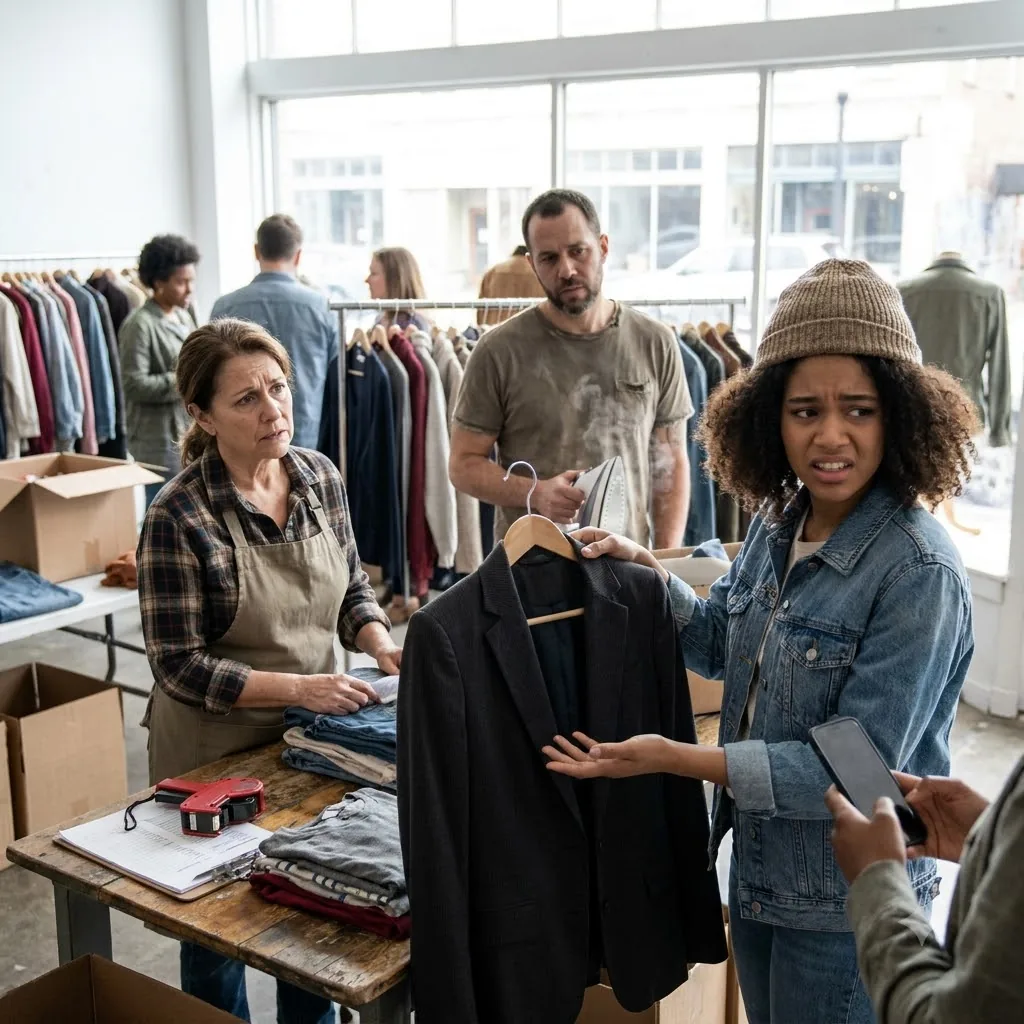
My niece stopped a live sale in the middle of our thrift pop-up by lifting a designer jacket off the rack and announcing that my mother had faked our entire ethics process. She did it while I was still rehanging a linen dress, with customers holding totes at the counter and Ruben pushing an intake bin along the back wall. Then she used our own store rule to put the whole floor on hold, and the only thing louder than her voice was the little paper tag on that jacket swinging from the sleeve. We run a family thrift pop-up twice a month in a borrowed studio space over a coffee shop. Everything is supposed to look clean and intentional. Donated pieces go to intake first. Consignment gets checked, tagged, and logged before it ever hits a rack. My mother, Evelyn, built the whole brand around that sequence. “Ethical, curated, transparent” is printed on our folding sign and repeated in every post. That morning had been normal until Talia crossed the floor with the jacket held out in both hands like evidence. It was cream wool, cropped, with dark horn buttons and a stitched designer label inside the collar. I had seen Denise Park pull it halfway off the designer rack and smile at the mirror we lean against a column. She was next in line with that jacket over her arm and two silk scarves in her tote. Talia stepped between Denise and the counter and said, loud enough for the whole front half of the room to hear, “Hold that sale. This piece should never have made it to the floor.” Denise stopped walking. Ruben stopped with both hands on the intake bin handle. I still had a hanger in one hand. My mother looked up from behind the office counter. That counter is where every dispute becomes official. If someone challenges a tag or asks where a piece came from, that is where the item gets carried. Talia knew that. She went straight there, laid the jacket flat on the counter, and tapped the tag with two fingers. “If this timeline is true,” she said, “then Aunt Evelyn put a luxury item on the rack before intake cleared it and kept preaching sustainability anyway.” Nobody answered right away. The room had that still look it gets when shoppers pretend not to listen while listening to every word. My mother said, “What exactly are you claiming?” Talia did not look at her. She looked at Denise and then at the other customers. “I am saying the store process was bypassed. Publicly. On a designer piece. If we care about ethical sourcing, this sale gets frozen until the intake sequence is verified.” That wording mattered because it was one of our actual rules. We can pause a sale if an item’s origin, tagging, or placement is challenged on the floor. Usually it is something small, like a missing price sticker. Talia used the full version like she had been waiting for an audience. My mother held out her hand. “Bring me the tag.” Talia did not let go of the jacket right away. She turned the tag over so everybody could see the handwritten price on one side and the small timestamp sticker on the back. Then she passed it across. “You posted this morning about strict intake order,” she said. “But this sticker says 11:14. Denise picked it up before eleven. I watched it. So either the rack was stocked before intake, or somebody backdated the ethics talk after the fact. Which is it?” Denise looked down at the jacket on the counter. “Am I still buying this or not?” “Not until this is resolved,” Talia said before my mother could answer. That was the first real damage. Sales stopped. The checkout line stopped. Nobody touched the card reader. A woman holding a shopping tote near the front table set it back down and stayed to watch. I moved closer because I had handled that rack all morning. “Denise did pick it up before eleven,” I said. “I saw that part.” Talia turned to me fast. “Thank you. So we agree the jacket was on the floor before this tag says it officially existed.” “I said Denise picked it up,” I said. “I didn’t say the rest.” She ignored that. “This is exactly how clean-image resale works when family thinks no one will check. A premium piece appears, the origin gets blurred, and then everybody hides behind branding.” My mother kept her voice flat. “Where did you see this jacket before Denise picked it up?” “On the designer rack,” Talia said. “At 10:52.” “When did you first touch the tag?” my mother asked. Talia gave a short laugh with no smile in it. “That isn’t the issue.” “It is if you’re naming a sequence,” I said. Ruben shifted at the back and looked toward the counter, waiting to see if he could move the intake bin. He did not move it. Talia pointed at the timestamp again. “The issue is simple. You can’t claim intake happened at 11:14 if the jacket was already being tried on before eleven. That makes the official sequence impossible.” For one second, that sounded airtight, and I could feel the whole room leaning into it. Then I looked closer at the tag in my mother’s hand. The price side was looped through the sleeve with our usual twine, but the little timestamp sticker Talia kept citing was not attached to the price side at all. It was stuck on the reverse of a smaller return-check label we only use at the counter after an item has already been pulled from a rack. I said, “Why is your intake time on a return-check label?” Talia’s mouth stayed open half a beat too long. The jacket was suddenly very still on the counter, and nobody in line said a word. If that sticker came from the counter instead of intake, then the timeline she had.
My niece stopped a live sale in the middle of our thrift pop-up by lifting a designer jacket off the rack and announcing that my mother had faked our entire ethics process. She did it while I was still rehanging a linen dress, with customers holding totes at the counter and Ruben pushing an intake bin along the back wall. Then she used our own store rule to put the whole floor on hold, and the only thing louder than her voice was the little paper tag on that jacket swinging from the sleeve. We run a family thrift pop-up twice a month in a borrowed studio space over a coffee shop. Everything is supposed to look clean and intentional. Donated pieces go to intake first. Consignment gets checked, tagged, and logged before it ever hits a rack. My mother, Evelyn, built the whole brand around that sequence. “Ethical, curated, transparent” is printed on our folding sign and repeated in every post. That morning had been normal until Talia crossed the floor with the jacket held out in both hands like evidence. It was cream wool, cropped, with dark horn buttons and a stitched designer label inside the collar. I had seen Denise Park pull it halfway off the designer rack and smile at the mirror we lean against a column. She was next in line with that jacket over her arm and two silk scarves in her tote. Talia stepped between Denise and the counter and said, loud enough for the whole front half of the room to hear, “Hold that sale. This piece should never have made it to the floor.” Denise stopped walking. Ruben stopped with both hands on the intake bin handle. I still had a hanger in one hand. My mother looked up from behind the office counter. That counter is where every dispute becomes official. If someone challenges a tag or asks where a piece came from, that is where the item gets carried. Talia knew that. She went straight there, laid the jacket flat on the counter, and tapped the tag with two fingers. “If this timeline is true,” she said, “then Aunt Evelyn put a luxury item on the rack before intake cleared it and kept preaching sustainability anyway.” Nobody answered right away. The room had that still look it gets when shoppers pretend not to listen while listening to every word. My mother said, “What exactly are you claiming?” Talia did not look at her. She looked at Denise and then at the other customers. “I am saying the store process was bypassed. Publicly. On a designer piece. If we care about ethical sourcing, this sale gets frozen until the intake sequence is verified.” That wording mattered because it was one of our actual rules. We can pause a sale if an item’s origin, tagging, or placement is challenged on the floor. Usually it is something small, like a missing price sticker. Talia used the full version like she had been waiting for an audience. My mother held out her hand. “Bring me the tag.” Talia did not let go of the jacket right away. She turned the tag over so everybody could see the handwritten price on one side and the small timestamp sticker on the back. Then she passed it across. “You posted this morning about strict intake order,” she said. “But this sticker says 11:14. Denise picked it up before eleven. I watched it. So either the rack was stocked before intake, or somebody backdated the ethics talk after the fact. Which is it?” Denise looked down at the jacket on the counter. “Am I still buying this or not?” “Not until this is resolved,” Talia said before my mother could answer. That was the first real damage. Sales stopped. The checkout line stopped. Nobody touched the card reader. A woman holding a shopping tote near the front table set it back down and stayed to watch. I moved closer because I had handled that rack all morning. “Denise did pick it up before eleven,” I said. “I saw that part.” Talia turned to me fast. “Thank you. So we agree the jacket was on the floor before this tag says it officially existed.” “I said Denise picked it up,” I said. “I didn’t say the rest.” She ignored that. “This is exactly how clean-image resale works when family thinks no one will check. A premium piece appears, the origin gets blurred, and then everybody hides behind branding.” My mother kept her voice flat. “Where did you see this jacket before Denise picked it up?” “On the designer rack,” Talia said. “At 10:52.” “When did you first touch the tag?” my mother asked. Talia gave a short laugh with no smile in it. “That isn’t the issue.” “It is if you’re naming a sequence,” I said. Ruben shifted at the back and looked toward the counter, waiting to see if he could move the intake bin. He did not move it. Talia pointed at the timestamp again. “The issue is simple. You can’t claim intake happened at 11:14 if the jacket was already being tried on before eleven. That makes the official sequence impossible.” For one second, that sounded airtight, and I could feel the whole room leaning into it. Then I looked closer at the tag in my mother’s hand. The price side was looped through the sleeve with our usual twine, but the little timestamp sticker Talia kept citing was not attached to the price side at all. It was stuck on the reverse of a smaller return-check label we only use at the counter after an item has already been pulled from a rack. I said, “Why is your intake time on a return-check label?” Talia’s mouth stayed open half a beat too long. The jacket was suddenly very still on the counter, and nobody in line said a word. If that sticker came from the counter instead of intake, then the timeline she had.