Story code: ST-000057
Part 1: The Camera Rule at 8:57
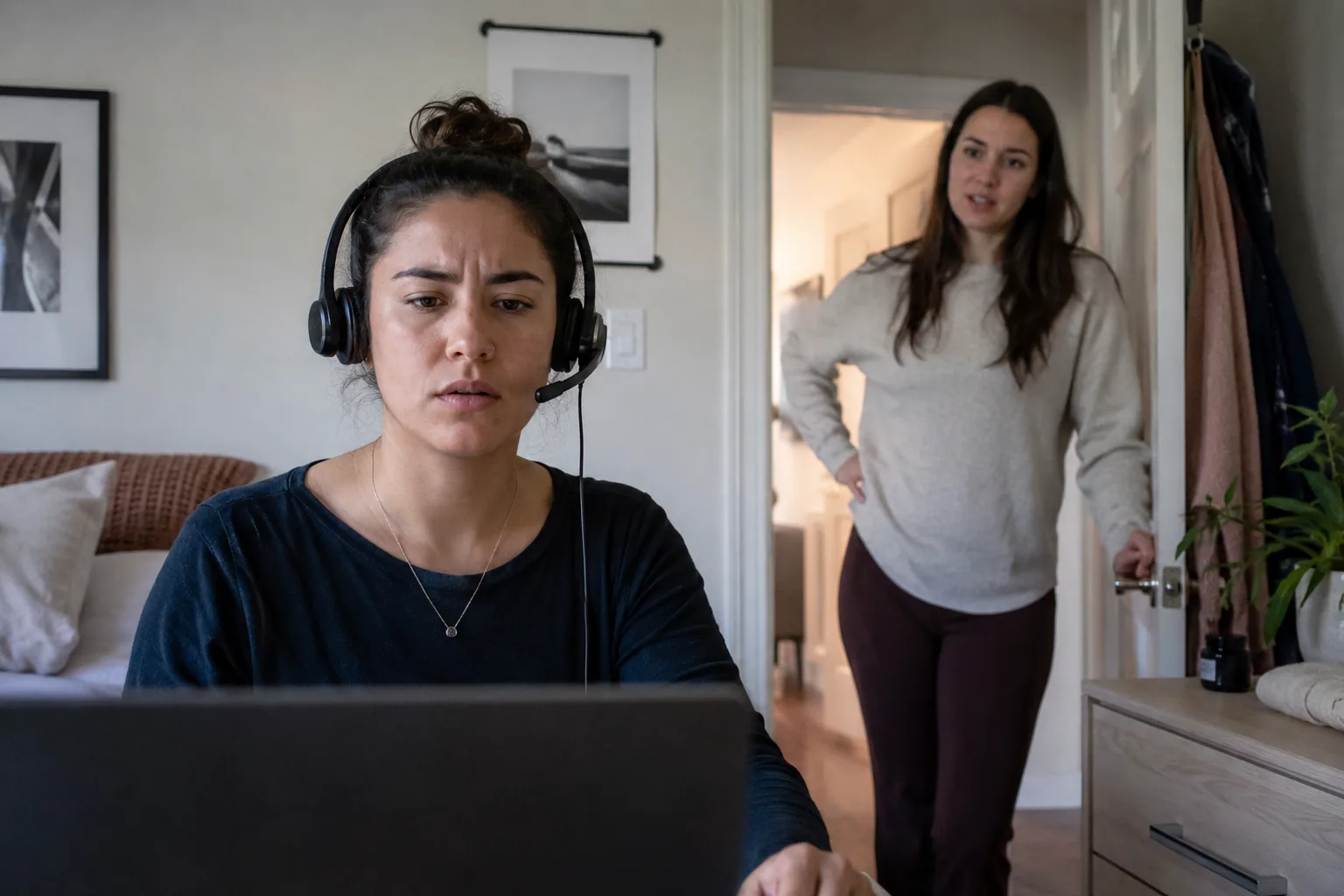
At 8:57 on a Monday morning, Jenna Morales was already at her desk in her bedroom home office, headset plugged in, meeting tiles loading on her work laptop, when her roommate stopped in the doorway and told her she was not allowed to turn on her camera because the house had a work compliance rule now. He said it like he was reading from something official. There was no paper in his hand, no email on the screen, and she still missed the first minutes of a required team call because Derek Collins stood there repeating that he had to approve camera use first.
The desk setup was ordinary enough to make the interruption look ridiculous in hindsight. Laptop open. Spiral desk calendar with the nine o’clock call boxed in blue. Charging cord looped around a mug. Slack already chiming. The only thing under dispute was the built-in camera at the top edge of the screen.
Jenna asked the first obvious question.
“What rule?”
Derek kept one hand on the doorframe and answered without moving. “House work compliance. Cameras during business hours have to be cleared. I told you that.”
Jenna asked who made it.
He said, “It’s part of the shared living standards.”
She asked where it was written.
He said, “It doesn’t have to be posted to be active.”
That was the first visible gap. He had a title for it, but no source. He had enforcement language, but nothing Jenna could point to, read, or forward to anyone who needed an explanation.
On her laptop, the meeting box flashed the usual reminder that cameras should be on for client-facing attendance. Marisol Vega, her manager, had sent a short message at 8:49: Need you visible for the kickoff if possible. Jenna typed back with Derek still in the doorway.
Roommate is blocking camera use. Says there’s a house compliance rule. Joining audio now.
The reply came fast.
What rule?
That was exactly the problem.
Jenna joined muted, camera off. Derek did not leave until he saw the indicator stay dark. From the hallway, his voice carried back in once more: “If anyone asks, tell them it’s a residential work restriction.”
That phrasing mattered later because it changed twice before lunch.
In the first call, Jenna kept her answers tight. She spoke when called on. She gave status updates. She did not embellish on a team kickoff with outside people listening. Marisol took over the visible pieces and moved on. When the call ended, she sent Jenna a direct message: We need something specific if this is going to affect attendance again.
Jenna answered with what she actually had.
No document. He says camera use during business hours needs his approval because of house work compliance.
Marisol asked whether this was a landlord issue, building issue, or internet privacy issue.
Jenna wrote back: He hasn’t named one.
By 10:15, the rule had already widened.
Jenna stepped into the hallway with her mug during a break, and Derek stopped her there too. The bedroom door was still open behind her, laptop on the desk, green meeting reminder for the next call visible from the hall.
“Keep the camera covered if you test your audio again,” he said.
Jenna looked at him and asked, “So I can’t use it in my own room unless you approve it first?”
“During business hours, yes.”
“What counts as business hours?”
“Standard workday.”
“Whose standard?”
He shifted and said, “The house standard.”
That was still vague enough to sound firm if nobody touched it.
Then ordinary life started pressing against it. A delivery app needed a quick identity photo update on Jenna’s phone after a failed login, and Derek heard the camera click from the doorway.
He said, “That too. Same rule.”
Jenna turned and asked, very plainly, “My phone now?”
“Any work-adjacent camera use.”
The wording had changed from laptop camera to any camera connected to work. A few minutes later, when Jenna opened her laptop settings to check whether the camera was even functioning, Derek said from the hall, “Diagnostics count as activation, so no.”
That was another expansion. No call, no client, no meeting image on screen, and he was still claiming authority over the camera icon in a settings menu.
Jenna started writing down times. 8:57 doorway statement. 9:01 blocked camera. 10:15 hallway warning. 10:22 phone photo objection. 10:31 settings menu objection. She took screenshots of her chat with Marisol and of the calendar notice saying Cameras on for client kickoff.
At 11:40, Marisol asked for a five-minute check-in by video before a second meeting. Jenna tried one more time to get a usable answer.
“If this is a real rule,” she said from her desk, “tell me who it applies to.”
Derek folded his arms and stayed in the doorway again. “Anyone doing business activity in the house.”
Jenna asked, “So if you FaceTime your brother on your lunch break while answering work texts, do you need approval too?”
For the first time that morning, his explanation stalled. He said, “That’s different.”
Jenna asked why.
He opened his mouth, looked at the laptop, then at the hall behind him, and said, “Because your setup is the one under compliance right now.”
He still had no source, no scope, and now no clean answer for why the same rule only existed when her camera was the one he wanted off.
At 8:57 on a Monday morning, Jenna Morales was already at her desk in her bedroom home office, headset plugged in, meeting tiles loading on her work laptop, when her roommate stopped in the doorway and told her she was not allowed to turn on her camera because the house had a work compliance rule now. He said it like he was reading from something official. There was no paper in his hand, no email on the screen, and she still missed the first minutes of a required team call because Derek Collins stood there repeating that he had to approve camera use first.
The desk setup was ordinary enough to make the interruption look ridiculous in hindsight. Laptop open. Spiral desk calendar with the nine o’clock call boxed in blue. Charging cord looped around a mug. Slack already chiming. The only thing under dispute was the built-in camera at the top edge of the screen.
Jenna asked the first obvious question.
“What rule?”
Derek kept one hand on the doorframe and answered without moving. “House work compliance. Cameras during business hours have to be cleared. I told you that.”
Jenna asked who made it.
He said, “It’s part of the shared living standards.”
She asked where it was written.
He said, “It doesn’t have to be posted to be active.”
That was the first visible gap. He had a title for it, but no source. He had enforcement language, but nothing Jenna could point to, read, or forward to anyone who needed an explanation.
On her laptop, the meeting box flashed the usual reminder that cameras should be on for client-facing attendance. Marisol Vega, her manager, had sent a short message at 8:49: Need you visible for the kickoff if possible. Jenna typed back with Derek still in the doorway.
Roommate is blocking camera use. Says there’s a house compliance rule. Joining audio now.
The reply came fast.
What rule?
That was exactly the problem.
Jenna joined muted, camera off. Derek did not leave until he saw the indicator stay dark. From the hallway, his voice carried back in once more: “If anyone asks, tell them it’s a residential work restriction.”
That phrasing mattered later because it changed twice before lunch.
In the first call, Jenna kept her answers tight. She spoke when called on. She gave status updates. She did not embellish on a team kickoff with outside people listening. Marisol took over the visible pieces and moved on. When the call ended, she sent Jenna a direct message: We need something specific if this is going to affect attendance again.
Jenna answered with what she actually had.
No document. He says camera use during business hours needs his approval because of house work compliance.
Marisol asked whether this was a landlord issue, building issue, or internet privacy issue.
Jenna wrote back: He hasn’t named one.
By 10:15, the rule had already widened.
Jenna stepped into the hallway with her mug during a break, and Derek stopped her there too. The bedroom door was still open behind her, laptop on the desk, green meeting reminder for the next call visible from the hall.
“Keep the camera covered if you test your audio again,” he said.
Jenna looked at him and asked, “So I can’t use it in my own room unless you approve it first?”
“During business hours, yes.”
“What counts as business hours?”
“Standard workday.”
“Whose standard?”
He shifted and said, “The house standard.”
That was still vague enough to sound firm if nobody touched it.
Then ordinary life started pressing against it. A delivery app needed a quick identity photo update on Jenna’s phone after a failed login, and Derek heard the camera click from the doorway.
He said, “That too. Same rule.”
Jenna turned and asked, very plainly, “My phone now?”
“Any work-adjacent camera use.”
The wording had changed from laptop camera to any camera connected to work. A few minutes later, when Jenna opened her laptop settings to check whether the camera was even functioning, Derek said from the hall, “Diagnostics count as activation, so no.”
That was another expansion. No call, no client, no meeting image on screen, and he was still claiming authority over the camera icon in a settings menu.
Jenna started writing down times. 8:57 doorway statement. 9:01 blocked camera. 10:15 hallway warning. 10:22 phone photo objection. 10:31 settings menu objection. She took screenshots of her chat with Marisol and of the calendar notice saying Cameras on for client kickoff.
At 11:40, Marisol asked for a five-minute check-in by video before a second meeting. Jenna tried one more time to get a usable answer.
“If this is a real rule,” she said from her desk, “tell me who it applies to.”
Derek folded his arms and stayed in the doorway again. “Anyone doing business activity in the house.”
Jenna asked, “So if you FaceTime your brother on your lunch break while answering work texts, do you need approval too?”
For the first time that morning, his explanation stalled. He said, “That’s different.”
Jenna asked why.
He opened his mouth, looked at the laptop, then at the hall behind him, and said, “Because your setup is the one under compliance right now.”
He still had no source, no scope, and now no clean answer for why the same rule only existed when her camera was the one he wanted off.