Story code: ST-001070
Part 1: The Uncropped Screen
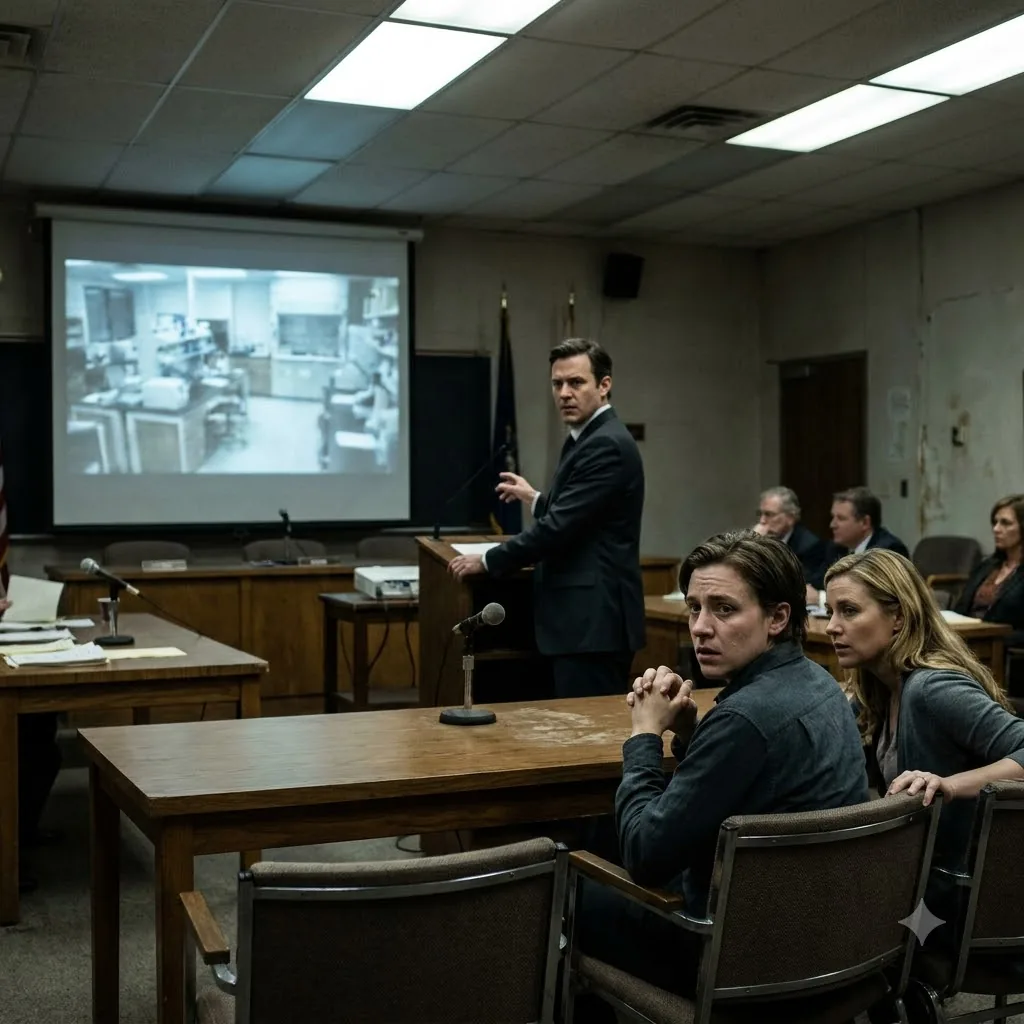
I sat in the back row of Bioethics Hearing Room 4B, listening to the quiet murmur of the committee members, when my clone sponsor Marcus Thorne cast a live feed onto the main projector that made my blood run cold. Up on the giant screen, illuminated in harsh blue light, was the real-time interior of my personal Model-9 Sample Freezer. Without my consent, Marcus was broadcasting my genetic storage unit to a room full of strangers, turning my medical privacy into a public sales pitch to secure his corporate license.
“As you can see, Committee Chair Harrison,” Marcus said, gesturing broadly to the projection, “Thorne Biotech maintains absolute, uninterrupted custody of the Vance genetic line. The temperature is stable, the seals are intact, and the donor’s assets are completely secure under our protocol.”
I gripped the secure key fob in my coat pocket. The plastic edges dug into my palm. I had never signed a waiver allowing a public broadcast of my cryogenic storage. In the near-future United States, corporate sponsors like Marcus were legally required to obtain explicit donor consent for any public transmission of genetic facilities. Yet here he was, bypassing the rule with a casual swipe of his finger.
Committee Chair Harrison leaned forward, his spectacles reflecting the blue glow of the freezer logs. “And this is a live diagnostic stream, Mr. Thorne?”
“Live and unedited,” Marcus replied, his voice smooth and confident. “We believe in total transparency. The committee can see the physical integrity of the vials right now.”
But Marcus had made a critical mistake. In his haste to prove his custody of the samples, he had mirrored his entire phone screen onto the projector rather than just the isolated camera app. The stream was completely uncropped. At the top of the projection, the Thorne Biotech Livestream App interface was fully visible. And right beneath the temperature reading, the system’s automated security logs were scrolling in real-time.
I stared at the scrolling text, my heart hammering against my ribs. The logs did not just show the internal environment. They listed the biometric signatures and exact timestamps of every single time the freezer door had been opened over the last seventy-two hours.
Marcus kept talking, his hands gesturing dynamically as he explained the market value of my genetic line. He was entirely focused on the committee, oblivious to the specific details flashing on the wall behind him. I looked at the top entry on the log. It was dated last night at 3:14 AM. The biometric ID used to bypass the lock was not mine. It was Marcus’s personal security override key-an override he had sworn under oath he would never use without a medical emergency. The uncropped screen was revealing a physical entry that contradicted everything Marcus had just told the committee about his hands-off protocol, and the room was beginning to notice.
I sat in the back row of Bioethics Hearing Room 4B, listening to the quiet murmur of the committee members, when my clone sponsor Marcus Thorne cast a live feed onto the main projector that made my blood run cold. Up on the giant screen, illuminated in harsh blue light, was the real-time interior of my personal Model-9 Sample Freezer. Without my consent, Marcus was broadcasting my genetic storage unit to a room full of strangers, turning my medical privacy into a public sales pitch to secure his corporate license.
“As you can see, Committee Chair Harrison,” Marcus said, gesturing broadly to the projection, “Thorne Biotech maintains absolute, uninterrupted custody of the Vance genetic line. The temperature is stable, the seals are intact, and the donor’s assets are completely secure under our protocol.”
I gripped the secure key fob in my coat pocket. The plastic edges dug into my palm. I had never signed a waiver allowing a public broadcast of my cryogenic storage. In the near-future United States, corporate sponsors like Marcus were legally required to obtain explicit donor consent for any public transmission of genetic facilities. Yet here he was, bypassing the rule with a casual swipe of his finger.
Committee Chair Harrison leaned forward, his spectacles reflecting the blue glow of the freezer logs. “And this is a live diagnostic stream, Mr. Thorne?”
“Live and unedited,” Marcus replied, his voice smooth and confident. “We believe in total transparency. The committee can see the physical integrity of the vials right now.”
But Marcus had made a critical mistake. In his haste to prove his custody of the samples, he had mirrored his entire phone screen onto the projector rather than just the isolated camera app. The stream was completely uncropped. At the top of the projection, the Thorne Biotech Livestream App interface was fully visible. And right beneath the temperature reading, the system’s automated security logs were scrolling in real-time.
I stared at the scrolling text, my heart hammering against my ribs. The logs did not just show the internal environment. They listed the biometric signatures and exact timestamps of every single time the freezer door had been opened over the last seventy-two hours.
Marcus kept talking, his hands gesturing dynamically as he explained the market value of my genetic line. He was entirely focused on the committee, oblivious to the specific details flashing on the wall behind him. I looked at the top entry on the log. It was dated last night at 3:14 AM. The biometric ID used to bypass the lock was not mine. It was Marcus’s personal security override key-an override he had sworn under oath he would never use without a medical emergency. The uncropped screen was revealing a physical entry that contradicted everything Marcus had just told the committee about his hands-off protocol, and the room was beginning to notice.