Story code: ST-001070
Part 3: The Cryptographic Proof
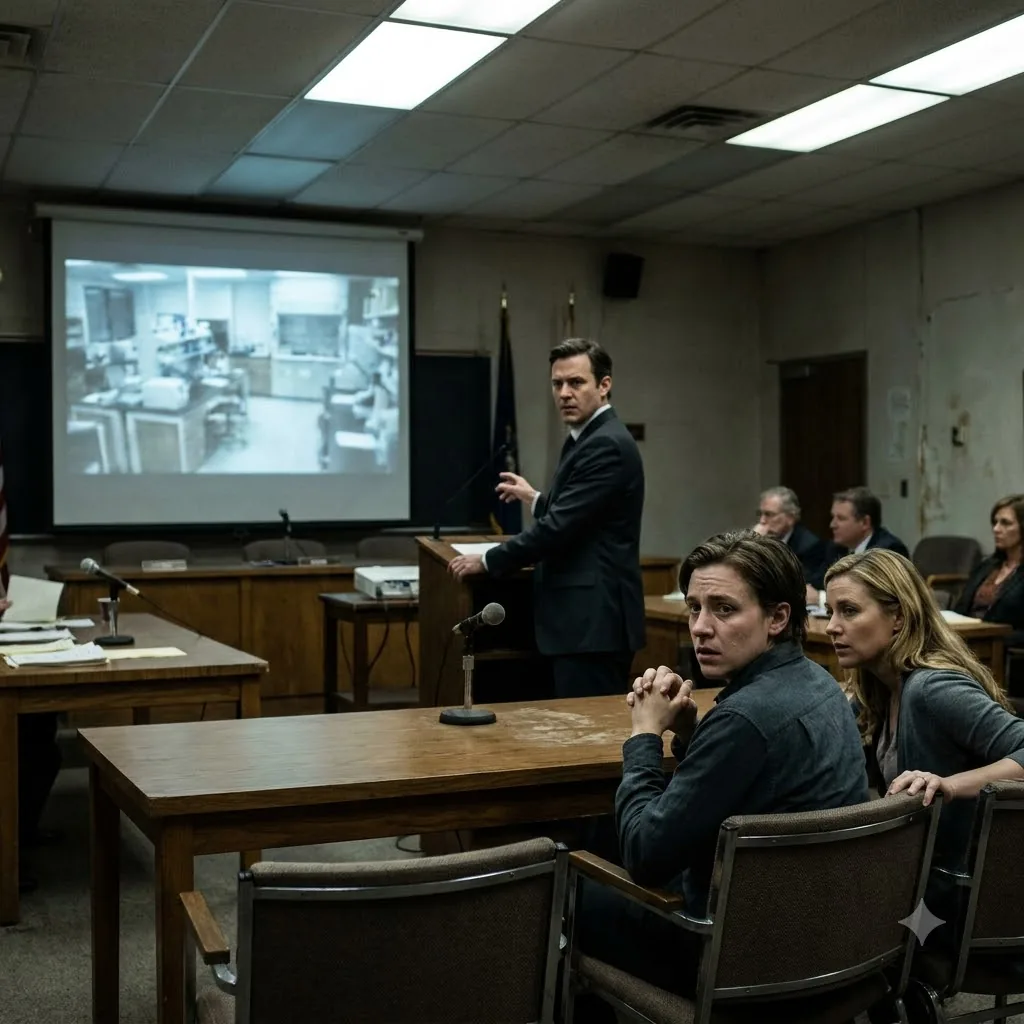
The air in Hearing Room 4B felt stagnant, smelling of old carpet and the static charge of the massive overhead projector. On the screen, the blinking red warning for the unregistered destination, Lab-8X, continued to pulse. A small digital progress wheel spun next to a countdown timer, which had just ticked down to four minutes and fifty seconds.
Marcus’s collar looked increasingly tight as Committee Chair Harrison waited for an explanation. The gallery was completely silent, save for the hum of the cooling fans in the projection system.
“The pending transfer,” Marcus began, his voice losing its smooth, polished resonance as he addressed the committee panel, “is actually the core reason we chose to present the feed without cropping the administrative interface. We wanted to show the live cryptographic verification hash scrolling at the bottom. I wanted this committee to have absolute proof of sample authenticity. A cropped feed could easily be pre-recorded, but this raw metadata proves to you, in real-time, that the Vance genetic line is exactly where we say it is.”
“And the administrative lockout of the donor?” Harrison asked, leaning over his microphone. “Was that also required to prove authenticity to this board?”
“A temporary security protocol,” Marcus insisted, his hand twitching toward the phone resting on his podium. “It prevents external commands from interrupting the stream during a live regulatory link. It is standard data preservation.”
I sat in the shadow of the back row, my eyes fixed on the projected screen. The countdown timer was at three minutes and twelve seconds. The pending transfer wasn’t just a data sync or a routine backup. The label on the screen read *Physical Release authorization pending*. Once that countdown hit zero, the physical canisters containing my genetic material would be unlocked for courier pick-up in the Thorne Biotech Cryo-Lab, completely bypassing my consent under the guise of an administrative emergency.
Marcus was running out of time, and his physical actions showed it. He tapped his phone screen, trying to clear the warning log from the projection, but the mirroring software hung, keeping the raw interface frozen on the wall for everyone in the room to see.
“Mr. Thorne,” Harrison said, his voice flat. “If that countdown reaches zero, does Thorne Biotech intend to physically move the Vance samples to an off-site, unregistered facility without this committee’s authorization?”
“Of course not,” Marcus said, though his thumb hovered frantically over the screen of his device. “We are simply queueing a diagnostic relocation. It is entirely standard procedure.”
I reached into my coat pocket and gripped the cold plastic of my secure key fob. I logged into my local user portal on my phone, keeping the screen dimmed against my lap so the light wouldn’t draw attention. Because my donor contract was still technically active, the cryo-facility’s hardware still recognized my biometric ID, even if Marcus had suspended my viewing access on his administrative console. As the primary donor, the physical architecture of the Model-9 freezer gave me one override that no sponsor could block: the remote authority to shut down the freezer’s network hub entirely.
If I triggered it, the freezer’s internal router would shut down, disconnecting it from the Thorne Biotech cloud. It would abort the pending transfer and lock the physical canisters shut. But it would also kill the feed immediately, letting Marcus know I was in the room, watching his betrayal. On the wall, the countdown timer dipped below two minutes.