Story code: ST-001076
Part 1: The Glass Screen
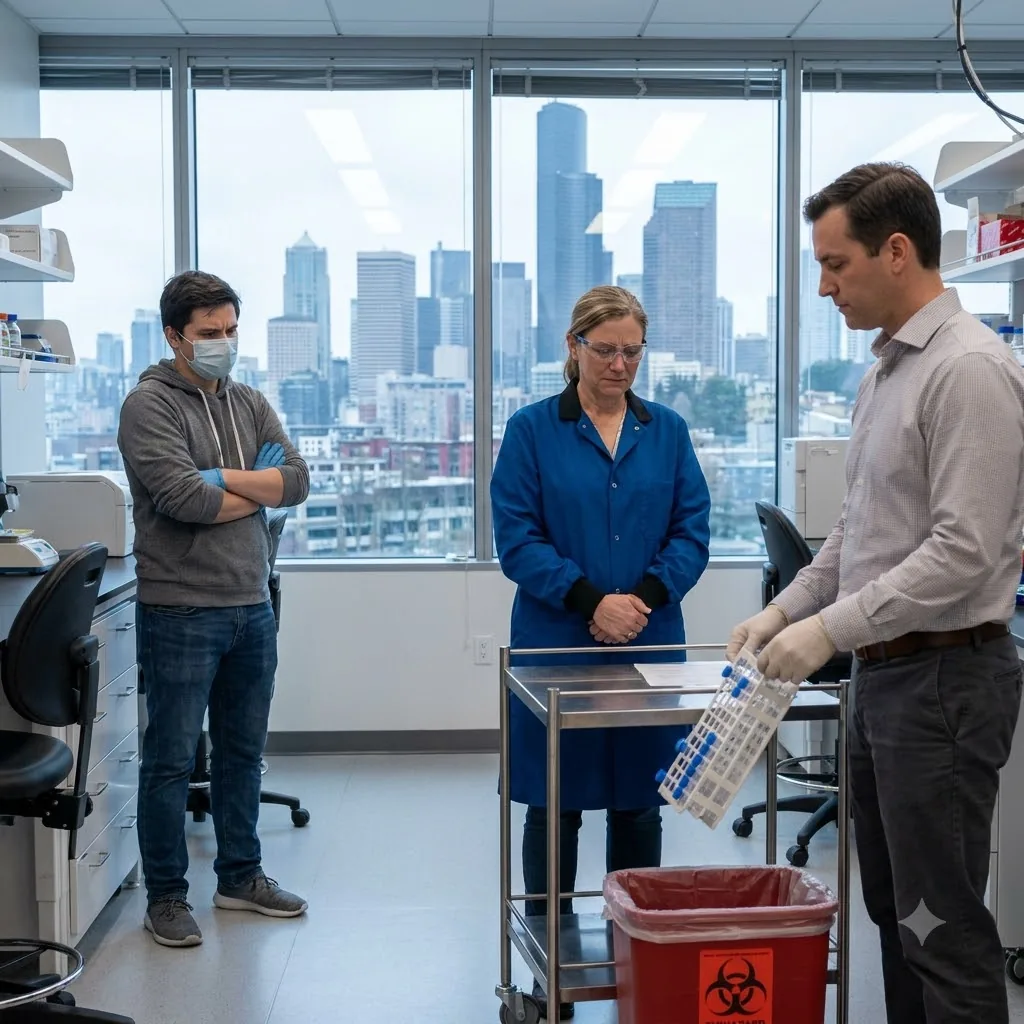
At the Horizon Genetics Suite in Seattle, I watched the director’s nephew, Julian Miller, deliberately drop a rack of custom buffer solutions into the biohazard bin, instantly ruining three weeks of Elena Vance’s primary gene-splicing study. Julian shrugged his shoulders, his voice smooth and empty as he apologized for his “slippery fingers.” Elena Vance did not yell; she simply massaged the bridge of her nose, her shoulders sagging as she stared at the ruined baseline control samples. It was the fourth time this week Julian had ruined a basic saline dilution batch, forcing Elena to stay late to redo the entire prep sequence while his uncle, Marcus Miller, watched from the hallway.
I sat at my workstation, adjusting my safety goggles and wiping down the glass shield with an alcohol pad. I took a clean micro-fiber cloth and began to polish the glass safety screen of my workstation, focusing on a smudged corner near the spectrophotometer. The physical blue ledger sat open next to me, its pages filled with neat columns of calibration dates. I adjusted my safety goggles, watching Julian’s reflection in the glass. When he sat at the interface of CRISPR Sequencer Unit 4 during normal shift hours, he was a monument to slowness. He typed with two rigid index fingers, peering at the screen as if the layout of a standard QWERTY keyboard were a deep mystery. Every few minutes, he would sigh, push his chair back, and ask Elena to input the sequence codes for him. “I just don’t want to mess up the upload,” he would say, his voice thick with performative helplessness. Elena, exhausted and buried under her own deadlines, would slide into his seat and type the sequence herself.
The routine worked perfectly. By Friday, Julian had successfully shifted eighty percent of his primary sequencing work onto Elena, leaving him free to browse his phone or wander to the Break Room.
At 9:00 PM, long after the rest of the team had clocked out, I returned to Sequencing Room B to retrieve the blue ledger I had left on my desk. The main overhead lights were off, but the blue glow of CRISPR Sequencer Unit 4 illuminated the back of the room. Through the glass partition, I saw Julian.
He was not slouching, and he was not peering blankly at the monitor.
Julian sat upright, his hands poised over the keyboard. His fingers did not hunt and peck. They moved in a rapid, fluid cadence, tapping out complex strings of gene-editing code with ten-finger precision. The monitor reflected a series of advanced synthesis commands-sequences that required years of specialized certification. He did not look at a reference sheet. His left hand adjusted the sequencer’s flow rate with tiny, exact turns, while his right hand executed a series of overrides on the control batch.
I stood frozen in the darkened hallway. Julian pressed the final execution key, his movements clean, sharp, and practiced. The machine hummed, beginning a run of Lab Report #882-G. The incompetent nephew who could not mix a saline dilution was running the clinic’s most complex gene-editing sequence with the grace of a master technician.
At the Horizon Genetics Suite in Seattle, I watched the director’s nephew, Julian Miller, deliberately drop a rack of custom buffer solutions into the biohazard bin, instantly ruining three weeks of Elena Vance’s primary gene-splicing study. Julian shrugged his shoulders, his voice smooth and empty as he apologized for his “slippery fingers.” Elena Vance did not yell; she simply massaged the bridge of her nose, her shoulders sagging as she stared at the ruined baseline control samples. It was the fourth time this week Julian had ruined a basic saline dilution batch, forcing Elena to stay late to redo the entire prep sequence while his uncle, Marcus Miller, watched from the hallway.
I sat at my workstation, adjusting my safety goggles and wiping down the glass shield with an alcohol pad. I took a clean micro-fiber cloth and began to polish the glass safety screen of my workstation, focusing on a smudged corner near the spectrophotometer. The physical blue ledger sat open next to me, its pages filled with neat columns of calibration dates. I adjusted my safety goggles, watching Julian’s reflection in the glass. When he sat at the interface of CRISPR Sequencer Unit 4 during normal shift hours, he was a monument to slowness. He typed with two rigid index fingers, peering at the screen as if the layout of a standard QWERTY keyboard were a deep mystery. Every few minutes, he would sigh, push his chair back, and ask Elena to input the sequence codes for him. “I just don’t want to mess up the upload,” he would say, his voice thick with performative helplessness. Elena, exhausted and buried under her own deadlines, would slide into his seat and type the sequence herself.
The routine worked perfectly. By Friday, Julian had successfully shifted eighty percent of his primary sequencing work onto Elena, leaving him free to browse his phone or wander to the Break Room.
At 9:00 PM, long after the rest of the team had clocked out, I returned to Sequencing Room B to retrieve the blue ledger I had left on my desk. The main overhead lights were off, but the blue glow of CRISPR Sequencer Unit 4 illuminated the back of the room. Through the glass partition, I saw Julian.
He was not slouching, and he was not peering blankly at the monitor.
Julian sat upright, his hands poised over the keyboard. His fingers did not hunt and peck. They moved in a rapid, fluid cadence, tapping out complex strings of gene-editing code with ten-finger precision. The monitor reflected a series of advanced synthesis commands-sequences that required years of specialized certification. He did not look at a reference sheet. His left hand adjusted the sequencer’s flow rate with tiny, exact turns, while his right hand executed a series of overrides on the control batch.
I stood frozen in the darkened hallway. Julian pressed the final execution key, his movements clean, sharp, and practiced. The machine hummed, beginning a run of Lab Report #882-G. The incompetent nephew who could not mix a saline dilution was running the clinic’s most complex gene-editing sequence with the grace of a master technician.