Story code: ST-001078
Part 3: The Registry Query
The progress bar on my monitor stalled at twelve percent. A small blue circle spun next to the words Accessing Federal Clearing Registry.
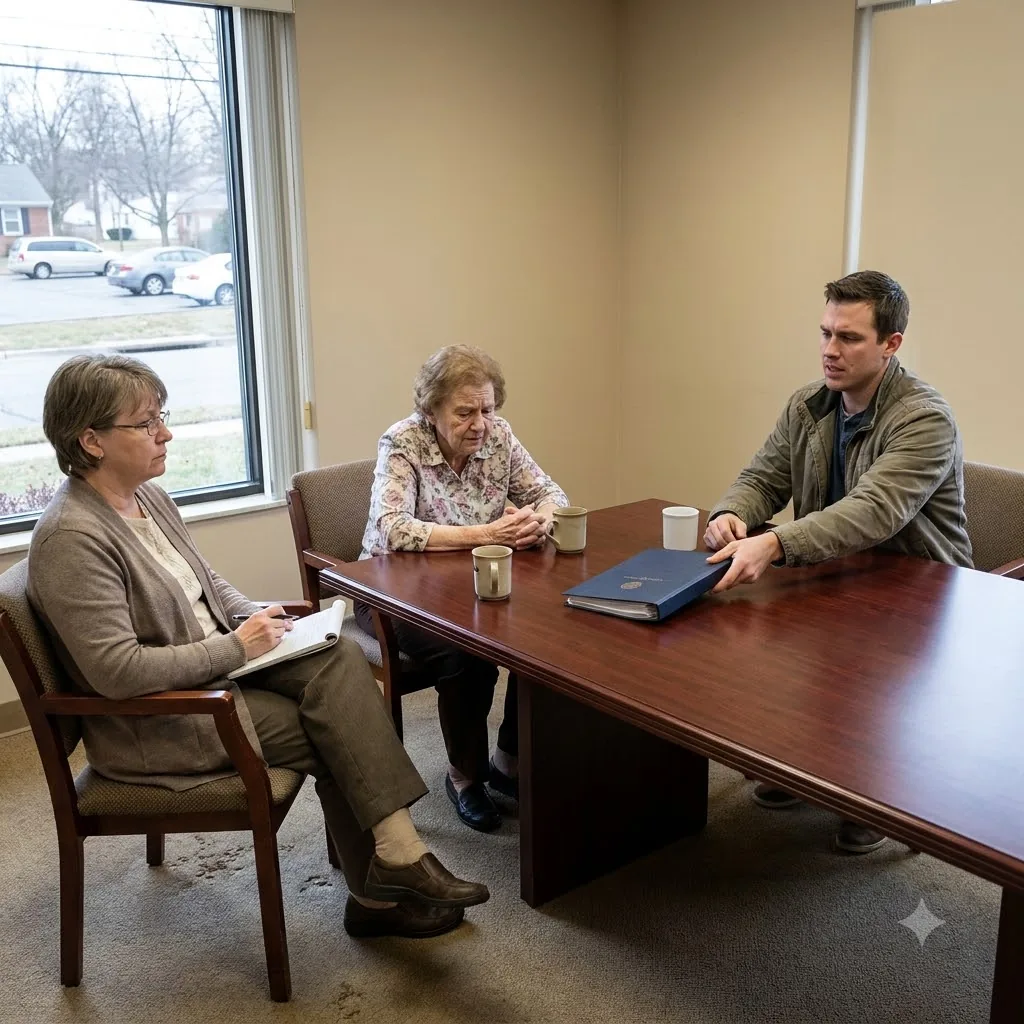
I watched Derek. He adjusted his tie twice in thirty seconds, the silk knot sliding slightly off-center. He looked at the wall clock, then down at Evelyn, whose hand remained suspended over the signature line, the black ink pen resting lightly against her index finger.
“This is ridiculous,” Derek said, his voice dropping to a low, tight register. “We are talking about a private family arrangement. Oakridge Community Bank has no jurisdictional authority to audit a secondary liquidity document. I’ve already cleared this with our family attorney.”
“If the document is registered, the query will take less than two minutes, Mr. Carter,” I said. “Our portal cross-references the National Underwriting Database. It is standard protocol for any transaction involving custom demurrage terms.”
Evelyn set the pen down. It rolled an inch before stopping against the blue backing of the document. “Derek, you said the bank required this check. You told me they needed to verify the tax code before we could transfer the savings.”
Derek didn’t look at her. His eyes remained fixed on my screen. “I said the bank requires notarization, Aunt Evelyn. There is a difference. The notary’s job is to witness your signature, not run a diagnostic on our private trust structures. She is overstepping.”
He leaned forward, his elbows on the mahogany table, trying to block my view of the monitor. “The national registry doesn’t index secondary liquidity transfers that utilize private clearing channels,” he said, his words coming faster, his pitch rising. “It’s a proprietary routing mechanism. If you run that query, you will trigger an unnecessary audit flag on the estate account. You are putting your aunt’s savings at risk just to satisfy a branch checklist.”
I kept my hands resting flat on the edge of the desk, away from the keyboard. “The query does not flag accounts for external audits, Mr. Carter. It simply verifies the validity of the document’s registration ID.”
He reached across the table, his hand flat, fingers spreading over the top edge of the Asset Realignment Agreement. “If this branch is going to create administrative bottlenecks, we will simply take the paperwork to a title company. Sign the authorization page now, Evelyn, and we’ll handle the filing ourselves.”
I placed my hand gently on the opposite corner of the document, maintaining a firm but non-threatening grip. “I cannot witness a signature on a document that has been flagged for active registry verification. The system has paused the transaction pending the result of the query.”
On the screen, a red prompt appeared: Registry ID TX-990-2014-DE format detected. Foreign or historical template match. Execute deep-query verification? WARNING: All deep-queries are logged permanently in the branch compliance audit ledger.
Derek’s jaw tightened. A muscle in his cheek twitched. “Cancel the query,” he said, his voice dropping to a flat whisper. “We’re leaving.”
“If I cancel the query now,” I said, looking directly into his eyes, “the system automatically freezes the pending transfer request for twenty-four hours due to incomplete verification. To keep the transfer active, I must proceed with the live test.”
Evelyn looked between the two of us, her shoulders dropping. “What is a deep-query, Sarah?”
“It checks the registration ID against the active regulatory database to ensure the template is valid and legal,” I told her.
Derek’s fingers dug into the edge of the blue paper, folding the corner slightly. “We don’t have time for this database nonsense. Aunt Evelyn, pick up the pen.”
Evelyn did not move. Her gaze remained fixed on the red warning text reflecting in the glass of my computer screen. I clicked the button labeled Execute Deep-Query.