Story code: ST-001079
Part 1: The Banner on the Steps
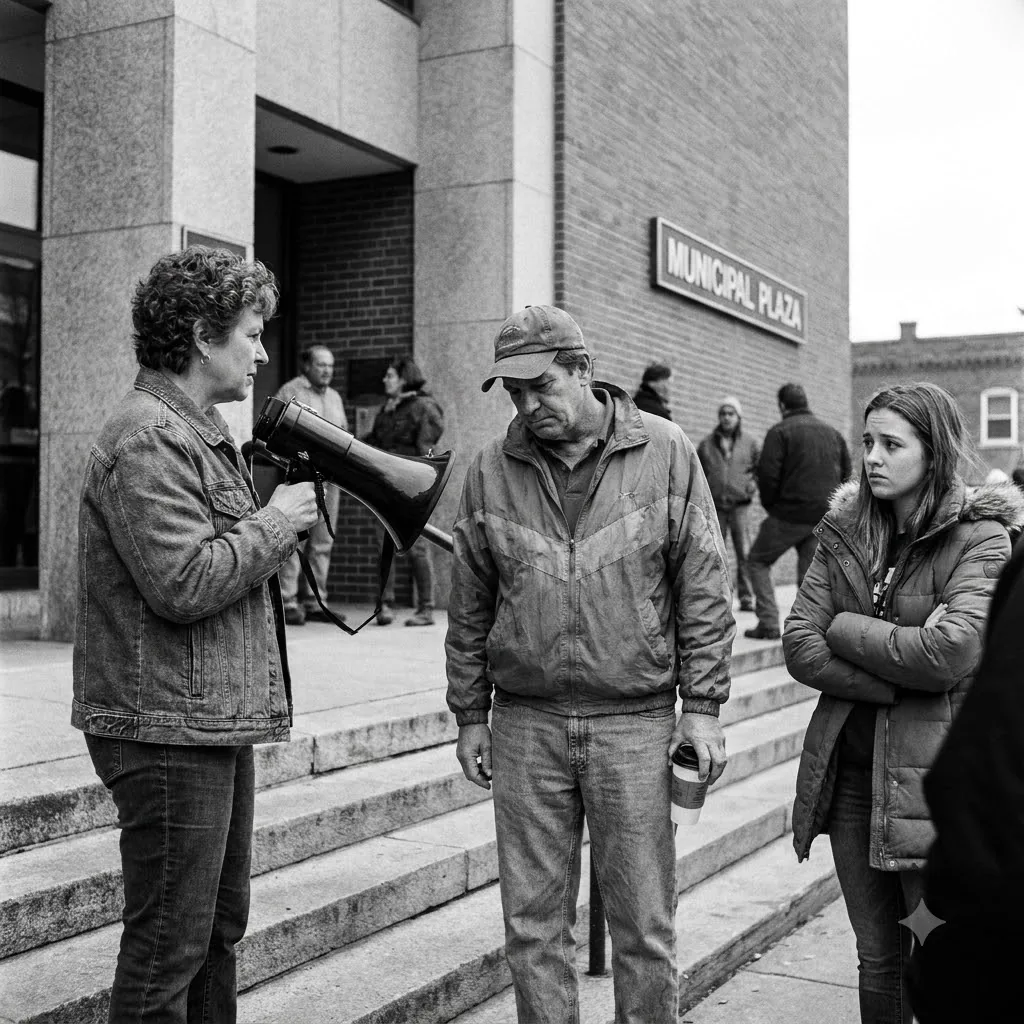
On the concrete steps of the Municipal Plaza, Chloe raised a megaphone to demand the immediate ruin of local landowners who had partnered with corporate energy developers. Right beside her, holding the heavy grommets of the vinyl protest banner, her uncle Arthur stood with a stooped posture, clutching his coat against the damp wind. Julian watched from the shadow of the stone pillars as his cousin Chloe pointed the megaphone directly at the crowd, her voice echoing off the granite walls. The morning air was cold, carrying the sound of traffic and the murmurs of the growing audience gathered at the base of the steps. The massive banner, stretched tight between two metal poles, listed corporate polluters in bold red lettering, followed by a demand for the city to revoke all active agricultural permits for any family associated with them.
Chloe adjusted her grip on the megaphone, her movements precise and practiced. “There is no middle ground when it comes to the destruction of our county,” she shouted, her voice sharp and steady. “Anyone who signed a lease with Apex-Vanguard or their subsidiaries took dirty money. They traded our water and our soil for quick cash. The city council must enforce the absolute moral standard we are presenting today. Retrospective forfeiture of all permits, and immediate public blacklisting!”
Julian watched Arthur’s reaction from his vantage point near the grand entrance. The older man did not look at the crowd or the cameras. Instead, his eyes were fixed on the bottom edge of the banner, where the names of local family-owned land leases were printed in a dense grid of black ink. Arthur’s hand, holding the corner of the banner, trembled slightly under the weight of the stiff canvas. He shifted his weight, his boots scraping against the cold concrete as if trying to shrink away from the public gaze. He looked at Arthur, whose eyes remained locked on the printed lease number, his face devoid of color as the crowd cheered Chloe’s declaration.
A reporter from the local paper stepped forward, pointing a camera at the banner. “Chloe,” the reporter called out, “does this standard apply to the legacy farms in the northern district? Many of them signed agreements just to keep their families afloat during the drought a decade ago.”
Chloe did not hesitate. “A compromise with a polluter is still a compromise,” she replied, her voice projecting across the plaza. “If they took the money, they are complicit. The punishment must be absolute. No exceptions.”
Julian moved closer to the steps, his boots clicking quietly on the stone. He looked past Chloe’s shoulder at the lower section of the banner. Under the heading ‘Apex-Vanguard Partners,’ his eyes scanned the list of registry numbers until they stopped on a specific entry: ‘Oakhaven Agricultural Holdings, Lease #412.’ Julian knew that name. It was the registered corporate entity for Arthur’s own family farm. The very punishment Chloe was demanding-the complete revocation of agricultural permits and the seizure of properties-was aimed directly at the land that had sustained their family for generations.
On the concrete steps of the Municipal Plaza, Chloe raised a megaphone to demand the immediate ruin of local landowners who had partnered with corporate energy developers. Right beside her, holding the heavy grommets of the vinyl protest banner, her uncle Arthur stood with a stooped posture, clutching his coat against the damp wind. Julian watched from the shadow of the stone pillars as his cousin Chloe pointed the megaphone directly at the crowd, her voice echoing off the granite walls. The morning air was cold, carrying the sound of traffic and the murmurs of the growing audience gathered at the base of the steps. The massive banner, stretched tight between two metal poles, listed corporate polluters in bold red lettering, followed by a demand for the city to revoke all active agricultural permits for any family associated with them.
Chloe adjusted her grip on the megaphone, her movements precise and practiced. “There is no middle ground when it comes to the destruction of our county,” she shouted, her voice sharp and steady. “Anyone who signed a lease with Apex-Vanguard or their subsidiaries took dirty money. They traded our water and our soil for quick cash. The city council must enforce the absolute moral standard we are presenting today. Retrospective forfeiture of all permits, and immediate public blacklisting!”
Julian watched Arthur’s reaction from his vantage point near the grand entrance. The older man did not look at the crowd or the cameras. Instead, his eyes were fixed on the bottom edge of the banner, where the names of local family-owned land leases were printed in a dense grid of black ink. Arthur’s hand, holding the corner of the banner, trembled slightly under the weight of the stiff canvas. He shifted his weight, his boots scraping against the cold concrete as if trying to shrink away from the public gaze. He looked at Arthur, whose eyes remained locked on the printed lease number, his face devoid of color as the crowd cheered Chloe’s declaration.
A reporter from the local paper stepped forward, pointing a camera at the banner. “Chloe,” the reporter called out, “does this standard apply to the legacy farms in the northern district? Many of them signed agreements just to keep their families afloat during the drought a decade ago.”
Chloe did not hesitate. “A compromise with a polluter is still a compromise,” she replied, her voice projecting across the plaza. “If they took the money, they are complicit. The punishment must be absolute. No exceptions.”
Julian moved closer to the steps, his boots clicking quietly on the stone. He looked past Chloe’s shoulder at the lower section of the banner. Under the heading ‘Apex-Vanguard Partners,’ his eyes scanned the list of registry numbers until they stopped on a specific entry: ‘Oakhaven Agricultural Holdings, Lease #412.’ Julian knew that name. It was the registered corporate entity for Arthur’s own family farm. The very punishment Chloe was demanding-the complete revocation of agricultural permits and the seizure of properties-was aimed directly at the land that had sustained their family for generations.