Story code: ST-000045
Part 1: The Tote He Touched Like It Was His
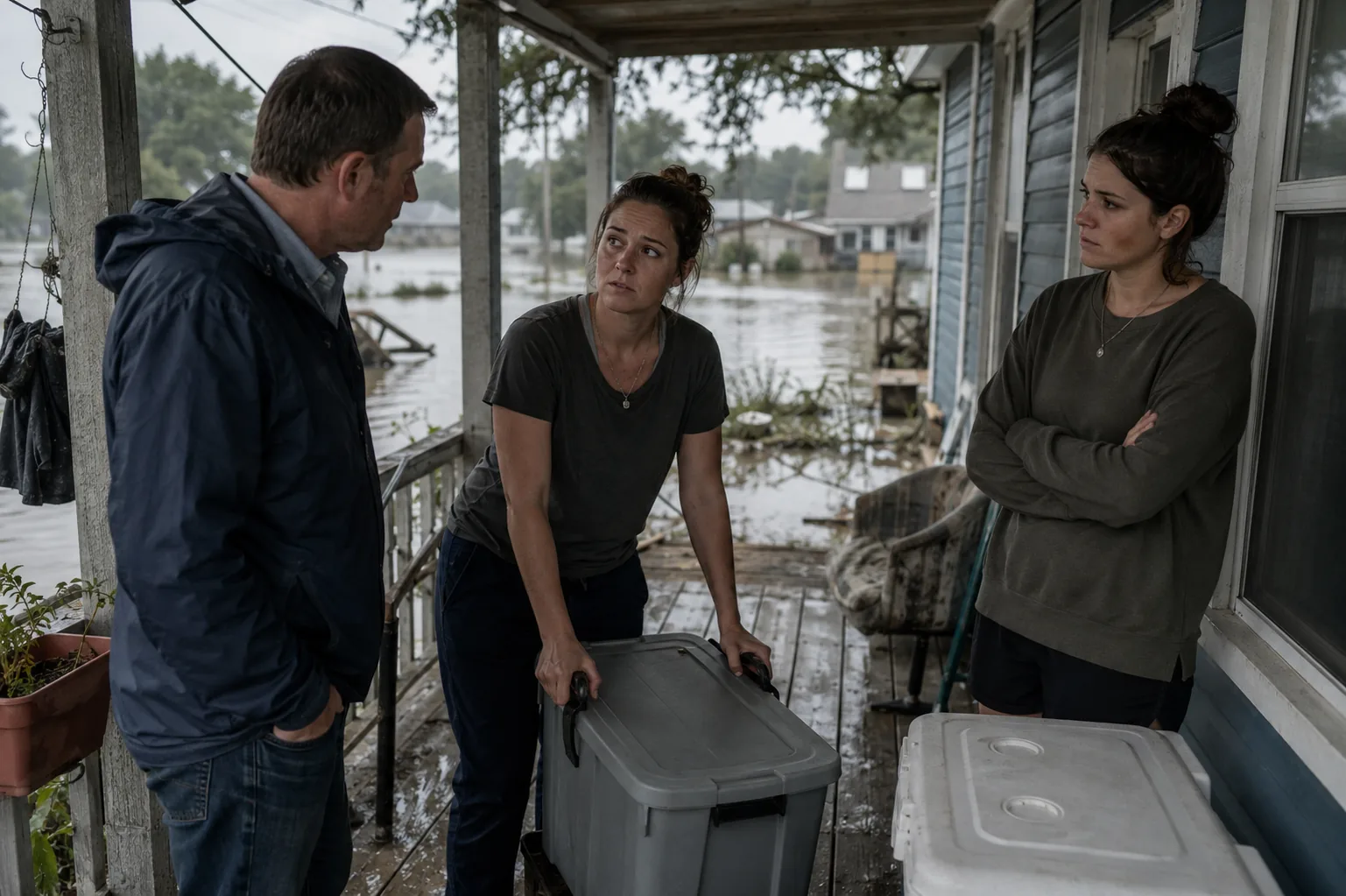
By the time Evan Pike stepped onto the Mercers’ flooded back porch and set his route printouts beside the cooler, Raina had already hauled the gray evacuation tote away from a wet board for the third time that morning. What stopped the meal cold was not the water under the porch or the folding chairs stacked above the tide line. It was Evan flipping the tote handle upright and saying, in front of her whole family, “No, the medicine pouch goes on the left side so it doesn’t crush the flashlight,” like he had packed that tote in somebody else’s house a hundred times. Leah was carrying foil pans from the kitchen door when he said it. She stopped with one tray against her forearm and watched Raina set down the paper plates she had been counting. “Left side?” Raina asked. Evan had one hand on the orange-taped handle. “For balance,” he said quickly. “I’m just saying what usually works. When people are moving in a hurry, they throw things in wrong.” Darnell gave a short laugh from near the warped railing. “If balance was the issue, we’d all be living in the church lot by now. Put the beans down before they slide.” The joke didn’t move anybody. Water stood in the yard past the porch steps, flat and brown, and every chair leg had been checked twice before anybody sat. Raina crossed to the tote and put her hand over the lid. “You said medicine pouch,” she said. “Who told you I keep one in there?” Leah saw Evan’s eyes go to the lid before he answered. His route papers were tucked under his arm, dog-eared from use, and he shifted them against his chest like he wanted both hands free. “Everybody keeps one,” he said. “Storm country. That’s not exactly a secret.” “Mine’s not labeled medicine pouch,” Raina said. That part was true. Leah knew because she had helped dump and repack the tote after the last flood. The pouches inside were color-coded and taped, but the writing had mostly worn off except for one newer label that hadn’t been there the year before. Milo Boyd came through the porch door sideways, holding a stack of paper bowls bigger than his face. Tessa followed behind him with a casserole and one careful foot on each dry strip of board. Darnell had invited them because Tessa knew somebody inland with a cousin leaving a second-floor unit, or that was how the introduction had come around the family text chain. Leah noticed Tessa before anybody made the greeting, because she stopped at the tote. Not the whole tote. One spot. The little zip pouch showing under the lid edge. Milo pointed with the bowls. “That’s the red-zip one,” he said. “Don’t squish it.” Nobody answered him. Tessa shifted the casserole to her other hand and said, without looking up at anyone, “He means the inhaler pouch.” Evan turned toward her so fast the papers slipped against his shirt. Raina’s hand stayed on the tote lid. “Inhaler pouch?” Tessa looked up then, first at the child, then at Evan, then at the orange tape on the handle. Leah had been watching hands all morning, but now she watched faces too. Tessa’s mouth stayed parted a second too long, like she had started one sentence and caught it in time. Milo bounced the bowls once against his knee. “At home Evan says red zip means grab first,” he said. “Because of the spacer.” Darnell reached for the bowls. “Come on, man, let’s get these down before they float away.” But Milo had already said it, and not one person on that porch had missed the name. At home Evan says. Evan gave a short, clipped laugh. “Kids hear one thing and build a whole movie out of it. Tessa and I have done volunteer runs together after storms. He probably heard me talking people through supplies.” Tessa did not nod. She kept her eyes on the tote. Leah set down the tray she was carrying and crouched by the lid before Raina could stop her. The faded orange tape scratched her knuckles. Inside were batteries, bottled water, two flashlights, copies of insurance cards in a plastic sleeve, and the red-zip pouch tucked left, exactly where Evan’s hand had gone without looking. Sewn into the corner of the pouch was a strip of white tape with block letters in marker. M.B. Leah didn’t touch it. She only looked. Milo had moved closer now, close enough to lean into Darnell’s hip. “That’s mine,” he said. “Where’s the blue one?” Raina stood very still. The porch sounds went thin around her: plastic lid shifting, ice knocking the cooler wall, a chair foot scraping away from a soft board. Evan stepped forward and held his route papers out toward Tessa like they explained anything. “You came to talk apartments, right? That inland place on Caden Street?” Tessa’s eyes finally left the tote. “I came because Leah’s aunt asked me to bring food,” she said. “And because you said this family was behind me on the waitlist, not sitting here with your hand on their supplies.” Darnell’s shoulders dropped, and his mouth closed around the joke he had been about to use. Raina looked from Milo to the pouch to Evan. “Behind you on what waitlist?” she asked. Evan answered too fast. “It’s the same property group. I can explain the overlap.” But Tessa had already seen enough to stop mid-step at one item, name it the way somebody inside a home would name it, and let a child fill in the rest. Leah looked at the red zipper, at the white tape with Milo’s initials, and then at the way Evan kept standing between two households like there was still a clean version of this. Raina did not raise her voice. She only asked the question again, slower this time, with one hand still pressed flat on the tote lid. “Evan, why is her kid’s.
By the time Evan Pike stepped onto the Mercers’ flooded back porch and set his route printouts beside the cooler, Raina had already hauled the gray evacuation tote away from a wet board for the third time that morning. What stopped the meal cold was not the water under the porch or the folding chairs stacked above the tide line. It was Evan flipping the tote handle upright and saying, in front of her whole family, “No, the medicine pouch goes on the left side so it doesn’t crush the flashlight,” like he had packed that tote in somebody else’s house a hundred times. Leah was carrying foil pans from the kitchen door when he said it. She stopped with one tray against her forearm and watched Raina set down the paper plates she had been counting. “Left side?” Raina asked. Evan had one hand on the orange-taped handle. “For balance,” he said quickly. “I’m just saying what usually works. When people are moving in a hurry, they throw things in wrong.” Darnell gave a short laugh from near the warped railing. “If balance was the issue, we’d all be living in the church lot by now. Put the beans down before they slide.” The joke didn’t move anybody. Water stood in the yard past the porch steps, flat and brown, and every chair leg had been checked twice before anybody sat. Raina crossed to the tote and put her hand over the lid. “You said medicine pouch,” she said. “Who told you I keep one in there?” Leah saw Evan’s eyes go to the lid before he answered. His route papers were tucked under his arm, dog-eared from use, and he shifted them against his chest like he wanted both hands free. “Everybody keeps one,” he said. “Storm country. That’s not exactly a secret.” “Mine’s not labeled medicine pouch,” Raina said. That part was true. Leah knew because she had helped dump and repack the tote after the last flood. The pouches inside were color-coded and taped, but the writing had mostly worn off except for one newer label that hadn’t been there the year before. Milo Boyd came through the porch door sideways, holding a stack of paper bowls bigger than his face. Tessa followed behind him with a casserole and one careful foot on each dry strip of board. Darnell had invited them because Tessa knew somebody inland with a cousin leaving a second-floor unit, or that was how the introduction had come around the family text chain. Leah noticed Tessa before anybody made the greeting, because she stopped at the tote. Not the whole tote. One spot. The little zip pouch showing under the lid edge. Milo pointed with the bowls. “That’s the red-zip one,” he said. “Don’t squish it.” Nobody answered him. Tessa shifted the casserole to her other hand and said, without looking up at anyone, “He means the inhaler pouch.” Evan turned toward her so fast the papers slipped against his shirt. Raina’s hand stayed on the tote lid. “Inhaler pouch?” Tessa looked up then, first at the child, then at Evan, then at the orange tape on the handle. Leah had been watching hands all morning, but now she watched faces too. Tessa’s mouth stayed parted a second too long, like she had started one sentence and caught it in time. Milo bounced the bowls once against his knee. “At home Evan says red zip means grab first,” he said. “Because of the spacer.” Darnell reached for the bowls. “Come on, man, let’s get these down before they float away.” But Milo had already said it, and not one person on that porch had missed the name. At home Evan says. Evan gave a short, clipped laugh. “Kids hear one thing and build a whole movie out of it. Tessa and I have done volunteer runs together after storms. He probably heard me talking people through supplies.” Tessa did not nod. She kept her eyes on the tote. Leah set down the tray she was carrying and crouched by the lid before Raina could stop her. The faded orange tape scratched her knuckles. Inside were batteries, bottled water, two flashlights, copies of insurance cards in a plastic sleeve, and the red-zip pouch tucked left, exactly where Evan’s hand had gone without looking. Sewn into the corner of the pouch was a strip of white tape with block letters in marker. M.B. Leah didn’t touch it. She only looked. Milo had moved closer now, close enough to lean into Darnell’s hip. “That’s mine,” he said. “Where’s the blue one?” Raina stood very still. The porch sounds went thin around her: plastic lid shifting, ice knocking the cooler wall, a chair foot scraping away from a soft board. Evan stepped forward and held his route papers out toward Tessa like they explained anything. “You came to talk apartments, right? That inland place on Caden Street?” Tessa’s eyes finally left the tote. “I came because Leah’s aunt asked me to bring food,” she said. “And because you said this family was behind me on the waitlist, not sitting here with your hand on their supplies.” Darnell’s shoulders dropped, and his mouth closed around the joke he had been about to use. Raina looked from Milo to the pouch to Evan. “Behind you on what waitlist?” she asked. Evan answered too fast. “It’s the same property group. I can explain the overlap.” But Tessa had already seen enough to stop mid-step at one item, name it the way somebody inside a home would name it, and let a child fill in the rest. Leah looked at the red zipper, at the white tape with Milo’s initials, and then at the way Evan kept standing between two households like there was still a clean version of this. Raina did not raise her voice. She only asked the question again, slower this time, with one hand still pressed flat on the tote lid. “Evan, why is her kid’s.