Story code: ST-001106
Part 1: The Intake Lock
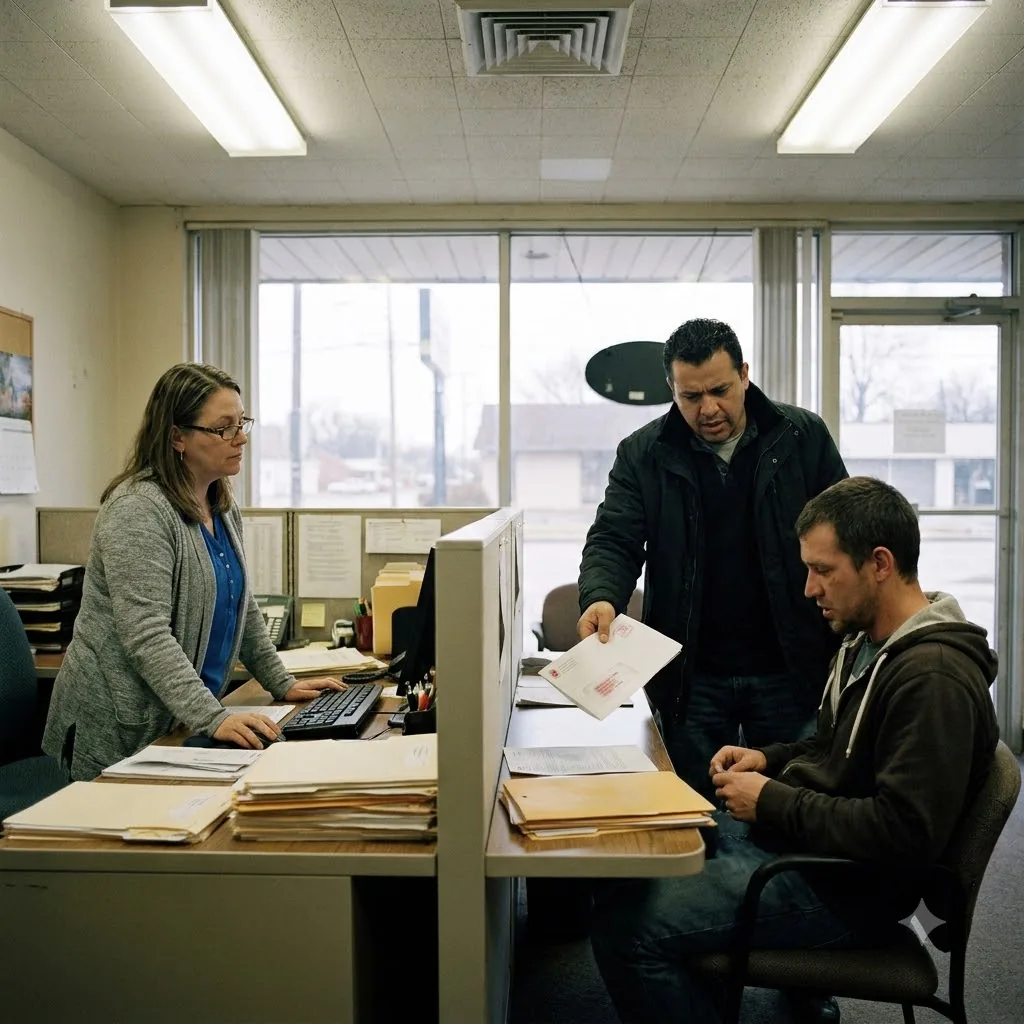
Elena Rostova adjusted her glasses at Counter Four, watching Julian Miller slide a red-stamped paper, Collection Notice #9088-A, directly in front of his younger brother, Marcus, demanding he sign an acknowledgment for a $42,000 debt registered to their late father’s estate. Under the strict intake rules of Vance Credit Counseling, Marcus could not file an official dispute against the massive claim without first signing this acknowledgment form-a procedural lock that Julian was using to force his brother’s hand. The office was quiet, save for the low hum of a laser printer in the corner and the occasional click of keyboards.
Julian, wearing a heavy black leather jacket, leaned over the laminate counter, his voice commanding and sharp. “Just sign the acknowledgment, Marcus. If we don’t submit the intake file today, the creditor will freeze the probate transition, and the house goes into foreclosure by Friday.”
Marcus, sitting with his shoulders hunched in a denim jacket with frayed cuffs, stared at the paper. He checked his watch, then held his breath for several seconds before speaking. “Forty-two thousand, Julian? Dad didn’t have active credit cards in his last year. He was in hospice. How is this possible?”
“It doesn’t matter how,” Julian said, his fingers tapping a rapid, erratic rhythm against the desktop. “The notice says it’s an outstanding estate liability. The counselor, Mr. Vance, is already pulling up the database. If you don’t sign the acknowledgment, they can’t dispute it, and we lose the property. Sign it.”
At the adjacent desk, Arthur Vance sat with his wire-rimmed spectacles perched low on his nose, holding a blue ink pen. He did not look up from the folder he was reviewing, but his dry, flat voice cut through Julian’s insistence. “Mr. Miller is correct about the intake procedure. Our system cannot initiate a dispute file for a third-party claim against an estate unless the designated heir signs the preliminary verification of notice. Without it, the administrative hold remains active.”
Elena typed rapidly, logging the intake numbers into the Vance database, but her eyes kept drifting to Julian’s hands. They were trembling slightly as he pushed the blue pen toward his brother.
Marcus picked up the pen, his thumb tracing the plastic barrel. He looked toward Arthur Vance. “And if I sign this, I’m just acknowledging I received it? I’m not saying I owe it?”
“It registers the claim within the system,” Arthur Vance replied, his pen hovering over a yellow notepad. “It binds you to the sequence of the debt as presented on the face of the notice.”
Julian leaned closer, his shoulder pressing against Marcus’s. “Do it. Stop stalling. We don’t have time to debate this. Arthur just needs the signature to block the immediate collection action.”
Marcus lowered the pen to the paper, his hand hesitating just above the signature line. Elena paused her typing, her gaze fixed on the dates printed at the bottom of Collection Notice #9088-A. There was a glaring discrepancy between the sequence of events on the notice and the estate records, an impossible timeline that threatened to turn the entire claim upside down.
Elena Rostova adjusted her glasses at Counter Four, watching Julian Miller slide a red-stamped paper, Collection Notice #9088-A, directly in front of his younger brother, Marcus, demanding he sign an acknowledgment for a $42,000 debt registered to their late father’s estate. Under the strict intake rules of Vance Credit Counseling, Marcus could not file an official dispute against the massive claim without first signing this acknowledgment form-a procedural lock that Julian was using to force his brother’s hand. The office was quiet, save for the low hum of a laser printer in the corner and the occasional click of keyboards.
Julian, wearing a heavy black leather jacket, leaned over the laminate counter, his voice commanding and sharp. “Just sign the acknowledgment, Marcus. If we don’t submit the intake file today, the creditor will freeze the probate transition, and the house goes into foreclosure by Friday.”
Marcus, sitting with his shoulders hunched in a denim jacket with frayed cuffs, stared at the paper. He checked his watch, then held his breath for several seconds before speaking. “Forty-two thousand, Julian? Dad didn’t have active credit cards in his last year. He was in hospice. How is this possible?”
“It doesn’t matter how,” Julian said, his fingers tapping a rapid, erratic rhythm against the desktop. “The notice says it’s an outstanding estate liability. The counselor, Mr. Vance, is already pulling up the database. If you don’t sign the acknowledgment, they can’t dispute it, and we lose the property. Sign it.”
At the adjacent desk, Arthur Vance sat with his wire-rimmed spectacles perched low on his nose, holding a blue ink pen. He did not look up from the folder he was reviewing, but his dry, flat voice cut through Julian’s insistence. “Mr. Miller is correct about the intake procedure. Our system cannot initiate a dispute file for a third-party claim against an estate unless the designated heir signs the preliminary verification of notice. Without it, the administrative hold remains active.”
Elena typed rapidly, logging the intake numbers into the Vance database, but her eyes kept drifting to Julian’s hands. They were trembling slightly as he pushed the blue pen toward his brother.
Marcus picked up the pen, his thumb tracing the plastic barrel. He looked toward Arthur Vance. “And if I sign this, I’m just acknowledging I received it? I’m not saying I owe it?”
“It registers the claim within the system,” Arthur Vance replied, his pen hovering over a yellow notepad. “It binds you to the sequence of the debt as presented on the face of the notice.”
Julian leaned closer, his shoulder pressing against Marcus’s. “Do it. Stop stalling. We don’t have time to debate this. Arthur just needs the signature to block the immediate collection action.”
Marcus lowered the pen to the paper, his hand hesitating just above the signature line. Elena paused her typing, her gaze fixed on the dates printed at the bottom of Collection Notice #9088-A. There was a glaring discrepancy between the sequence of events on the notice and the estate records, an impossible timeline that threatened to turn the entire claim upside down.