Story code: ST-001117
Part 2: The Box in the Hallway
The investigator’s log from the following morning records the first clear break in the contractor’s bluff. Arthur Vance decided to test the boundaries of the rules Mark had laid down. A large cardboard box containing the new kitchen sink had been delivered and left in the middle of the narrow hallway, blocking the family’s path to the stairs.
Arthur did not call Mark. Instead, he simply lifted the box and carried it three feet into the unfinished kitchen, placing it on the subfloor near the temporary plywood counter.
When Mark arrived at the house two hours later, he stopped just inside the doorway. His gaze went immediately to the box. According to Arthur’s documentation, Mark’s posture stiffened, and his voice lost its usual flat, professional cadence.
“Who moved this?” Mark asked, pointing at the cardboard box.
“I did,” Arthur said, holding a printed copy of the local municipal building code guidelines he had spent the previous evening researching. “It was blocking the stairs. I moved it three feet.”
“I told you yesterday,” Mark said, his voice rising. “Nothing gets touched. Moving that box violates the site containment rules. The city inspector can flag this building for an immediate stop-work order if they see materials moved by unlicensed hands.”
Arthur placed his printed code documents on the plywood counter. “Mark, I read through the entire residential building guide last night. There is no mention of homeowner material handling. Especially not for moving a cardboard box three feet.”
“The guide doesn’t list the internal department policies,” Mark snapped, refusing to look at the papers on the counter. “I’m the contractor. I deal with the inspectors, not you. Because you moved that box, the entire permit is in jeopardy. If I have to file a mitigation report with the city to explain why the site was compromised, I will shut down this project entirely. I’ll pull my license off the job today, and you can explain to the county why your kitchen has no walls.”
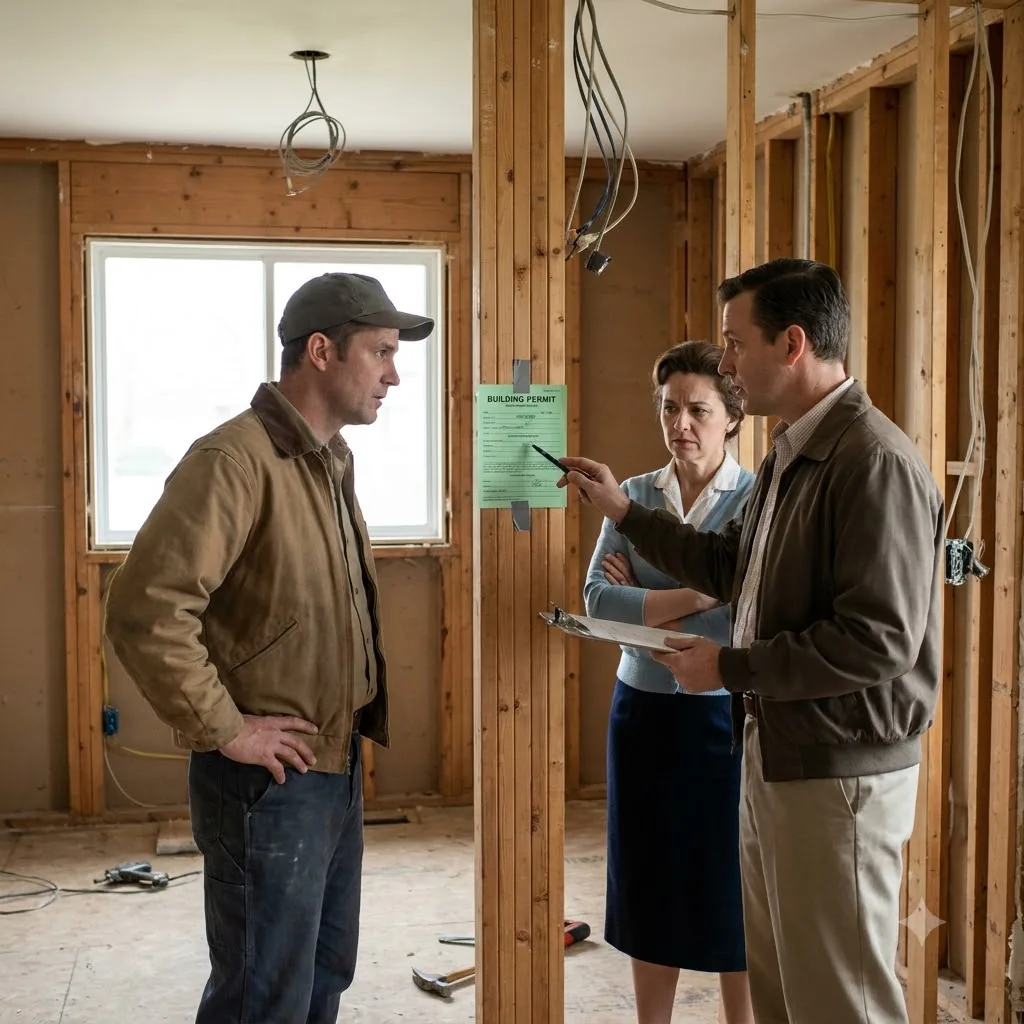
The absurdity of the threat was documented in Arthur’s personal notes. The idea that moving a cardboard box containing a sink could trigger a complete municipal shutdown of a residential renovation defied basic logic. Arthur did not argue. Instead, he watched Mark walk over to the exposed studs and adjust the tape holding the laminated green permit tag in place.
“If the permit is in jeopardy,” Arthur said quietly, “then we should call the inspector’s office to clarify the box rule. I want to make sure we don’t get flagged.”
Mark’s hand remained on the green permit tag for a moment. He turned slowly, his face tight. “You don’t call the city. Only the licensed contractor of record communicates with the inspector. If you call them, they will flag the property immediately just for bypass of protocol.”
After Mark left the house for another unscheduled four-hour absence, Arthur approached the exposed studs. He pulled out his phone and took a clear, close-up photograph of the registration numbers and inspector signatures written on the green permit tag.
The photograph, later submitted as evidence, showed the numbers clearly: Permit #884-91-B. Arthur opened the city’s online permit portal on his tablet. When he entered the number, the database returned a search result that changed everything.