Story code: ST-001117
Part 4: The Stop-Work Order
My analysis of the final county inspection records reveals that the administrative process moved with complete indifference to the personal relationships involved. On the afternoon of October fourteenth, Inspector Sarah Chen returned to the Vance residence to deliver the formal resolution. She carried a printed, high-visibility red poster-the official municipal Stop-Work Order.
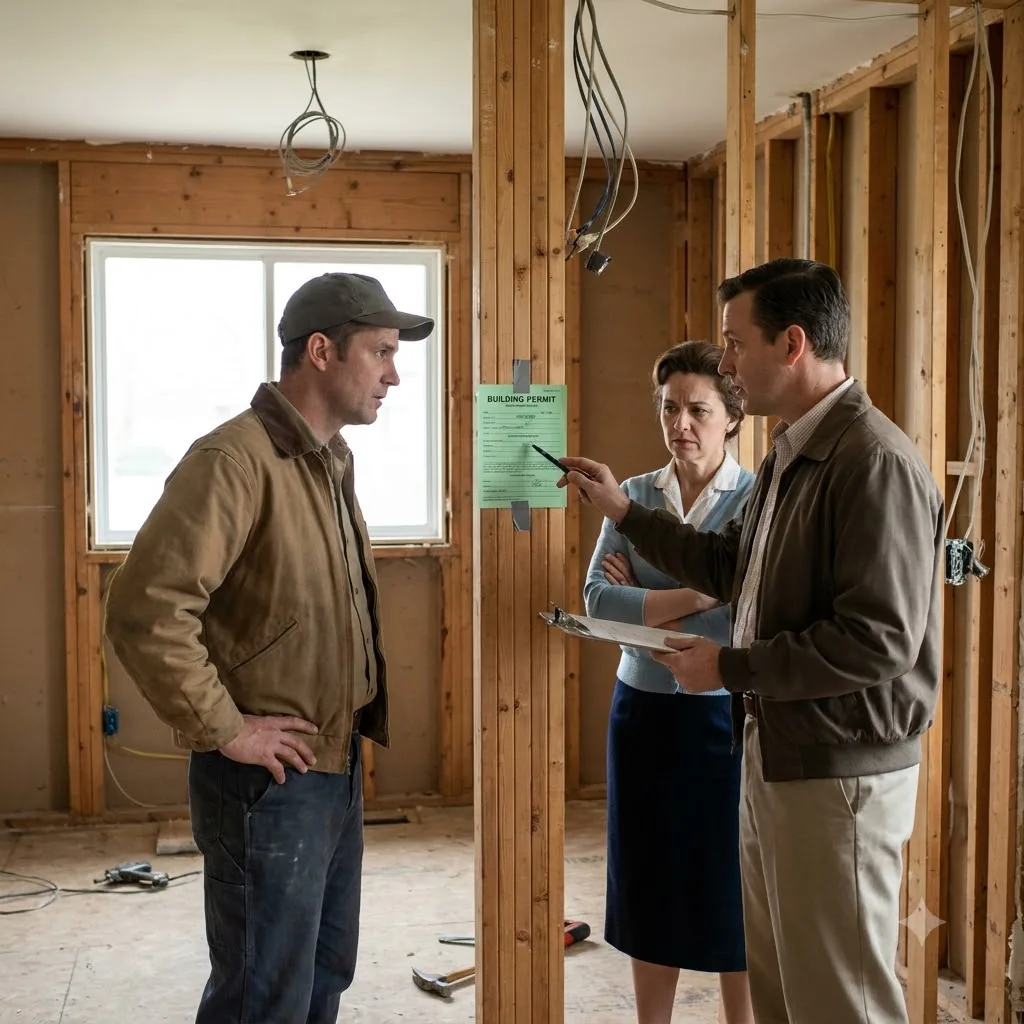
She did not discuss the family dynamics or the project delays with Arthur or Mark. Instead, she walked past the temporary plywood counter and used a heavy-duty stapler to secure the red notice directly to the center of the exposed pine stud where the false green permit tag had previously been displayed. The bold lettering warned that any further construction activity on the property would result in immediate civil penalties and potential misdemeanor charges.
‘Under municipal code section 105.6, all construction at this address must cease immediately,’ Sarah Chen announced, her voice retaining its flat, regulatory cadence. ‘The property is now flagged in the county database as an unauthorized work site. No further modifications can occur until new engineered plans are submitted, reviewed, and paid for by a registered builder.’
Mark Miller stood near the edge of the drywall-dusted subfloor. In the field report, Sarah Chen noted that the contractor did not attempt to sign the citation or dispute the code numbers. He stared at the red paper, his breathing shallow.
‘I can get the corrected engineering paperwork submitted by tomorrow morning,’ Mark said to the inspector. His voice had lost its previous authoritative weight. ‘We can clear this up with a minor revision without leaving the stop-work filing on the property record.’
‘The citation has already been uploaded to the municipal registry,’ Sarah Chen replied. She slid her digital tablet back into her leather utility case. ‘Because this case involves the deliberate posting of a permit tag registered to a different property, a formal notification of license misuse is being routed to the state licensing board. The department does not expunge active stop-work logs for administrative convenience.’
Mark’s face remained blank, but his hands tightened into fists inside his jacket pockets. He did not offer any further explanation or argue with the inspector. He turned to look at Arthur Vance, who stood by the plywood counter holding the stack of municipal guidelines he had printed. Arthur did not speak or make eye contact; he simply watched the inspector finalize her paperwork.
Sarah Chen completed her notes, stepped past the temporary plumbing boxes in the hallway, and walked out the back door, her boots echoing down the wooden steps.
The unfinished kitchen went completely silent. The investigator’s final site report notes that Mark spent the next forty-five minutes removing his personal tools from the property. He walked to the corner of the room, picked up his miter saw, and carried it out to his truck. He returned three more times for his levels, drills, and tool boxes, working in total silence. He did not say goodbye to his brother-in-law, nor did he ask for the remaining balance of the contract. The physical reality of the stalled renovation remained-exposed wires, bare studs, and the red citation sticker-but the administrative leverage Mark had used to control the home was gone. The kitchen was left as a quiet ruin of exposed wood and plaster dust.
The state licensing database was updated forty-eight hours later. Under Mark Miller’s professional record, a permanent entry was added: ‘License Misuse / Unauthorized Posting of Permit #884-91-B’. The public record of the bluff would remain accessible to every future client, ensuring the cost of his control over the kitchen would follow him long after the drywall was finally hung.