Story code: ST-001131
Part 3: The Plumber’s Log
The digital and physical records from the afternoon of October 12 outline a rapidly escalating mechanical failure that Richard Vance could not arrest. At 10:18 AM, a dispatch log from local plumbing contractor Vargas & Sons shows that Richard requested an emergency service call for Unit B. The responding technician, Leo Vargas, later provided a written statement to the city housing board during the code review process. According to Vargas’s log, he arrived at the North Duplex at 10:45 AM and noted a strong odor of sewer gas originating from the cellar windows.
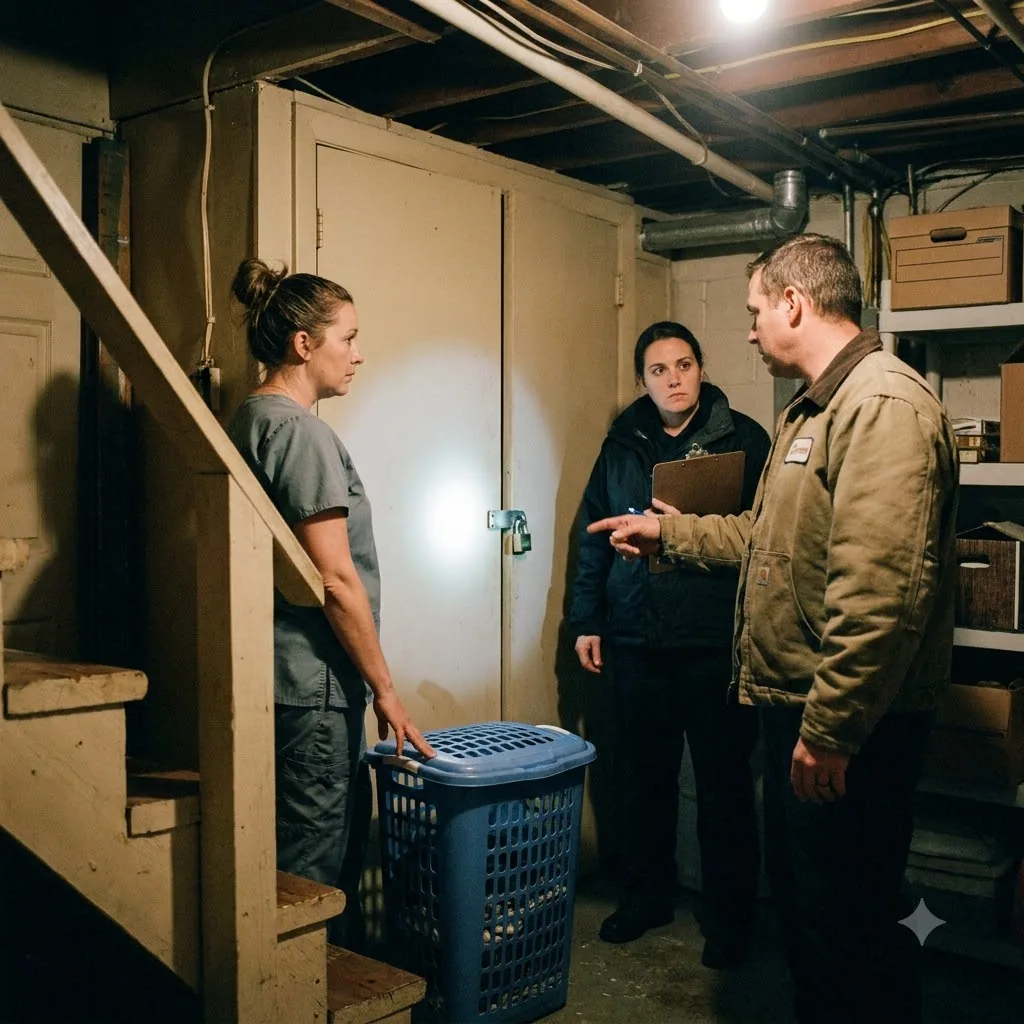
Vargas’s report states: “Upon inspection, landlord requested emergency main line snaking. Landlord pointed to the shared basement laundry door, which was secured by a brass padlock. Landlord stated he did not have the key on his person and declined to cut the lock, citing an active tenant dispute. Landlord then requested access to Unit A to manually vent the pressure valve under the kitchen sink. Tenant was not present on the property. Landlord refused to authorize emergency entry into Unit A without the tenant’s consent. Because physical access to the cleanout port and the vent valve were both unavailable, I informed the landlord that no work could be performed. Service call was aborted at 11:12 AM.”
Richard’s outbound communication log shows a series of five text messages sent to Maya Lin between 11:15 AM and 1:30 PM. The messages, preserved in the investigator’s file, document a progression from administrative demands to direct financial concessions. At 11:15 AM, Richard wrote: “The plumber is here but cannot clear the line. You need to come home immediately to open the kitchen valve.” Maya’s phone records show no response; her keycard at the medical lab logged her inside the secure sterile processing unit from 7:15 AM until her scheduled break.
At 12:45 PM, Richard sent a second message: “I will waive the signature requirement on the utility addendum for thirty days if you return now to vent the line. The basement floor is covered in water.” Again, no reply was recorded. By 1:30 PM, the tone shifted further: “I am removing the addendum from the door. Just tell me where the spare key to Unit A is so the plumber can turn the valve.”
Maya’s single outgoing text occurred at 1:45 PM, during her designated lunch period: “I do not authorize entry to Unit A in my absence. I will return at 5:45 PM after my shift.”
By 3:00 PM, municipal water records for Unit B indicated that water usage had ceased, but the pressure in the shared main line remained critical. The insurance adjustment report later noted that the standing wastewater in the locked laundry room had reached a depth of four inches. The moisture sensors inside the partition wall separating the two cellars began registering structural saturation. Richard’s final text of the afternoon, sent at 4:12 PM, read: “The water has reached the folding table. Your laundry basket is going to get wet if you don’t help me.” Maya did not reply.
When Maya’s vehicle pulled into the driveway at 5:48 PM, the neighbor’s security camera captured her carrying her second set of scrubs in a plastic dry-cleaning bag. She entered Unit A through the front door. The camera records no movement toward the basement stairs. Instead, she began systematically moving cardboard packing boxes from her living room to the front hallway. A silver SUV owned by her sister arrived at 6:30 PM, and the two women began loading personal items into the rear cargo area. The pre-scheduled city inspection notice, taped to the common entrance door weeks prior, remained set for 9:00 AM the following morning.