Story code: ST-001171
Part 3: The Hardware Lockout
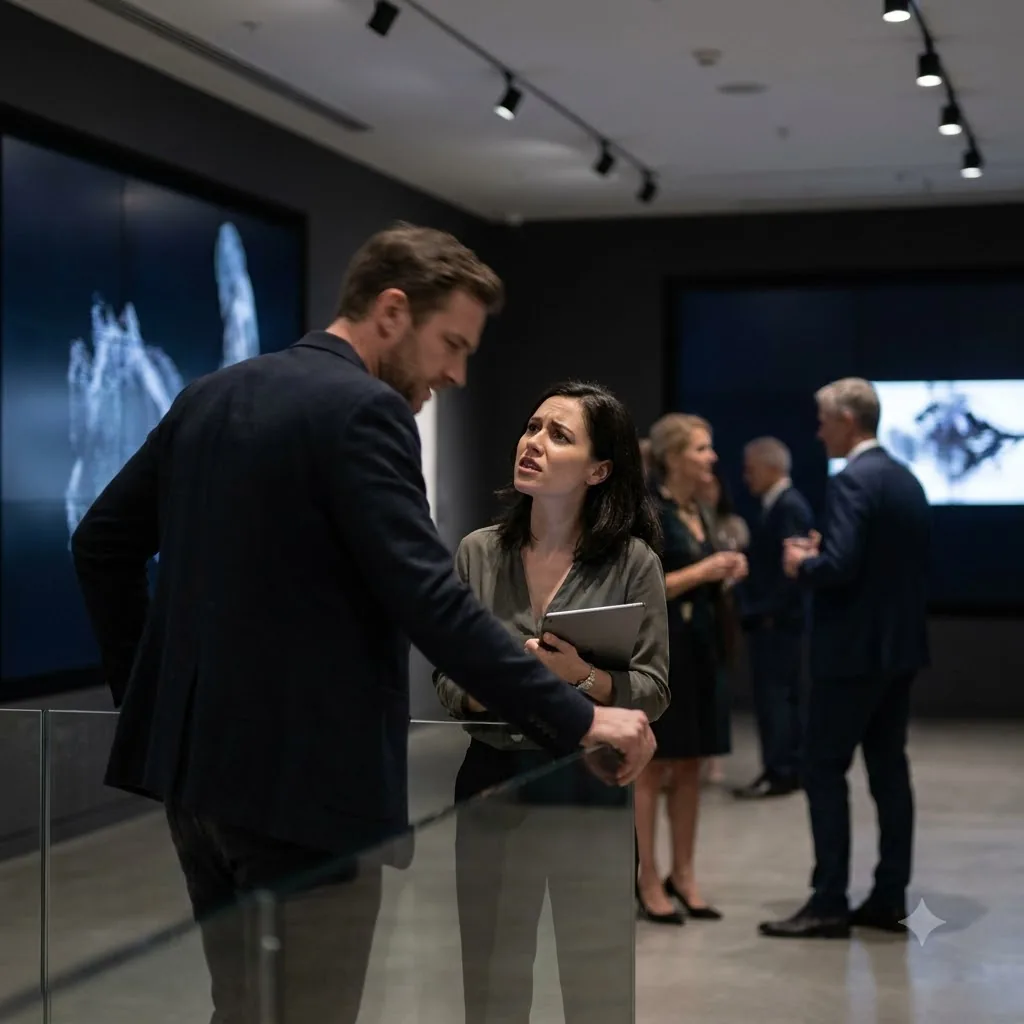
Julian lunged toward my console desk, pushing his tablet aside to grab the physical keyboard. His fingers typed rapidly, entering override after override. On the screen, the system terminal flashed back: ERROR: HARDWARE KEY UNSYNCED. VALIDATION REQUIRED. “Leo, bypass the local hardware handshakes,” Julian muttered. His right hand was shaking as he gripped the mouse. He kept glancing over his shoulder at the glass doors, where the gallery owner was now gesturing to the security guards to prepare to unlock the entry. “There has to be a configuration file we can edit. We can redirect the asset path to a local directory.” “The displays are hardwired to the security chips on those print certificates, Julian,” I said, pointing to the blinking red status bar. “The local directory paths are encrypted. The decrypter only loads once the physical chip is scanned at the screen’s base. The master account credentials cannot sign the local decryption keys. You locked the repository, but you also locked out the handshake protocol.” Julian spun around to face Maya. His face had gone pale, a sharp contrast to his crisp gray suit. “Maya, let’s be reasonable. The VIPs are about to walk in. If the canvases remain watermarked, the sales contracts for tonight are void. We lose the gallery space for the rest of the season. I will restore your access to the repository. I’ll do it right now.” He pulled out his phone, his thumb tapping the screen with rapid, jerky movements. He showed the screen to Maya. “See? I’m opening the user administration panel. I’m adding your email back as an owner. Just give Leo the certificates.” Maya did not look at his phone. She remained standing near the center canvas, her arms crossed. Her eyes stayed on the watermark drifting across the screen behind him. “You deleted my signature from the metadata of the autumn collection, Julian. I saw the logs before you cut my access.” “It was a branding decision,” Julian said, his voice rising, cracking slightly on the final syllable. He glanced at the entrance again. The security guard was now sliding the brass lock open. “A unified brand sells better. It doesn’t change the split. You still get your percentage. Just scan the cards!” “The digital ledger is permanent,” Maya said, her voice remaining low and level. “You wanted your name to be the sole signature. The physical certificates are signed with my local key. If I scan them now, the system logs the output under your master account, attributing the creation to you. I’m not signing my work over to your name.” Julian typed frantically on my keyboard again, trying to pull up the system BIOS, but the screen instantly went black, displaying a sixty-second lockout warning. His breathing was loud in the small tech booth. “Leo, there has to be a physical override switch on the back of the screens. Find it. Now.” “The hardware doesn’t have a manual bypass,” I said. “It’s a security feature to prevent art theft. Only the physical certificate chip can authorize the high-res stream.” Outside, the first group of collectors stepped through the glass doors, their coats damp from the New York drizzle. They walked into the lobby, their eyes instantly landing on the nearest digital canvas, which still displayed the pixelated, watermarked preview. Julian stood between them and my desk, his fingers gripping the edge of the wood so tightly his knuckles turned white.